Every July, our phones fill up with the same message from guests: “Where are the herds today?” That is exactly what a wildebeest migration tracker live location update should answer, though it is rarely something anyone can state with total certainty, no matter how good the tracker looks on screen.
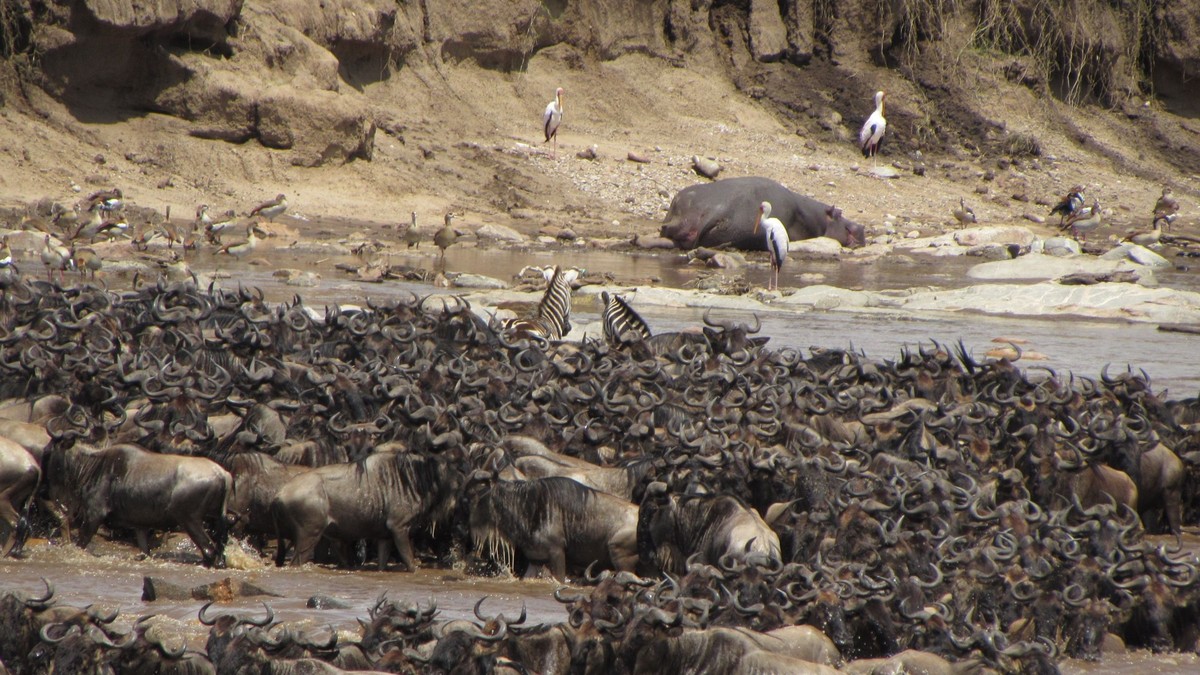
Here’s what we can tell you as of mid-July 2026. The main columns have pushed north out of the Serengeti’s Lamai Triangle and Kogatende area, crossed the Sand River, and are spreading across the Mara Triangle and Mara North Conservancy. Our guides on the ground this week are reporting herds along the Mara River between Lookout Hill and the Serena Crossing Point, with smaller groups already grazing near Paradise Plain. That matches the pattern of the last several seasons, though the herds never read the calendar quite the same way twice.
How Our Wildebeest Migration Tracker Live Location Updates Work
Every big migration page shows you a map with pins on it. Fewer of them explain where the pins come from. Ours come from three sources, updated daily during peak season, from June through October.
Our guides radio in from the field every morning and evening. Camp managers at Kicheche Mara, Angama Mara, and Serian’s Mara Camp share sightings from their own game drives. And when herds bunch up near a crossing point, we get updates from pilots flying the Mara North and Musiara airstrips, who can see column movement from the air that’s invisible from a vehicle.
None of this makes us psychic. It makes us current, usually within twelve hours. That’s the honest limit of any tracker, ours included.
The Migration Calendar, Month by Month
If you’re planning around the migration rather than reacting to it, the broad pattern below has held reasonably steady for the past decade. Treat exact weeks as indicative, since rainfall shifts things by two to four weeks most years.
| Month | Herd Location | What’s Happening |
|---|---|---|
| December to March | Southern Serengeti, Ndutu area | Calving season, around 500,000 calves born in a six-week window |
| April to May | Central and Western Serengeti | Herds moving north, long rains make roads heavy |
| June | Western Serengeti, Grumeti River | First river crossings, smaller and less predictable |
| July to August | Mara River, Kogatende to Mara Triangle | Peak crossing season, largest and most dramatic crossings |
| September to October | Maasai Mara, Mara Triangle and Mara North | Herds settle into Mara grasslands, repeated shorter crossings |
| November | Southward migration begins | Herds move back toward the Serengeti with the short rains |
Roughly 1.3 to 1.5 million wildebeest and around 200,000 zebra make this loop each year, following rain and fresh grass rather than any fixed schedule. That’s also why deciding between the Mara and Serengeti side of the migration matters more than picking a specific date.
Where to Watch a Crossing
Not every crossing point is equal, and this is where a wildlife photographer’s itinerary really pays off. Light matters as much as location. The Mara River runs roughly north to south through the Mara Triangle, so a morning crossing at Lookout Hill gives you soft side light, while an afternoon session at the Serena Crossing Point can turn harsh unless you’re positioned on the western bank.
| Crossing Point | Best Months | Nearest Camps | Drive Time |
|---|---|---|---|
| Serena Crossing Point | July to September | Little Governors’ Camp, Mara Serena | 20 to 35 minutes |
| Lookout Hill | July to October | Angama Mara, Kicheche Mara Camp | 15 to 30 minutes |
| Cul-de-sac, Mara North | August to September | Serian’s Mara Camp, Mara Expedition Camp | 25 to 40 minutes |
| Sand River / Kogatende | June to July | Sand River Camp (Serengeti side) | 10 to 20 minutes |
A patient itinerary beats a rushed one here. We build in three full days at a crossing-adjacent camp rather than one, because herds can sit on a riverbank for hours, sometimes days, before committing. Guests who’ve booked just one night often leave without seeing a single wildebeest touch water.
Is Seeing a Crossing Guaranteed?
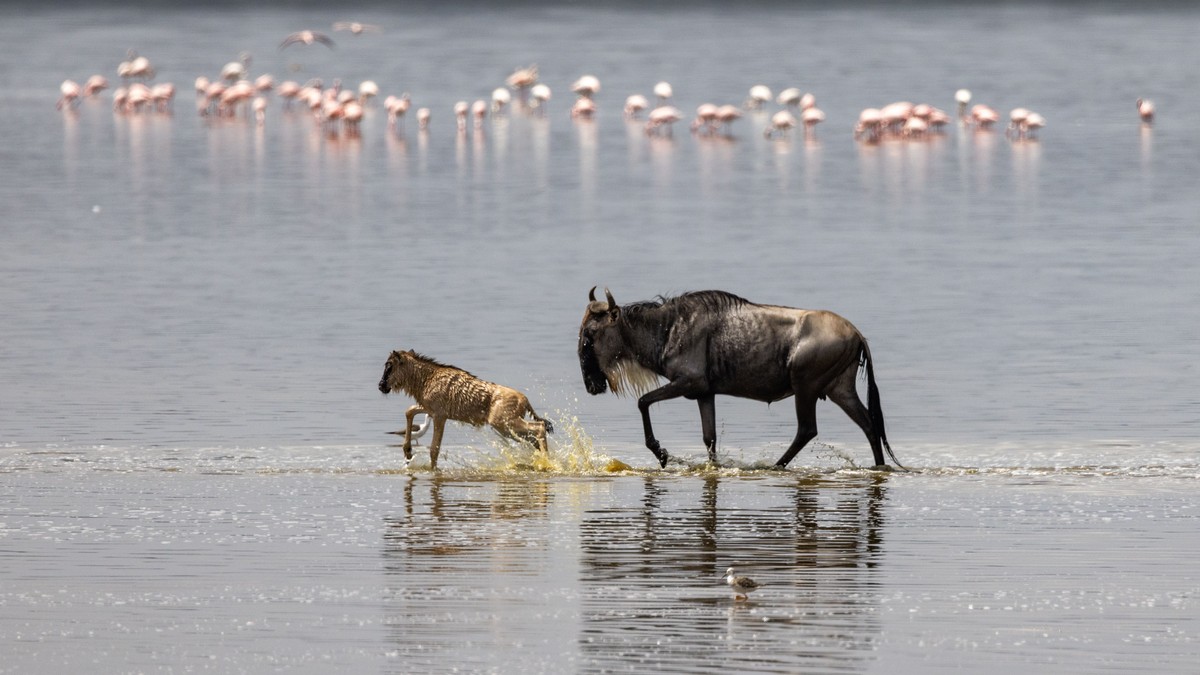
No, and we’d rather tell you that upfront than oversell it. Wild animals move on their own logic, and even our best-connected guide can be twenty minutes too late some mornings. As we’ve written before, sightings are never 100% guaranteed, and the migration is no exception, arguably the least predictable sighting in Kenya.
What improves your odds is time in the field, not luck. Four to five game drives across three to four days near an active crossing point gives you a realistic shot, often above 80 percent based on our own booking data from July and August 2025. One drive gives you a coin flip at best.
Calving Season and Predators
The other half of the migration story happens far from the Mara River. Calving season runs from late January through March in the Ndutu and Southern Serengeti plains, when up to 8,000 calves can be born in a single day at the peak. Predator density spikes here too. Lion prides and cheetah coalitions follow the herds south for exactly this reason, and it’s one of the best windows anywhere in East Africa for predator-and-prey photography.
Where to Stay Near the Current Location
Camp choice should follow the herds, not the other way around. Here’s where we’re placing guests through August 2026, with indicative 2026 rates per person per night, full board.
- Angama Mara (Mara Triangle, Oloololo Escarpment): from USD 1,100. Closest to Lookout Hill.
- Kicheche Mara Camp (Mara Triangle): from USD 850. Small, eight tents, strong guiding team.
- Serian’s Mara Camp (Mara North Conservancy): from USD 950. Best positioned for Mara North crossings.
- Governors’ Camp (Mara Triangle, riverside): from USD 780. Closest tented camp to the Mara River itself.
Conservancy camps like Serian’s and Kicheche also cap vehicle numbers at sightings, which matters more than people expect once a crossing starts. We always brief guests on the conservancy vehicle limits at crossing points before departure, since it shapes where we park and how close we can get.
Park and conservancy fees add up too. The Maasai Mara National Reserve conservation fee runs around USD 100 per person per day (non-resident, 2026 rate), while Mara North Conservancy charges a similar community fee on top of camp rates. Worth building into your budget rather than discovering it on arrival.
The Valley Safaris Difference
We don’t run a call center pointed at a sightings app. Our guides work the same twelve-kilometre stretch of the Mara Triangle season after season, and they know which acacia a leopard favors at 6 a.m. and which bend in the river the herds hesitate at before committing to a crossing.
When you book with us, your guide is already radio-linked to three or four other Valley Safaris vehicles working different sections of the river that same morning. If the action moves, so do you, usually before the crowds catch on. We also build genuinely flexible days into every migration itinerary, including a standing offer to swap a midday rest for an extra drive if reports come in that herds are massing nearby. It’s a small thing, but it’s the difference between watching from a viewpoint and watching from the front row.
Plan Your Migration Trip
The herds are moving right now, and the window for the best 2026 crossings runs through late September. If you’d like a guide who already knows where they’ve been headed this week, have a look at our Mara migration safari packages or get in touch through our contact page and we’ll help you build an itinerary around the current location, not last year’s calendar.