The first time a guide radios “five cars already at the leopard, we wait,” you understand what a conservancy fee buys. No jostling for a gap between roofs. No engine noise drowning out a cub calling for its mother. Just your vehicle, maybe two others, and a clean line of sight.
That rule, the conservancy vehicle limit sighting rules that govern most private conservancies bordering the Maasai Mara, is not a marketing line. It is written into each conservancy’s management plan and enforced daily by rangers on the ground. Here is exactly how it works, conservancy by conservancy, and when paying extra for it actually makes sense.
What Counts as a “Sighting” and How the Cap Gets Enforced
A sighting is any stationary predator, or a notable event like a kill, a mating pair, or a den with cubs. The moment a guide spots one, it goes out over the radio to camp and to other guides working the same conservancy.
Enforcement runs on three layers. Rangers patrol in their own vehicles and will physically ask a car to leave once the cap is reached. Radios coordinate guides so a sixth vehicle already knows to hold back before it even arrives. Camp managers also brief every guide on the rules before the trip starts. A conservancy can suspend a camp’s operating license for repeat violations.
Guides also self-police, partly out of professional pride. In the safari vehicle you’ll be riding in, your driver will often idle at a distance and watch the radio traffic. That is safer than crowding in and getting flagged by a ranger.
Conservancy Vehicle Limit Sighting Rules by Location
The rules are not identical everywhere. Each conservancy sets its own cap, timing, and distance rule, and camps brief guests differently depending on where they are staying. Here is how the main Mara conservancies compare, using figures published in conservancy visitor guidelines and confirmed by guides operating in each area. Where an exact number varies by source, we have marked it as an indicative range.
| Area | Vehicles per sighting | Time limit once vehicles are waiting | Approximate size | Conservancy fee (indicative) |
|---|---|---|---|---|
| Mara North Conservancy | 5 | 10 minutes, then give way | 296 km² | USD 100-140 per person per night |
| Olare Motorogi Conservancy | 3-6, depending on species | Ranger discretion, no fixed minutes | 140 km² | USD 120-150 per person per night |
| Naboisho Conservancy | 3 | 5-10 minutes | 200 km² | USD 100-130 per person per night |
| Maasai Mara National Reserve | No enforced cap, 20-40+ reported at popular sightings | None | roughly 1,510 km² including the Mara Triangle | USD 80-100 per day, non-resident (varies by Narok County side versus Mara Triangle) |
Mara North’s rule is the one most guides quote first. It is the most specific: five vehicles, a 100-meter approach distance, and a 10-minute clock once a sixth car shows up waiting.
Olare Motorogi flexes the cap by species. A lion pride sighting might allow more cars than a single leopard in a tree. Leopards startle more easily and have fewer good viewing angles to begin with.
Naboisho runs the tightest fixed number in the Mara ecosystem, at three vehicles. That is one reason photographers ask camps there for morning slots.
Why the Cap Exists
Animal stress is measurable. Researchers studying cheetah in the Mara ecosystem have linked high vehicle density around hunts to lower hunting success and cubs abandoning kills early. A pride with ten vehicles circling it behaves differently than one with two. Cats duck into cover sooner, mothers move cubs more, and hunts get abandoned mid-stalk.
There is also a simpler reason: exclusivity is the product. Guests pay a conservancy fee on top of their camp rate specifically so that ten other vehicles are not blocking the shot. Understanding why animals tolerate vehicles at close range also explains why the cap matters so much for photography. Big cats habituate to a small, predictable number of vehicles moving slowly and staying at a set distance. Introduce a crowd and that habituation breaks down. Animals get skittish, and the safe viewing distance for a clean frame with a 400mm lens disappears.
Conservancy Density Versus the National Reserve
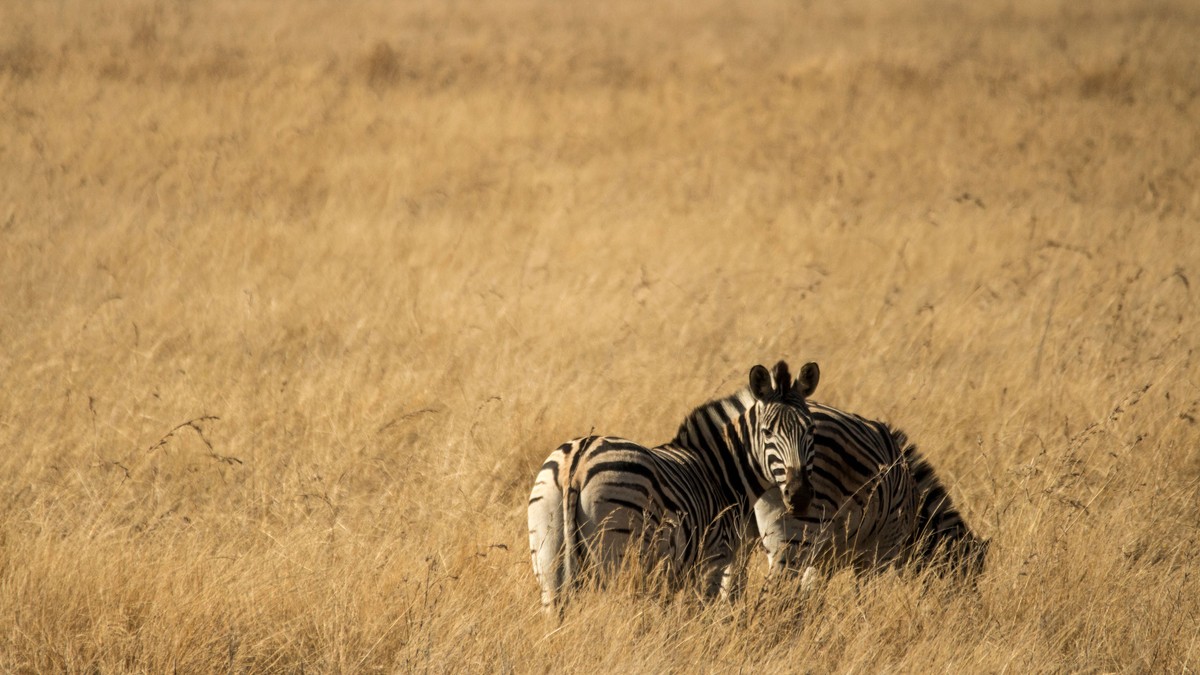
The contrast is the clearest argument for paying the conservancy premium. In Mara North, Naboisho, or Olare Motorogi, five vehicles at a lion sighting is treated as a full house. The national reserve is different. Near the Mara River during wildebeest crossing season in August and September, 20 to 40 vehicles at one crossing point is common. That is not against reserve rules.
That density changes the entire posture of your photography. Instead of picking your angle and waiting for the light, you are boxed between roofs, shooting through gaps. You move when the driver ahead of you moves, not when the scene changes. For a photographer chasing a specific composition at golden hour, that is the difference between a usable frame and a wasted afternoon.
Off-Road Driving, Night Drives, and Walking Safaris
The vehicle cap is one piece of a bigger conservancy privilege set. Most conservancies also permit limited off-road driving to close in on a sighting. They also allow night drives with a spotlight after the reserve gates close at 6:30pm, and guided walking safaris. None of these are allowed inside the national reserve.
For a photographer, the off-road allowance matters as much as the vehicle cap. Being able to reposition ten meters for better light, without waiting for a track, often makes the difference in a shot. Night drives open up genets, aardvarks, and hunting leopards that reserve guests never see, since reserve vehicles must be parked at camp by dusk.
What the Fee Actually Pays For
Conservancy fees typically run USD 100-150 per person per night, on top of the camp rate. That money funds a specific set of things. It covers ranger salaries and patrol vehicles. It pays monthly lease payments to the Maasai landowners who set aside grazing land for wildlife instead of cattle. It also funds a hard cap on the number of camp beds allowed inside conservancy boundaries.
That bed cap is what indirectly limits vehicle numbers. Mara North permits roughly one tourist bed per 350 acres. The national reserve has no equivalent cap, which is part of why conservancy safaris cost more than a reserve-based trip of the same length. You are not just paying for fewer vehicles at one sighting. You are paying to keep the whole landscape at low density, day after day, for the length of your stay.
The Valley Safaris Difference
We plan conservancy time deliberately rather than as an add-on. When we build an itinerary around Mara North or Naboisho, we brief you on each conservancy’s specific cap and timing before you land. That way you know what to expect at your first sighting, rather than learning the rule from a ranger mid-drive.
We also sequence camps to match how you shoot. Photographers booking with us often split a week between a low-density conservancy and a short reserve visit timed to a river crossing. You get the quiet five-vehicle leopard sighting and the spectacle of the migration, and neither one cancels out the other.
Our guides carry radios tuned to conservancy channels. So when a rare sighting like a cheetah with cubs comes up, you are often among the first three cars there, not the fifteenth.
Planning Your Own Conservancy Safari
If close, uncrowded sightings matter to your trip, the conservancy fee is not a cost to avoid. It is the mechanism that makes those sightings possible. A five-vehicle cap in Mara North or a three-vehicle cap in Naboisho only works because everyone staying there has paid into the same system.
Ready to build a trip around it? Get in touch through our contact page. We will walk you through which conservancy fits your dates, your lens kit, and your patience for waiting on a leopard to come down from its tree.