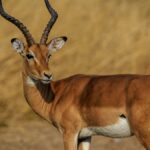
You have done the Mara. Maybe twice. You know what a wildebeest crossing sounds like and you have your favorite camp in Laikipia. So let me tell you about the one Kenyan park most safari veterans never bother with. Ruma National Park sits in the Lambwe Valley near Lake Victoria. The Ruma National Park roan antelope herd is the last wild population left in the country.
I have driven clients out to Ruma a handful of times over the years, and every single one asked the same question first: is it actually worth an 8-hour drive to see an antelope? The honest answer is nuanced, and that is exactly what the glossy safari-operator pages will not tell you.
Why Ruma is Kenya’s only home for roan antelope
Roan antelope are big, handsome animals, reddish-brown with backswept horns and a face marked like a badger. Across most of Africa they hold their own. In Kenya, they hold on in exactly one place: Ruma National Park.
No other park in the country has a resident roan population. That single fact is why every reference site calls Ruma “the last retreat of the roan antelope.” You will see that exact phrase on Wikipedia, on Kenya Wildlife Service pages, and on half a dozen safari listicles. It is true. It is also the least useful part of the story. It does not tell you how few roan are actually left, or where in a 120-square-kilometer park you need to stand to see one.
Ruma National Park roan antelope population: the real numbers behind “last retreat”
This is where most articles get vague or contradict each other. You will find the number 40 on some pages, 25 on others, and 19 on a few more recent ones. None of them explain why the figures disagree.
Here is the clearest picture I can give you. In 1976, surveys counted roughly 202 roan antelope living wild in the Lambwe Valley. Poaching, disease, and habitat pressure hit hard over the following decades, and by the 2000s the population had crashed to a small fraction of that. Recent counts inside the park’s protected roan sanctuary put the number at somewhere between 19 and 25 animals. I would treat that as an indicative range rather than an exact count, since roan are shy and hard to count precisely even inside a fence.
Inbreeding became a serious risk once the herd shrank that far. In 2022, Kenya Wildlife Service worked with Tanzanian conservation partners to bring in fresh roan antelope from Tanzania, aiming to widen the gene pool and give the Ruma population a real chance at recovery. It is a slow, careful process, and it is the reason conservationists now talk about Ruma’s roan in terms of decades, not seasons.
Where to actually find roan antelope in the park
Here is the detail that almost nothing online spells out clearly: you will not simply drive through Ruma and stumble on roan antelope. They live inside a fenced sanctuary near Nyatoto Gate, on the park’s western side, set up specifically to protect the last breeding herd from predators and poaching.
Ask your driver to head for the Nyatoto Gate sanctuary area first thing in the morning, when roan are most active and the light is soft for photos. Even then, sightings are not guaranteed. Roan are naturally wary, the sanctuary is not small, and a herd of twenty-odd animals can tuck itself into thick bush for hours. Go in with the mindset of a dedicated wildlife search, not a checklist tick, and you will enjoy it far more.
Other wildlife: rhino, giraffe, hyena, and 400-plus bird species
Roan antelope get top billing, but Ruma has quietly built a wider conservation story. A fenced black rhino sanctuary inside the park protects a small, closely monitored population, part of Kenya’s wider effort to rebuild numbers of this critically endangered subspecies.
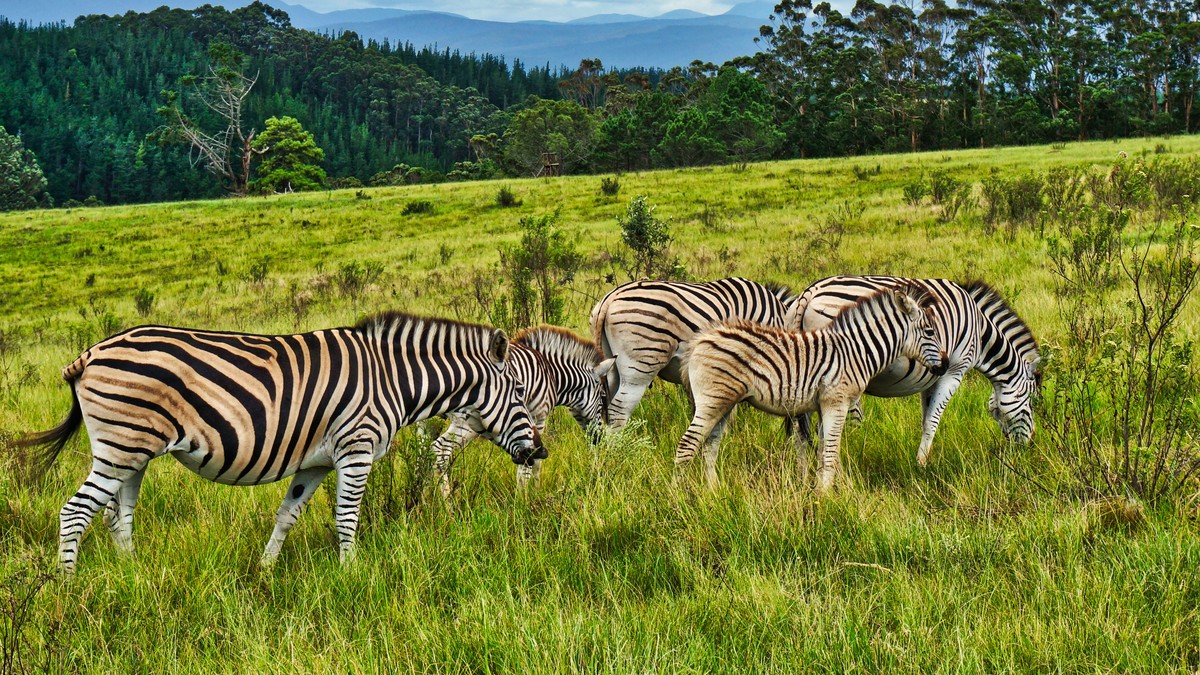
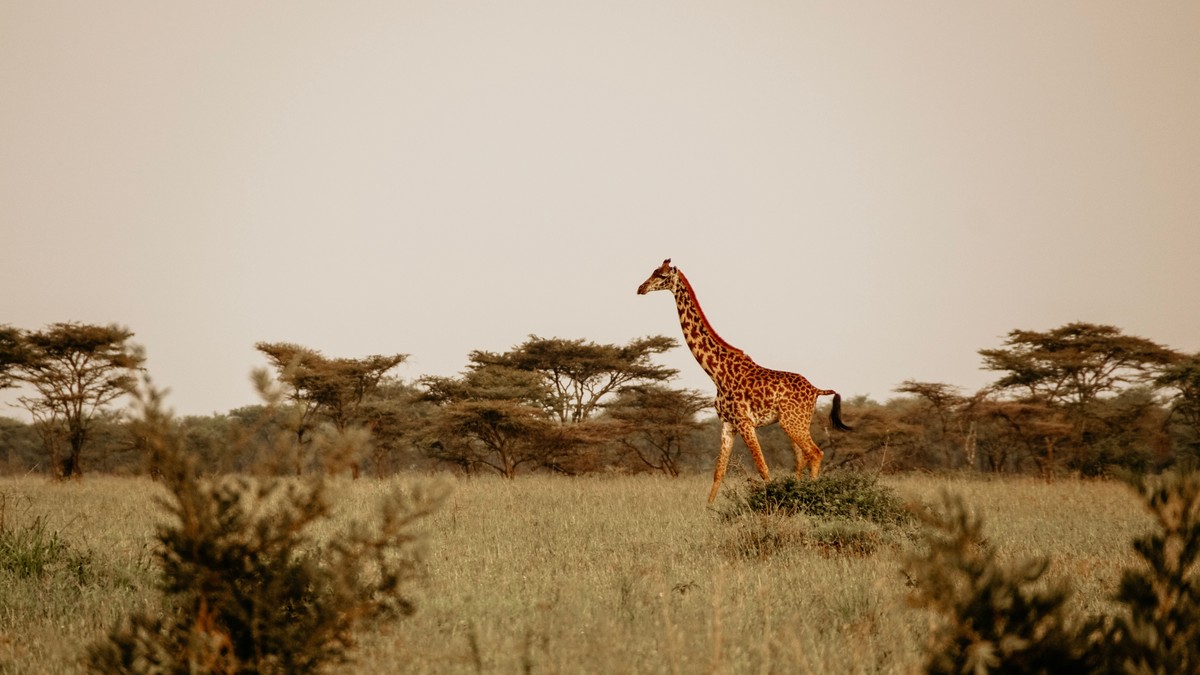
You will also find Rothschild’s giraffe, one of Africa’s rarer giraffe types, moving through the park’s open grassland and acacia woodland. Spotted hyena, buffalo, oribi, and topi round out the mammal list. Birders take Ruma especially seriously, with over 400 recorded species, including blue swallows during their migration season and a healthy population of raptors drawn to the valley’s mix of grassland and riverine forest.
Best time to visit Ruma National Park
The dry months, from June to October and again in January to February, give you firmer roads and better game visibility, since animals cluster near remaining water sources. Grass is shorter too, which helps enormously when you are trying to spot a roan antelope in thick bush.
The long rains, typically March to May, turn the black-cotton soil sections of the park into a genuine hazard. I have seen a well-equipped 4×4 sink to its axles on the Nyatoto road after a heavy afternoon storm. If you are set on visiting during the rains, build in extra time and go in with realistic expectations about mud.
Getting to Ruma National Park from Nairobi: road vs air
This is usually the deciding factor for repeat visitors weighing whether Ruma fits into an itinerary. Here is how the two main options actually compare.
| Route | Distance | Typical time | Approx. cost (one way) |
|---|---|---|---|
| Nairobi to Ruma by road (via Kisii or Homa Bay) | 425 km | 7 to 8 hours driving | Fuel and vehicle hire vary; budget KES 15,000 to 25,000 for a private 4×4 with driver |
| Nairobi to Kisumu by air, then road to Ruma | ~340 km flown + 140 km by road | 50 minutes flying + 2.5 to 3 hours driving | Flight from USD 70 to 130; road transfer from KES 8,000 |
| Nairobi to Homa Bay by road, then short hop to Ruma | 380 km to Homa Bay, plus ~40 km to the park | 6.5 to 7 hours plus 1 hour | Similar to full road route above |
Most of our repeat-visitor clients choose the fly-to-Kisumu option. It cuts a full day of driving down to an afternoon, leaving more time in the park itself and less time watching the Kisii-Homa Bay road unroll. If you would rather self-drive the whole way, it is entirely doable in a capable vehicle. Our guide on planning a self-drive safari in Kenya covers the safety basics worth knowing before you commit.
Entry fees and payment: Mpesa only
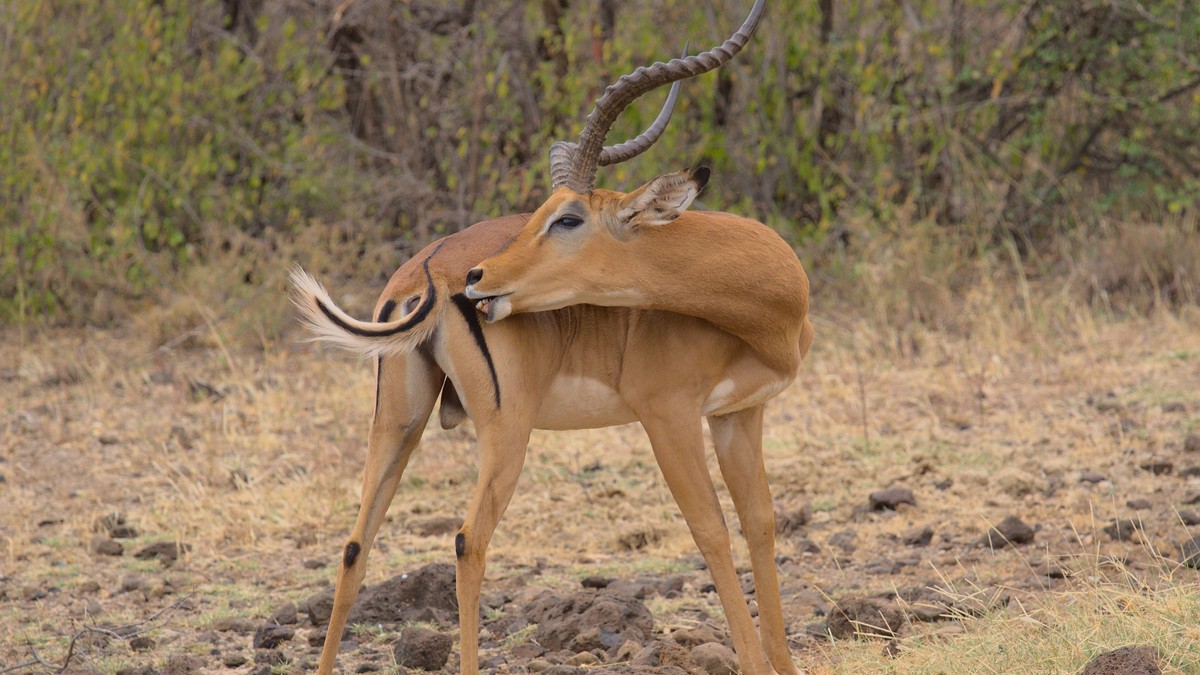
Ruma’s entry fees sit well below the big-name parks, which is one more reason it appeals to travelers who have already paid Amboseli or Mara prices more than once. Non-resident adults pay in the range of USD 20 to 25 per day, Kenyan citizens pay a small fraction of that in KES, and children are discounted further. Treat these as indicative figures, since KWS reviews park fees periodically.
The detail that catches almost every first-time Ruma visitor off guard: gates do not accept cash. Payment runs through Mpesa or the Safaricom-linked KWS payment system exclusively. Load your phone with airtime and confirm your Mpesa balance before you leave Nairobi or Kisumu, because there is no backup plan at the gate if your network signal or balance lets you down.
Where to stay near Ruma National Park
Accommodation options are simple compared to the lodges you might be used to in the Mara or Laikipia, which fits the deliberately low-key nature of a Ruma trip. Inside the park, KWS operates basic self-catering bandas and a campsite, both functional rather than luxurious. Homa Bay town sits about 40 km from the main gate. It has a handful of mid-range hotels with hot showers, decent beds, and views over Lake Victoria, a reasonable base if you would rather not rough it.
Activities: game drives, walking safaris, and Lake Victoria boat trips
Game drives cover the main circuit, with the Nyatoto sanctuary loop as the priority stop for roan antelope. Ruma is also one of the Kenyan parks where walking safaris are permitted with an armed KWS ranger, a genuinely different way to experience the Lambwe Valley’s grassland up close. If you have not tried walking safaris with an armed ranger elsewhere in Kenya, Ruma is a good, quiet place to start.
Beyond the park gates, Lake Victoria sits close enough for a half-day boat trip from Mbita or Homa Bay, giving you fishing villages, cormorants, and a very different landscape from the savanna you just left.
Practical tips and honest trade-offs for visiting
A 4×4 is not just recommended, it is necessary, especially on the Nyatoto Gate roads and during any rain. Fuel up fully before leaving Homa Bay or Kisumu, since options inside and near the park are limited. Bring cash in small denominations for tips and roadside stops, even though the gate itself is Mpesa-only.
Be honest with yourself about the trade-off. Ruma asks for a long drive or a flight-plus-drive combination, and it does not guarantee a roan antelope sighting even inside the sanctuary. What it offers instead is space, quiet, and the chance to see a species you genuinely cannot see anywhere else in Kenya. If that trade feels worth it, few parks reward the effort quite like this one. For a different kind of underrated detour, we also send repeat visitors to another underrated Kenya safari park for comparison.
The Valley Safaris Difference
We do not sell Ruma as a headline destination, because it is not one. We sell it honestly, as a deliberate detour for travelers who already know what a big-name park looks like and want something rarer. That means we tell you upfront when roan sightings are unlikely. We build in the extra driving time rather than rushing you, and we brief you on the Mpesa-only gate policy before you are standing at the gate with cash and no signal. Our guides know the Nyatoto Gate roads season by season, not from a brochure, and they plan the timing of your visit around when the light and the animals actually cooperate.
Plan your Ruma antelope safari with us
If a park with fewer than 25 roan antelope and almost no other visitors sounds like exactly the kind of detour your next Kenya trip needs, we would love to help you plan it properly. Get in touch through our contact page and we will build the logistics, timing, and stay around what you actually want to see.