You have already done the Masai Mara. Maybe twice. You know what a lion looks like through a windscreen, and you are here for something more honest this time. So let’s talk about the thing most operators gloss over: masai mara vehicle crowding sightings are a real problem, not a rumor, and it shapes where we now send repeat guests.
I have stood at a cheetah sighting near Talek with 43 vehicles counted by a colleague on radio. I have also parked alone at a leopard kill in Naboisho Conservancy for 40 minutes before another car showed up. Both are the Mara. They are not the same trip.
How Bad Are Masai Mara Vehicle Crowding Sightings, Really?
On a busy July or August morning, a single cheetah or a mating lion pair inside the Masai Mara National Reserve can draw 20 to 50 vehicles within 20 minutes. During peak wildebeest migration season, river crossing points along the Mara River, especially near Lookout Hill and Paradise Crossing, have been reported and photographed with over 100 vehicles lined up at once.
This is not exaggeration for effect. It is the standard complaint from guides who work the reserve daily. Talek Gate and Sekenani Gate are the two entry points that see the worst pile-ups, because they are the closest gates to Nairobi-facing lodges and the most heavily used by day-trippers from Narok town.
Why It Happens
The Masai Mara National Reserve, on the Narok County side, has no hard cap on the number of vehicles allowed inside at any one time. Compare that to a private conservancy, where bed numbers and vehicle numbers are fixed by contract with the local Maasai landowners.
Add radios. Every driver-guide in the reserve is in constant contact with every other driver-guide. Spot a leopard and within ten minutes, every vehicle within radio range knows the exact tree. This is sometimes called “aggressive tourism,” chasing a sighting rather than waiting for one to develop naturally.
What Crowding Does to the Animals
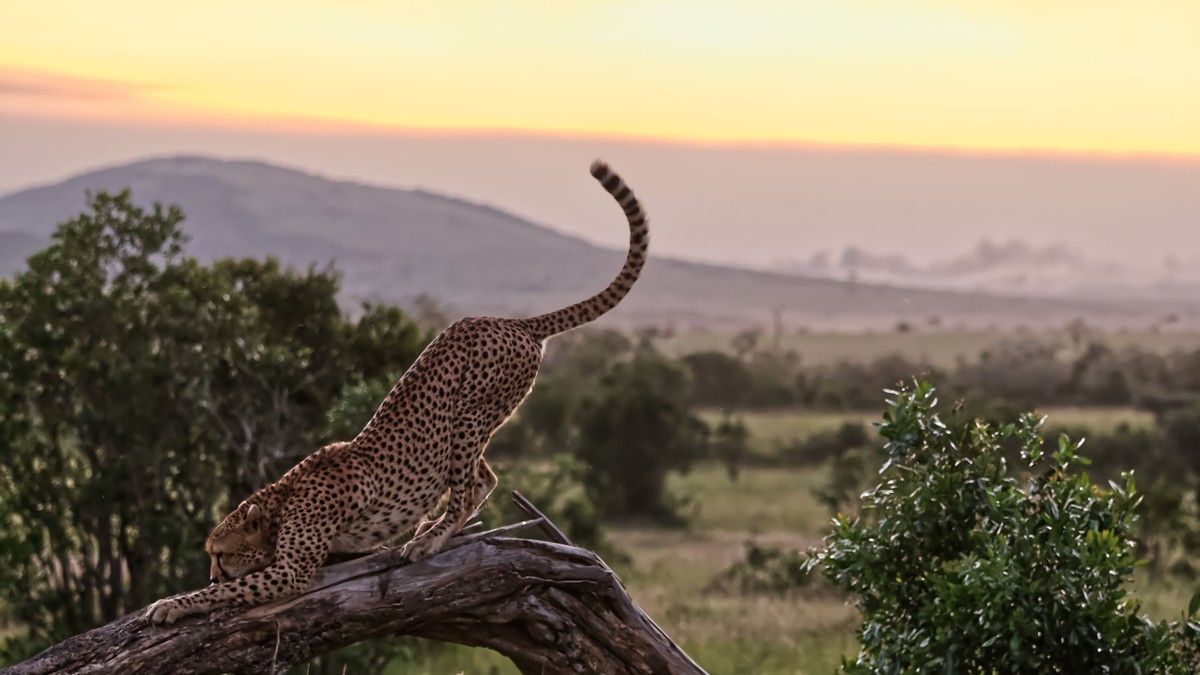
This part matters, and it is not just about your photos. Research published through The Conversation and other wildlife biology outlets has linked vehicle density around cheetahs to measurably higher stress hormone levels and reduced hunting success. Cheetah mothers with cubs are especially vulnerable, since a crowded sighting can push a hunting window closed for the day.
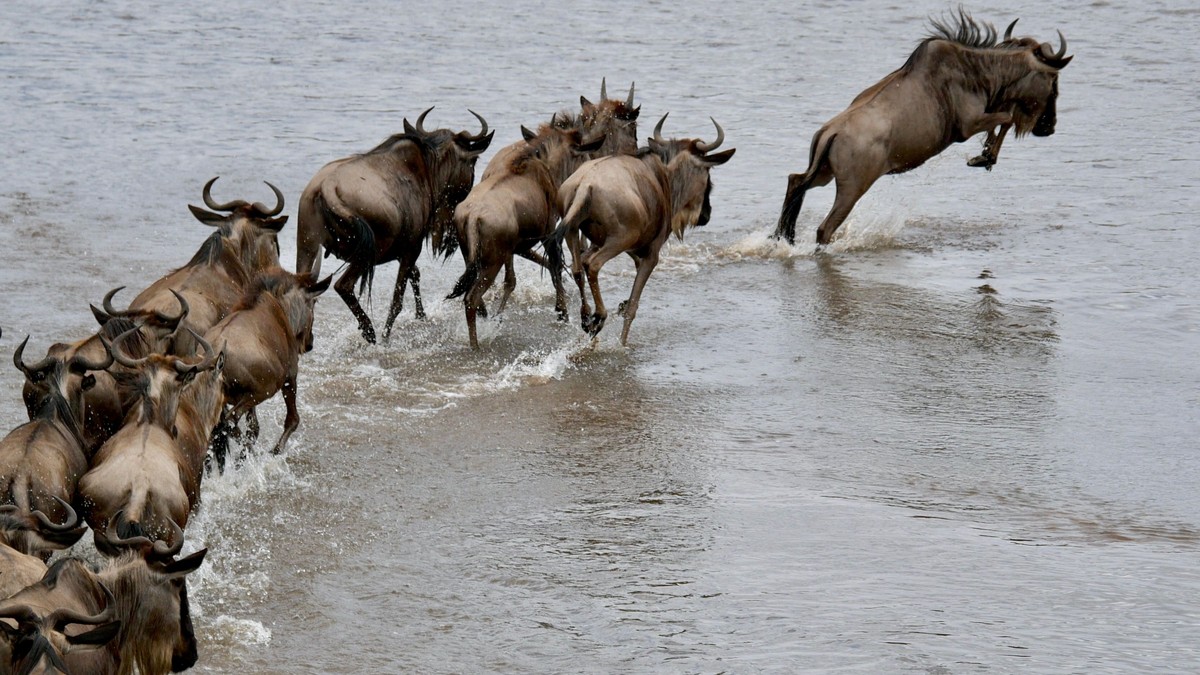
Lion cub survival studies from the Mara ecosystem point to similar patterns near den sites that see heavy vehicle traffic. And at river crossings, a wall of vehicles parked too close to the bank can spook a herd mid-crossing, sending wildebeest back across the river or into a chaotic scatter that increases drowning risk.
The Rules on Paper
There is technically a 5-vehicle rule in the Masai Mara National Reserve. No more than five vehicles are supposed to sit at one sighting for longer than five to ten minutes before rotating out. In practice, enforcement depends entirely on how many Narok County rangers are on duty that day, and on a busy weekend, that number can be one or two for the entire reserve.
A tourism management plan due for renewed enforcement in 2026 has promised stricter ranger patrols and radio monitoring, along with zoning that would rotate vehicle access around the most sensitive den and crossing sites. Guides on the ground remain cautiously hopeful rather than convinced. The reserve is large, roughly 1,510 square kilometers, and the ranger force has never matched that scale.
Reserve vs Conservancy: What You Actually Get
Here is the comparison we walk every returning client through before they choose where to base themselves.
| Area | Vehicle limit at a sighting | Approx. fee (USD/person/day) | Off-road driving | Night drives | Typical camp rate (USD/person/night) |
|---|---|---|---|---|---|
| Masai Mara National Reserve (Narok side) | 5-vehicle rule exists, weakly enforced | ~$100 | Not permitted | Not permitted | $150-450 (e.g. Mara Serena Safari Lodge) |
| Mara Triangle (Mara Conservancy, western reserve) | Same 5-vehicle guideline, better patrolled by Mara Conservancy rangers | ~$100 | Not permitted | Not permitted | $300-650 (e.g. Governors’ Camp) |
| Mara North Conservancy | Strict 5-vehicle cap, actively enforced | ~$100 conservation fee, on top of camp rate | Permitted | Permitted | $700-950 (e.g. Kicheche Mara Camp) |
| Naboisho Conservancy | Low bed density, strict cap | ~$100 conservation fee | Permitted | Permitted | $500-750 (e.g. Encounter Mara) |
| Olare Motorogi Conservancy | Among the lowest vehicle density in the ecosystem | ~$130-150 conservation fee | Permitted | Permitted | $900-1,400 (e.g. Mahali Mzuri) |
Fees and rates shift by season and camp, so treat these as indicative ranges rather than fixed quotes. What does not shift is the pattern: conservancies cost more per night, but you are paying for a legally capped vehicle count, not just a nicer tent.
When to Go If You Want Space
If dates are flexible, October and November, plus January through March, are the quietest stretches across both the reserve and the conservancies. Vehicle counts at a typical predator sighting drop by half or more compared to the July to September peak. You will also want to check Kenya’s month-by-month safari season guide before locking dates, since rainfall patterns shift year to year and affect both game movement and road conditions.
If migration timing is the whole point of the trip, get serious about tracking where the migration is before you book. Herds do not read itineraries. A camp booked for a crossing that has already happened is a wasted week of driving.
What You Give Up in a Conservancy
Honesty matters more to us than a clean sales pitch. Conservancies are quieter, but they are smaller. Mara North covers about 320 square kilometers, Naboisho about 200. The main river crossing points sit inside the national reserve itself, mostly along the Mara Triangle side and near Lookout Hill.
Stay only in a conservancy during peak crossing weeks, and you may need to drive into the reserve for the crossing itself, which means rejoining the crowd for that one event. Most conservancy camps handle this well, timing entry for early morning before the day-trip vehicles arrive from Nairobi and Narok town. But it is a trade-off, not a loophole. And no operator, us included, can promise a crossing will happen on your exact dates. It is worth reading honestly about whether Big Five sightings are ever truly guaranteed before setting expectations too high.
The Valley Safaris Difference
We route clients around Talek and Sekenani gates during peak hours whenever the itinerary allows it, using Oloololo Gate or direct airstrip transfers into Mara Triangle and the northern conservancies instead. Our guides run a private radio network shared only among Valley Safaris vehicles, so we are not pulled into every reserve-wide pileup the moment a leopard is spotted.
For repeat visitors, we usually recommend splitting the trip: two nights in Mara North or Naboisho for the off-road tracking and night drives, then a short reserve visit timed for early morning if a crossing is active nearby. It is not the cheapest way to see the Mara. It is the way that keeps a cheetah sighting feeling like something you earned, not something you fought forty other vehicles for.
Beyond the Mara, this same logic is exactly why we push repeat guests toward Samburu, Laikipia, and the Kaya forests of the Kenyan coast. Different ecosystems, different rhythms, and far fewer vehicles at every sighting.
Plan Your Next Mara Trip With Us
If you are ready to see the Mara without the traffic jam, or ready to try Samburu and Laikipia instead, we can build the route around your dates and your tolerance for crowds. Have a look at our Masai Mara and Conservancy tour options or head to our contact page to start the conversation.