I once watched a guide with fifteen years in the Mara Triangle call a cheetah a leopard, then correct himself thirty seconds later. It was 6:15 a.m., the light was flat, and the cat was 180 meters out through long grass. If it can happen to him, it can happen to you. This guide breaks down the real cheetah vs leopard spot differences, tear marks, tracks, and everything else, for photographers who want to know what they’re looking at before the light disappears, not after they’ve reviewed the shots back at camp.
The Quickest Way to Tell Them Apart
If you only remember one thing, remember this: cheetahs have small, solid black spots and a lean, greyhound-like body built for speed. Leopards have rosette-shaped spots (a ring with a darker center) and a thicker, more muscular build made for climbing and ambush. Add in the cheetah’s black “tear marks” running from the eyes to the mouth, and you’ll get it right most of the time, even at a distance.
But “most of the time” isn’t “always.” Bad light, tall grass, and a cat curled up in a tree all make this harder than any field guide admits. More on that below.
Body Shape and Size
Cheetahs are built like sprinters. They stand about 75 to 90 centimeters at the shoulder, with a small, rounded head, a deep chest, and a narrow waist. Adults weigh between 35 and 65 kilograms, with males usually a bit heavier than females.
Leopards are shorter but noticeably stockier. They stand around 60 to 70 centimeters at the shoulder, yet they carry more muscle through the chest and shoulders, since they need to haul kills up into trees. Adult leopards weigh anywhere from 30 to 90 kilograms depending on region and sex, with big males in areas like Samburu sometimes outweighing the average cheetah by a wide margin.
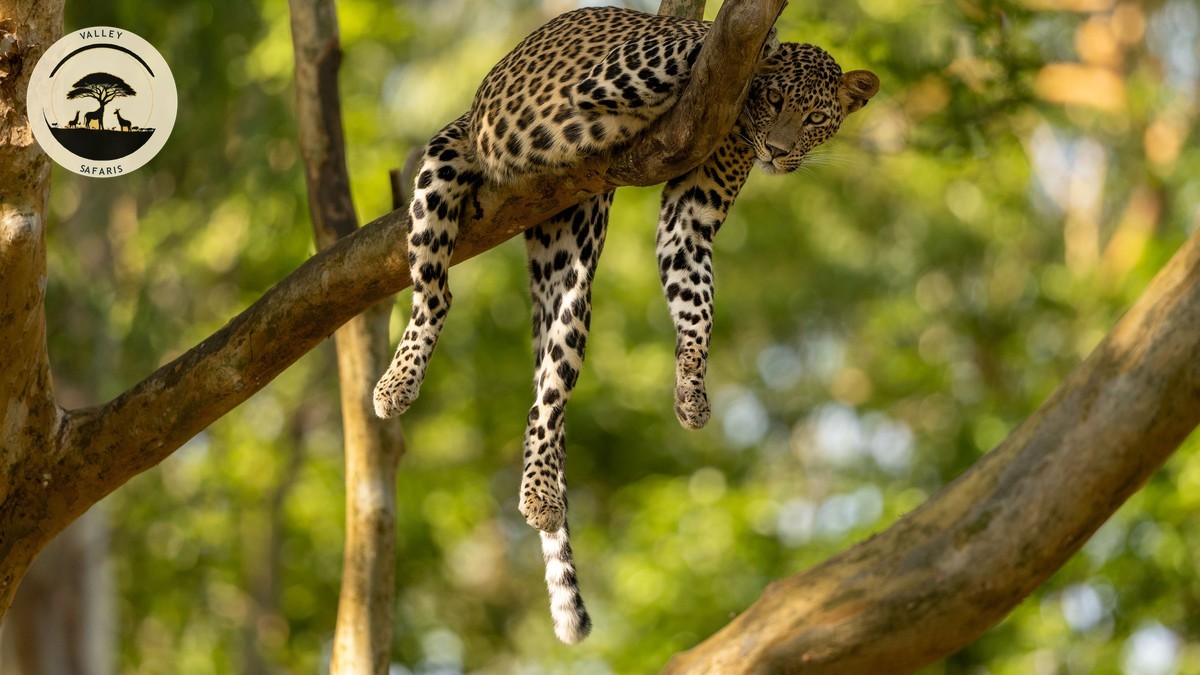
From a vehicle, the giveaway is posture. A cheetah often sits upright on a termite mound, scanning the plains like it’s on lookout duty. A leopard tends to move low and close to cover, or lounge along a branch with its legs hanging down.
Face and Head: Tear Marks vs Clean Cheeks
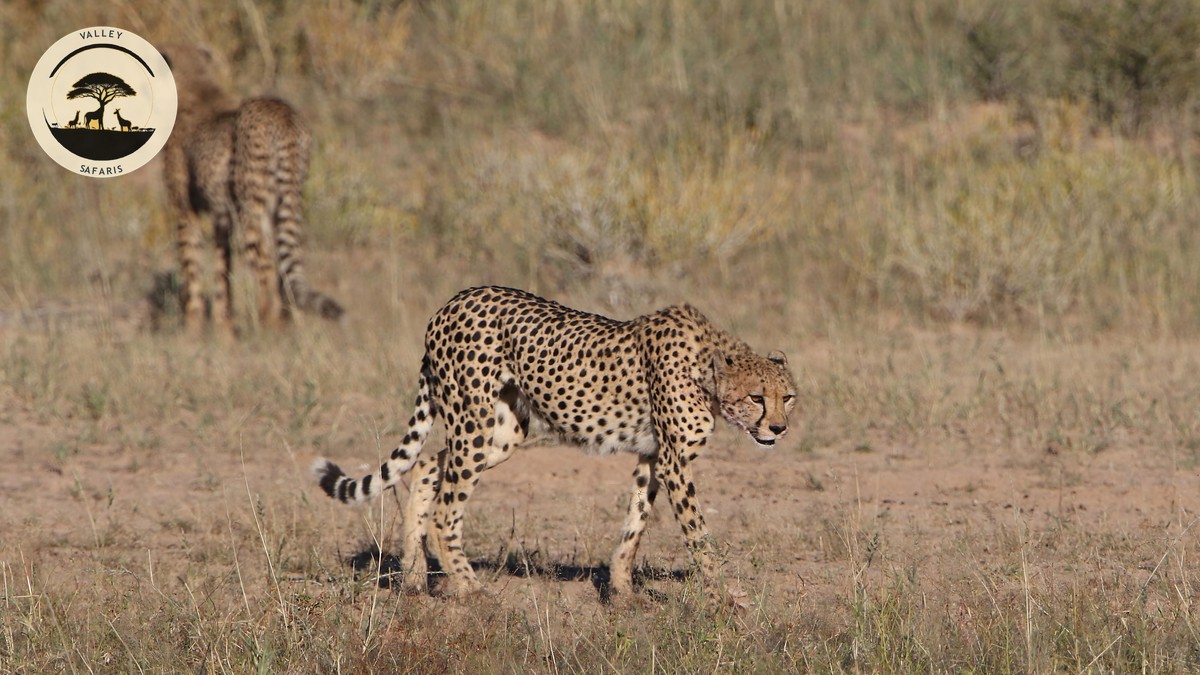
This is the fastest tell if you’re close enough to see it. Cheetahs have black lines running from the inner corner of each eye down to the corners of the mouth, often called tear marks or tear lines. Researchers believe these reduce glare from the sun during high-speed daytime hunts, working a bit like the black stripes athletes wear under their eyes.
Leopards have no tear marks. Their face is rounder and broader, with a heavier jaw and whisker pads built for a stronger, more powerful bite. If you can get a clean look at the face through a good pair of safari binoculars, this single feature settles the argument faster than anything else on this list.
Tail Shape and Markings
Cheetah tails are long, thin, and end in a bushy white tuft with dark rings near the tip. They use the tail like a rudder, throwing it side to side to stay balanced during sharp turns at full speed.
Leopard tails are also long, but thicker and more evenly spotted or rosetted all the way to the tip, without the white tuft. A leopard’s tail often trails below a branch while the cat rests in a tree, sometimes the only part visible until the cat shifts.
Cheetah vs Leopard Spot Differences: Spots vs Rosettes
This is the detail most people get wrong from a distance. Cheetah spots are small, solid, and round, almost like they were stamped on individually with black ink. There’s no pattern within each spot.
Leopard markings are rosettes, a cluster of small dark marks forming a rough circle around a center that’s slightly darker than the surrounding coat but not solid black. On the legs and head, leopard spots can look more solid and cheetah-like, which is where confusion creeps in. Always check the flanks and back, where the rosette shape is clearest.
Feet, Claws, and Tracks
If you ever get a look at tracks in soft mud or sand near a waterhole, this is one of the more reliable ID methods, and one most blogs skip entirely.
Cheetahs have semi-retractable claws, so their tracks often show faint claw marks in front of each toe pad, a bit like a dog’s print. Leopards have fully retractable claws, like all cats in the Panthera genus, so their tracks show no claw marks at all, just clean, rounded pads.
Leopard tracks are also generally rounder and slightly larger relative to body size, since their paws support more muscle mass for climbing and dragging kills.
Hunting Style and Speed
Cheetahs hunt by sight, during daylight, usually early morning or late afternoon when the light is soft and prey is moving. They rely on acceleration, not endurance, reaching speeds of around 100 to 120 kilometers per hour in short bursts of under 30 seconds. After that, they need up to half an hour to recover before eating.
Leopards hunt mostly at dusk, at night, or in the low light just before dawn. They rely on stealth and a short, explosive charge from cover, topping out around 58 kilometers per hour. Once they make a kill, they often drag it up a tree, sometimes a carcass heavier than themselves, to keep it away from hyenas and lions.
This difference matters for photographers. If you want cheetah action, plan for early morning game drives on open plains. If you want leopard shots, dusk drives near riverine trees and rocky kopjes are where the patience pays off.
Habitat and Where Each Cat Actually Lives
Cheetahs need open ground. They favor short-grass plains and savanna where they can spot prey from a distance and use their speed without obstruction. In Kenya, that means places like the Mara Triangle, Naboisho Conservancy, and the open plains of Amboseli.
Leopards are far more adaptable and far more secretive. They favor riverine forest, rocky outcrops, and thick bush, anywhere with cover to stalk from and trees to escape into. Samburu National Reserve, with its doum palm river line and granite kopjes, is one of the better places in Kenya to find them, though you’ll usually need a sharp guide and a bit of luck.
Where to See Both on Safari in Kenya
Here’s the honest version, not the brochure version. Cheetah sightings cluster on open, short-grass terrain, and the Mara Triangle and Naboisho Conservancy are consistently strong for coalitions of two or three males working together. Dawn game drives, before the heat pushes prey into shade, give you the best odds.
Leopards are a different game entirely. Samburu’s riverine trees and kopjes hold resident leopards that guides track over years, but sightings still depend on a leopard choosing to be visible. Dusk drives and night drives, where permitted, improve your odds considerably. If you’re weighing best places to spot leopards on a Kenya safari, Samburu and the Mara’s forested river lines both deserve a spot on your list.
If you’re still deciding where to start, our guide to choosing between Samburu and the Masai Mara for your first safari breaks down which region suits your priorities, cheetah plains versus leopard riverine country included.
| Location | Drive from Nairobi | Approx. entry fee (non-resident) | Cat most likely | Best time |
|---|---|---|---|---|
| Mara Triangle, Masai Mara | 5-6 hrs by road, or 45 min flight to Ol Kiombo | USD 100/day (indicative, Narok County rate) | Cheetah | Dawn, open plains |
| Naboisho Conservancy | 5-6 hrs by road, or 45 min flight to Olare Orok strip | USD 100-130/night conservancy fee (indicative, often bundled into lodge rates) | Cheetah | Early morning |
| Samburu National Reserve | 5-6 hrs by road (approx. 325 km), or 1 hr flight to Samburu airstrip | USD 100/day (indicative, Isiolo County rate) | Leopard | Dusk, riverine trees and kopjes |
Quick Reference: Cheetah vs Leopard
| Feature | Cheetah | Leopard |
|---|---|---|
| Build | Lean, long-legged, sprinter’s frame | Stocky, muscular, built for climbing |
| Weight | 35-65 kg | 30-90 kg |
| Spots | Small, solid, round | Rosettes with darker centers |
| Face | Black tear marks under eyes | No tear marks, broader jaw |
| Tail | Bushy white tip, thin | Thick, spotted to the tip, no white tuft |
| Claws | Semi-retractable, show in tracks | Fully retractable, no claw marks |
| Top speed | 100-120 km/h in short bursts | Up to 58 km/h |
| Hunts | Day, especially dawn and late afternoon | Dusk, night, or first light |
| Habitat | Open plains, short grass | Riverine forest, rocky kopjes, thick bush |
Conservation Status and Numbers
Both cats carry the IUCN’s Vulnerable status, but for different reasons. Cheetahs are estimated at around 7,100 individuals left in the wild globally, a figure conservationists treat as rough since so much of their range crosses unfenced land across multiple countries. Their biggest threats are habitat fragmentation and low genetic diversity.
Leopards are harder to count. No one has a reliable continent-wide census, and estimates range widely, from under 100,000 to several hundred thousand, depending on the survey and the region included. What’s clear is that leopard range has shrunk significantly across Africa, even where individual populations, like Samburu’s, remain relatively stable.
The Valley Safaris Difference
Anyone can hand you a laminated card with cheetah facts on one side and leopard facts on the other. What we do differently is put you in the right vehicle, at the right time of day, with a guide who knows which termite mound a cheetah coalition has been using this week, or which fig tree a particular leopard favors in Samburu.
Our guides carry two-way radios and share sightings across vehicles, which matters more than any fact sheet when a leopard is draped over a branch 40 meters into thick bush. We also build in the patience these cats demand, extra time at a sighting instead of rushing to the next stop, because a cheetah readying to hunt or a leopard descending a tree rewards the people willing to wait.
Frequently Asked Questions
What’s the easiest way to tell a cheetah from a leopard? Check the spots first. Solid black dots mean cheetah. Ring-shaped rosettes mean leopard. Tear marks confirm cheetah if you’re close enough to see the face.
Do cheetahs have spots or rosettes? Solid spots, not rosettes. Rosettes are a leopard (and jaguar) feature.
Why do cheetahs have tear marks but leopards don’t? The leading theory is glare reduction during fast daytime hunts, similar to eye black worn by athletes. Leopards hunt mostly in low light, so the adaptation isn’t needed.
Is a cheetah more dangerous than a leopard? No. Leopards are considerably more dangerous to humans, thanks to greater strength, aggression when cornered, and a habit of hunting in the dark near camps. Cheetahs are shy and generally avoid confrontation.
How is a leopard different from a jaguar? Jaguars are heavier, live in the Americas, and have a bite strong enough to pierce skulls and turtle shells. Their rosettes often contain small internal spots, which leopard rosettes typically lack.
Can a cheetah and a leopard mate? No. They’re different genera (Acinonyx for cheetah, Panthera for leopard) and can’t interbreed.
Plan Your Big Cat Safari
If you’re chasing that split-second shot of a cheetah at full stretch, or the quiet thrill of a leopard descending a tree at dusk, timing and location decide everything. Get in touch through our contact page and we’ll help you plan a Kenya itinerary built around the light, the season, and the cats you most want to see.