I once watched a lioness walk within two meters of our Land Cruiser in the Maasai Mara, yawn, and lie down in the shade our vehicle was casting. Nobody in the car moved. She never looked up again. That moment sums up the whole strange truth of safari lions: they tolerate the vehicle completely, and they would treat any one of us very differently on foot.
If you’re planning a photography trip and wondering why lions ignore safari vehicles, or whether it’s actually safe to lean out for that perfect shot, here’s what fifteen years of driving guests through the Mara and Laikipia has taught our guides.
Why Lions Ignore Safari Vehicles: One Big Shape, Not a Car Full of People
The leading theory among researchers, and the one our guides trust most, is simple. A lion’s brain evaluates threats by silhouette and behavior, not by reasoning about what’s inside a shape. A Land Cruiser with people in it reads as one large, oddly-shaped object. It does not read as several soft, slow, bipedal animals a lion already recognizes as prey.
The moment a person’s outline separates from the vehicle, that changes fast. A lion that has ignored a car for twenty minutes will snap to alert the second someone stands up through the roof hatch or leans a limb out the window. The silhouette breaks. Suddenly there’s a shape the lion’s brain does know how to categorize.
No Smell, No Sound, No Movement a Lion Reads as Prey
Lions hunt using a stacked set of triggers: movement, sound, and scent, in that order of importance at close range. Inside a closed or slow-moving vehicle, guests supply almost none of these. Engines mask human scent reasonably well, especially with windows up and the wind in your favor. Quiet, seated guests make no sudden movement. A vehicle idling at 5 to 10 km/h doesn’t trigger the chase response that a fleeing impala does.
Guides are trained to keep engines running at a low idle near resting cats for exactly this reason. A silent, switched-off vehicle that guests then clamber out of is a different story, which is why our drivers rarely cut the engine within 30 meters of a pride.
Habituation Built Over Decades, Not Days
None of this works without history. Lions in the Maasai Mara and Ol Pejeta Conservancy have grown up around vehicles since cubhood. Their mothers ignored cars, so they ignore cars. That learned tolerance, called habituation, took roughly 60 years to build across the Mara ecosystem, starting with the first tourist vehicles in the 1960s.
It’s also why lions in newly opened conservancies, or ones with very light tourist traffic, tend to be warier and require more distance. Guides adjust accordingly, and it’s part of why choosing a conservancy with strong big-cat sightings matters as much as choosing the right season.
Researchers monitor how these habituated prides move and interact with vehicle traffic using collar data, which is also how Kenya’s lions are tracked and monitored across the wider Mara-Serengeti system.
Energy Is Currency, and a Vehicle Isn’t Worth Spending It On
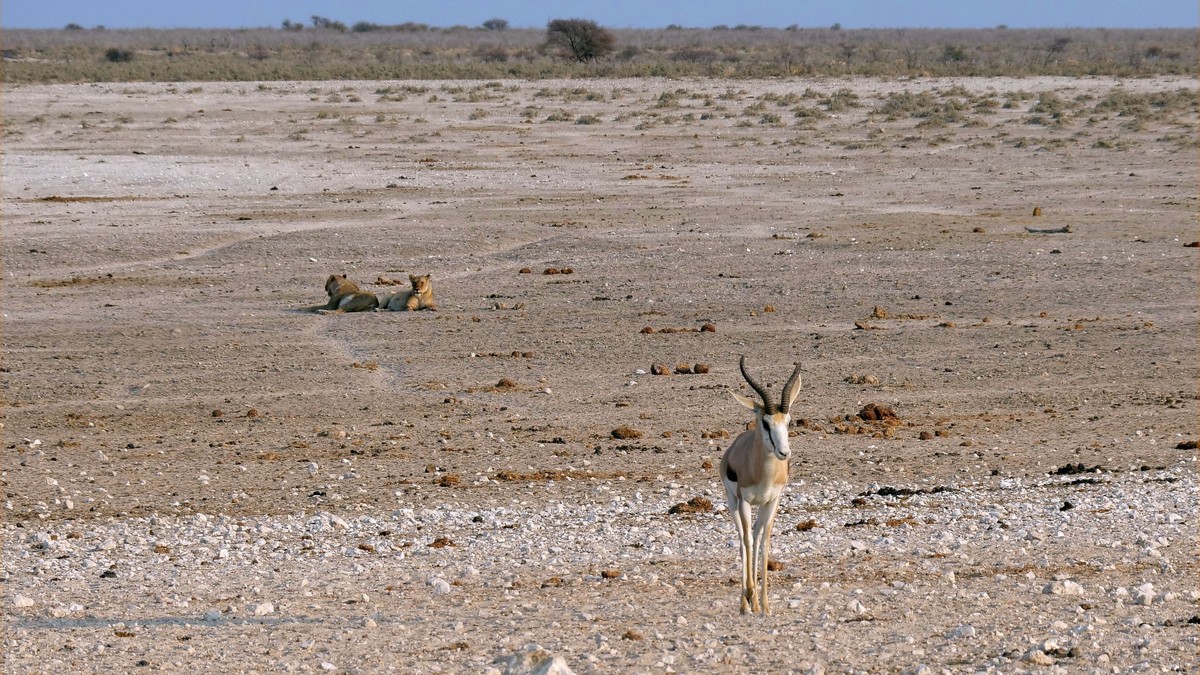
A lion in the Mara makes maybe one successful kill for every four or five attempts, and each failed chase burns real energy in 30-plus degree heat. Predators are economical by instinct. A vehicle offers no payoff. It doesn’t run, doesn’t smell like food, and doesn’t behave like anything worth the calories of investigating. Ignoring it is simply the cheaper option, every time, for an animal that survives on tight energy margins.
The Moment the Illusion Breaks
This is the part every guide repeats until it sounds like a mantra: stay seated, stay inside the silhouette, keep your hands and camera lenses inside the vehicle line. The tolerance lions show is entirely conditional on the vehicle staying a vehicle.
Standing fully upright through a pop-top hatch is usually fine, since your head and shoulders still read as part of the vehicle’s outline from a distance. Leaning far out, dangling a leg, or stepping onto the running board changes your shape enough that a nearby lion may reclassify you. Getting out entirely, for any reason, removes the illusion completely. On foot, you’re no longer an object a lion doesn’t understand. You’re an animal it understands very well.
Open-Sided Cruisers vs Closed Vehicles: The Honest Trade-Off
Every operator gets asked whether an open vehicle is actually safe. Here’s how the two compare on a typical Kenya lion sighting.
| Factor | Open-sided Land Cruiser | Closed-roof 4×4 |
|---|---|---|
| Photography angles | Unobstructed, 270-degree view | Limited by window frames and glass glare |
| Typical distance kept from resting pride | 10 to 20 meters, guide discretion | 10 to 20 meters, same protocol |
| Physical barrier if a lion approached | None below the sill | Doors and windows |
| Dust and weather exposure | High | Low |
| Common in | Maasai Mara, Ol Pejeta, Laikipia conservancies | Some Amboseli and Tsavo lodges, budget group tours |
| Typical vehicle rate (guided, per day) | USD 180 to 320 | USD 150 to 260 |
The physical barrier difference is real but rarely the deciding factor in an actual encounter. A determined lion could, in theory, jump into either vehicle. It essentially never happens, because the behavioral reasons above matter far more than a door panel. Most professional photographers choose open sides anyway, because the images are simply better, and the added risk is marginal when game drive etiquette rules are followed properly.
When Lions Do Attack Vehicles: The Honest Answer
Attacks on occupied safari vehicles are extremely rare in Kenya’s major reserves, and I don’t know of a documented case in the Mara ecosystem of a lion attacking guests who stayed inside a moving or engine-running vehicle. The incidents that do happen almost always involve someone stepping out, a vehicle breaking down with doors open, night walks near a den site, or a mother lion defending cubs at very close range on foot.
Night driving off marked tracks is restricted in most reserves partly because lion behavior shifts after dark, when they’re actively hunting rather than resting. Mating pairs and females with new cubs also get a wider berth from experienced guides, since both situations raise a lion’s baseline defensiveness regardless of the vehicle.
What Our Guides Do in the First Ten Seconds
When we roll up on a pride, the guide reads the scene before anyone reaches for a camera. Engine stays on at idle. We stop at a natural distance, usually 15 to 20 meters, and let the lions decide whether to stay or move off. Guests are asked to stay seated with elbows inside the vehicle line until the guide confirms the cats are settled. Only then do the roof hatches go up for photos. It’s a small routine, repeated hundreds of times a season, and it’s the real reason our sightings stay calm for both the lions and the guests.
The Valley Safaris Difference
We’ve been running game drives in the Mara and Laikipia long enough to know that the best lion photographs come from patience, not proximity. Our guides train specifically on reading pride body language before every approach. Our vehicles are configured for photographers first: open sides, beanbag rests on the roof rails, and enough seat space that nobody has to shoot over a neighbor’s shoulder. We keep groups small, usually four to six guests per Cruiser, so everyone gets a window.
We’re also upfront about trade-offs. If a client wants a closed vehicle for a family with young kids, we’ll say so plainly. We’ll tell them the open Cruiser gets better light and better angles, then let them choose with full information rather than a sales pitch.
Ready to See This for Yourself?
There’s nothing quite like watching a lioness settle into your vehicle’s shadow on a hot Mara afternoon, camera ready, engine humming low. If that’s the trip you’re picturing, have a look at our Maasai Mara photography safaris. Or get in touch through our contact page, and we’ll help you plan it around the right season, the right conservancy, and the right vehicle for the shots you’re after.