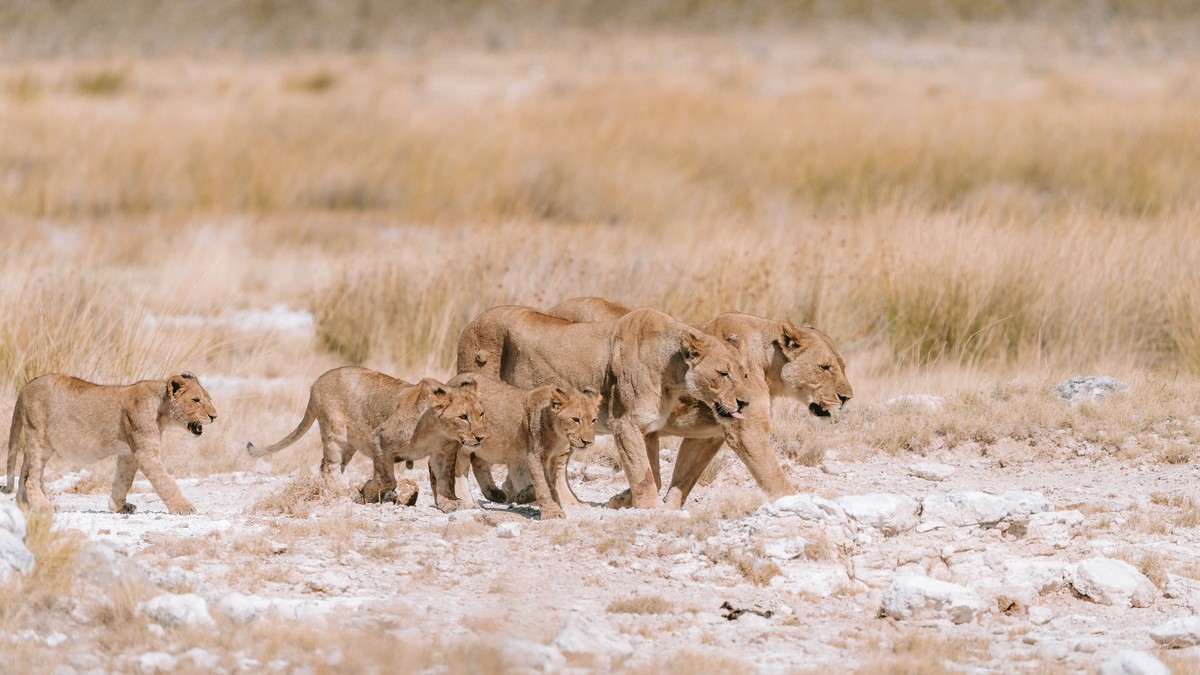
On your first game drive in Kenya, you might spot a lioness resting under an acacia tree with a thick black band around her neck. It looks a little odd against all that wild scenery. Why Kenya lions wear GPS collars is the question almost every first-time guest asks, especially since not every lion in the park has one.
The short answer is data. That collar sends a signal that tells researchers and rangers exactly where the lion goes, day and night. It sounds simple, but it is one of the most useful tools Kenya has for keeping lions alive.
Here is what the collar actually does, why conservancies use them, and where you can see this work happening on your own trip.
What a GPS Lion Collar Actually Is
A GPS lion collar is a leather or nylon band fitted with a small transmitter, a battery pack, and often a VHF radio beacon as backup. It sits loosely around the lion’s neck, similar to a thick dog collar.
The unit records the lion’s location every few hours and sends that data to researchers by satellite. Most collars weigh between 500 grams and 1.2 kilograms, depending on the model. An adult male lion weighs 150 to 190 kilograms, so the collar is a tiny fraction of his body weight, usually well under 1 percent.
Battery life varies by brand and settings, but most collars run for 18 months to 3 years before they need replacing or the battery runs low. Some are built with a drop-off mechanism, so the collar releases on its own after a set period.
Why Kenya Lions Wear GPS Collars in the First Place
Kenya’s lion population has fallen sharply over the past few decades. Estimates from groups like the Kenya Wildlife Service and Lion Landscapes put the national population somewhere around 2,000 lions, down from tens of thousands a century ago. Habitat loss, prey decline, and conflict with livestock keepers are the main drivers.
That last point is where collars matter most. Lions often roam outside park boundaries, especially at night, and can end up near cattle bomas or farms. When a lion kills livestock, herders sometimes retaliate, and that has historically been one of the biggest threats to lion survival outside fenced reserves.
A collared lion lets rangers see, almost in real time, when a pride is drifting toward a village. Teams from organizations like Ewaso Lions in Samburu or the Laikipia-based Lion Landscapes can alert herders, move livestock, or send a rapid response team before conflict happens. It turns a reactive problem into a preventable one.
Virtual Fencing and Geofence Alerts
Some of the newer collars support what researchers call a virtual fence. Instead of a physical barrier, the system draws an invisible boundary around a conservancy or a cluster of settlements.
If a collared lion crosses that line, the collar sends an automatic alert to a ranger’s phone. This is not a shock collar and does not hurt the lion in any way. It simply flags location, and a human decides what to do next, usually herding the lion back with a vehicle or warning nearby homesteads.
Ol Pejeta Conservancy in Laikipia has used this kind of alert system alongside its predator monitoring team, and it has become a model that smaller community conservancies now try to copy.
How the Collaring Process Works
Fitting a collar is not something a guide does on a whim. It is a planned operation involving a wildlife vet, usually one certified through the Kenya Wildlife Service or a partner conservation group.
The team tracks the target lion, then a vet darts it with a fast-acting sedative from a vehicle. Once the lion is fully sedated, which usually takes 5 to 10 minutes, the team checks its health, takes measurements and blood samples, and fits the collar. The whole procedure, from dart to the lion waking up, typically takes under an hour.
Vets monitor the lion until it is back on its feet and rejoins its pride. It is a routine procedure for experienced teams, and complications are rare, though it always carries some risk, which is why only trained professionals handle it.
What Collar Data Is Actually Used For
Beyond conflict prevention, the location data builds a picture researchers could not get any other way. It shows how far prides roam, which corridors lions use to move between conservancies, and how prey populations shift over time.
This matters for tourism too. Guides use range data, sometimes shared informally between camps and research teams, to understand which valleys or riverlines a pride favors in a given season. It is one reason some guides seem to know exactly where to find a pride on a given morning.
Where Travelers Can See This Work in Kenya
You do not need a research permit to see collared lions. Several well-known conservancies actively collar and monitor lions, and guests visit them every week.
- Ol Pejeta Conservancy, Laikipia: about 3 hours (200 km) north of Nairobi by road, or a 45-minute flight. Works with Lion Landscapes on collaring and conflict prevention.
- Naboisho, Olare Motorogi, and other Mara conservancies: bordering the Maasai Mara National Reserve, roughly 5 to 6 hours from Nairobi by road or a 45-minute flight to Ol Kiona or Musiara airstrip. Several prides here are monitored as part of long-running Mara lion research projects.
- Samburu National Reserve: home to Ewaso Lions, a Kenyan-led organization founded by Shivani Bhalla that has tracked and protected lions in the Ewaso ecosystem since 2007.
On a game drive in these areas, your guide may use a handheld VHF receiver to pick up a nearby collar signal, then follow the beeps toward the pride. It is a neat thing to watch, and it often means a more reliable sighting than driving around hoping to get lucky.
The Trade-Off Worth Knowing About
Here is the honest part. A collar in your photo is not exactly what people picture when they imagine a “wild” lion. Some guests feel it takes a bit of the magic out of the shot.
Guides can usually angle the vehicle so the collar sits toward the far side of the lion’s neck, but it will not disappear from every photo. Worth knowing before you go, so it does not catch you off guard.
Quick Comparison: Where to See Collared Lion Research in Kenya
| Location | Distance from Nairobi | Typical Access | Lead Organization | Park/Conservancy Fee (indicative, per person per night) |
|---|---|---|---|---|
| Ol Pejeta Conservancy, Laikipia | 200 km / about 3 hrs drive, or 45-min flight | Road or air (Nanyuki airstrip) | Lion Landscapes, Ol Pejeta | USD 90-100 |
| Maasai Mara conservancies (Naboisho, Olare Motorogi) | 270 km / 5-6 hrs drive, or 45-min flight | Road or air (Ol Kiona, Musiara) | Various conservancy research teams | USD 100-150 |
| Samburu National Reserve | 325 km / about 6 hrs drive, or 1-hr flight | Road or air (Samburu airstrip) | Ewaso Lions | USD 70-85 |
Fees above are indicative ranges based on typical 2025-2026 conservancy and reserve rates, and they shift by season and camp. Always confirm current rates before booking.
Your Park Fees Are Part of This Story
When you pay a conservancy fee at Naboisho or a bed night levy at Ol Pejeta, a portion typically supports exactly this kind of work, ranger patrols, collar maintenance, and rapid response teams. It is not a separate donation. It is built into what you already pay to visit.
That is worth remembering the next time a park fee feels steep. You are not just paying for access. You are funding the reason there are still lions to see at all.
The Valley Safaris Difference
We have been planning Kenya trips long enough to know which conservancies actually let you see this research in action, and which ones just talk about it in a brochure. When we build your itinerary, we pick camps near active lion monitoring areas, like Laikipia or the Mara conservancies, so your guide can genuinely track a signal and find a pride, not just drive in circles hoping.
We also brief you honestly before you go. If a collar might show up in your photos, we would rather you hear it from us first than feel surprised in the field. That is the same approach our guests mention again and again, the small things done right, like a guide who knows exactly where the pride is that morning, or a picnic set up right as the sun starts to drop.
Plan Your Kenya Safari With Us
If watching this kind of lion research up close sounds like the trip you want, we can build it around Laikipia, the Mara conservancies, or Samburu, whichever fits your time and budget. Visit our Kenya safari tours page to see current itineraries, or head to our contact page to start planning with our team.