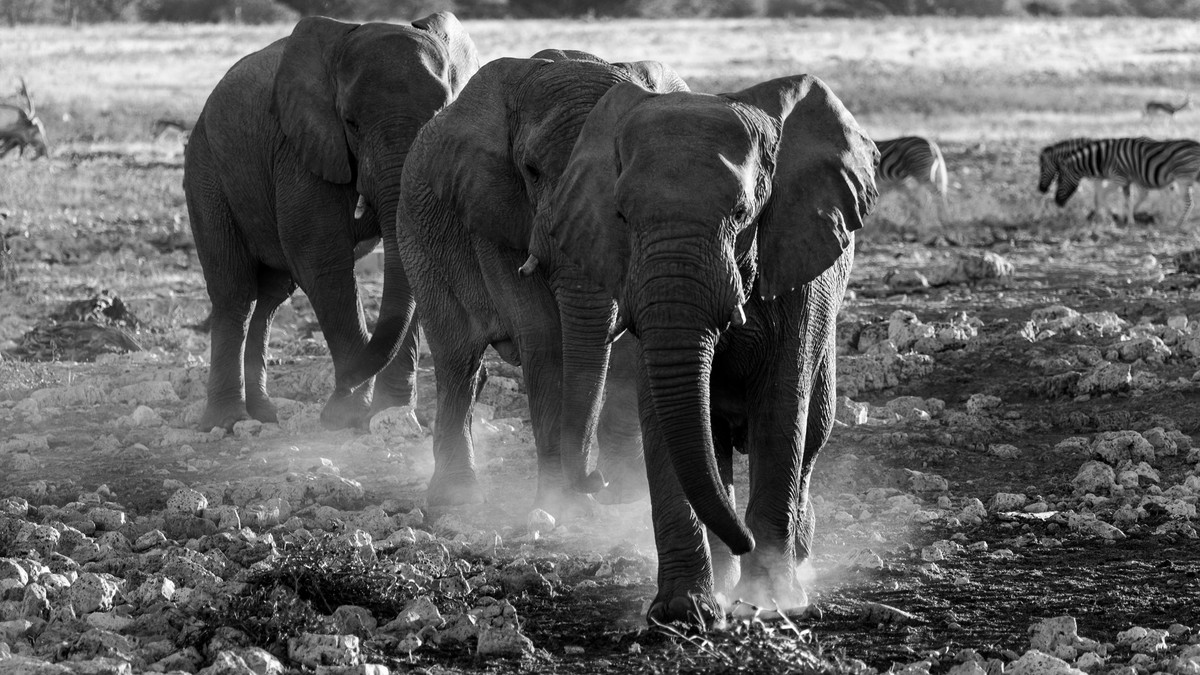
The first time it happens, your stomach drops before your brain catches up. A bull elephant swings toward your vehicle, ears snap open like sails, and dust flies up around his feet. Every photographer freezes at that moment, camera or no camera. Most of the time, he stops well short of the car. But not always. Elephant mock charge safari safety starts with knowing that difference, and it is the single most useful thing you can learn before a Kenya safari.
This guide breaks down what mock charges are, how to read the warning signs in real time, and what changes when you swap a guided Land Cruiser for a self-drive rental. It comes from what our guides see daily in Amboseli, Samburu, and Laikipia, not a general Africa checklist.
What Is a Mock Charge and Why Elephants Do It
A mock charge is a warning, not an attack. The elephant runs at you, sometimes to within 10 or 15 meters, then pulls up short, turns sideways, or peels off at the last second. It looks terrifying. It is meant to.
Elephants mock charge to test a threat without paying the cost of a real fight. Running full speed burns energy an elephant would rather save. So they bluff first, a loud display that says “back off” in a language every predator understands instantly.
Matriarchs do it to protect a herd with calves. Young bulls do it to practice, the same way teenage boys posture before they know how to fight. Bulls in musth do it because their patience is short. In all three cases, the charge is a message. The animal wants you gone, not hurt, and would rather not close the distance at all.
Elephant Mock Charge Safari Safety: Reading the Warning Signs
The body language differences are subtle at 20 meters and obvious once you know what to look for. Here’s what our guides watch for on every drive.
| Signal | Mock Charge | Real Charge |
|---|---|---|
| Ears | Fanned wide open, often flapping | Pinned flat back against the head |
| Trunk | Curled up or swinging loosely | Tucked under, out of the way |
| Head | Held high, sometimes shaking side to side | Held low, lined up like a battering ram |
| Sound | Loud trumpeting, ear flaps slapping | Often silent, or a single sharp scream |
| Dust | Thrown up dramatically with the feet | Little dust, all motion goes forward |
| Approach | Stops, veers off, or slows well before contact | Continues at full speed, does not slow |
The trunk is the detail most first-time visitors miss. An elephant that plans to hit you tucks its trunk away to protect it. If the trunk is loose or curled, that animal is not committed yet. If it disappears, take the warning seriously.
A Guide’s Account From Amboseli
One of our senior guides, Joseph, tells this story on almost every Amboseli departure. He was leading a photography group near Observation Hill when a young bull, agitated by another vehicle that had crept too close, spun toward Joseph’s Land Cruiser.
“Ears out, dust everywhere, running maybe twelve meters before he stopped,” Joseph says. “My clients thought it was over for us. I kept the engine idling, did not reverse fast, and told everyone to stay quiet and low. He shook his head once more, then walked back to the herd.”
Joseph’s read was correct because he watched the trunk, not the noise. The bull’s trunk stayed loose and swinging the whole time, a tell sharpened by 14 years of guiding around Amboseli. Newer guides sometimes reverse too fast at the first sign of dust, which can trigger a real chase in an animal that was only bluffing.
What to Do If You’re in a Vehicle
Stay in the vehicle. This is the single biggest factor in almost every safe outcome. Elephants read a vehicle as one large, unfamiliar object, not as a collection of prey animals. Getting out changes that instantly.
If a charge starts, your guide will usually hold position or reverse slowly and steadily, never in a sudden burst that reads as prey fleeing. Loud revving or sharp turns can provoke a bluffing elephant into finishing the charge. A calm, low idle often does more to defuse the moment than any evasive move.
Keep noise down. Put the camera down if you have to. Sudden movement and shouting from inside the vehicle add to the animal’s read of the situation, and elephants are sensitive to both sound and motion, even through glass and metal.
What to Do If You’re on Foot
Walking safaris in Laikipia and around parts of the Mara ecosystem put you much closer to this decision than a game drive ever will. On foot, the guide’s armed escort is not decoration. It is standard practice for a reason.
If a walking guide tells you to stand still, group together, or move slowly backward, do exactly that. Do not run. Running triggers a chase instinct, and no person can outrun one over real distance. Elephants can reach speeds close to 40 km/h, about 25 mph, in short bursts, faster than almost anyone can sprint, and they only hold that pace for seconds.
Trees, termite mounds, and vehicles are useful cover if close. Open ground is not. This is why walking safaris in Kenya always run with a licensed, armed guide, never solo and never off-script.
Musth Bulls and Mothers With Calves
Two situations raise the odds of a real charge above the baseline mock-charge risk, and both are worth planning around.
Musth is a periodic hormonal state in bull elephants, marked by a discharge from the temporal glands near the eyes and a strong odor. A musth bull is unpredictable and quicker to escalate from bluff to contact. It can occur at any time of year, though guides in Samburu and Laikipia report more sightings during and just after the wetter months, roughly November through May.
Mothers with young calves are the other flashpoint. A herd matriarch protecting a calf under a year old will charge with far less warning than a lone bull testing you for fun. Our guides give nursing herds a wider berth automatically, often 50 meters or more, well before any charge behavior starts.
Guided Vehicle vs Self-Drive: The Risk Most Guides Won’t Tell You
Most safari advice treats every vehicle the same. It isn’t. A guided Land Cruiser comes with a driver who has read hundreds of these situations and knows the specific herds and bulls in that stretch of Amboseli or Samburu. A self-drive rental, common for visitors doing Nairobi to Samburu on their own timeline, does not.
Self-drive travelers face two risks. First, less experience reading the ear position and trunk tuck that separate bluff from real. Second, slower reactions under pressure, since panic reversing or gunning the engine are the mistakes rangers report most.
If you’re set on self-driving, keep at least 30 meters from any elephant at all times, more near a mother with a calf, and never linger to get the closer shot. A Land Cruiser vs minivan for wildlife encounters comparison is worth reading before you decide which vehicle to book, since ground clearance and reverse visibility both matter here.
Prevention: Distance, Timing, and Where You Go
The best charge is the one that never starts. Staying back before an elephant feels pressured avoids the entire decision tree above.
| Park or Conservancy | Distance from Nairobi | Typical Drive Time | Park Fee (indicative, non-resident adult/day) | Elephant Density Note |
|---|---|---|---|---|
| Amboseli National Park | ~240 km | 4.5 to 5 hours | USD 60 to 80 | High density, large family herds near swamps |
| Samburu National Reserve | ~325 km | 5 to 6 hours | USD 70 to 90 | Frequent bull sightings, notable musth activity |
| Laikipia Conservancies (Ol Pejeta, Loisaba) | ~200 to 220 km | 3.5 to 4.5 hours | USD 90 to 110 | Lower density, calmer herds, strong walking safari option |
Fees shift year to year, so treat these as planning ranges and confirm current rates before booking.
Elephants are not the only animal that surprises first-time visitors, and reading up on how common wildlife encounters really are on safari helps set realistic expectations before you land. Tsavo’s red elephants behave a little differently thanks to the red dust they bathe in, though the same mock-charge signals apply across every population in Kenya.
The Guide’s Role and Why You Never Self-Direct a Response
Every scenario above assumes one thing: you defer to the person who does this for a living. Guides read wind direction, herd mood, and animal history that a first-time visitor cannot see in the moment.
Do not tell your guide to get closer for a shot once ears go up. Do not open a window or lean out for a better angle. A guide’s job during a charge is split-second, built on years of watching that exact herd, and it works best without input from the back seat.
The Valley Safaris Difference
Every driver-guide on our team trains specifically on elephant behavior before leading a trip through Amboseli, Samburu, or Laikipia, not just general game-viewing skills. We brief every guest on arrival, before the first game drive, on what a mock charge looks like and what we’ll do if one happens. It takes five minutes and it changes how people react.
We also route itineraries around known musth bulls and nursing herds using ranger updates from each park, which is one reason our guests get calmer sightings instead of rushed, anxious ones. A photographer who reads the signals gets a better photograph, not just a safer one.
Frequently Asked Questions
How can you tell if an elephant charge is a mock charge or a real charge? Watch the trunk and ears. A curled or loose trunk with fanned ears usually means a bluff. A tucked trunk with pinned ears means the elephant is committed.
Should you turn off the engine if an elephant charges the car? No. Keep it idling. A running engine gives your guide the option to move calmly if needed, and a dead engine removes that option entirely.
Is it safe to get out of the vehicle when elephants are nearby? No, unless your guide specifically directs it, such as on an approved walking safari with an armed escort. Vehicles read as one large object to elephants, and stepping out changes that instantly.
Can an elephant outrun a safari vehicle or a person? A person, easily. Elephants can hit close to 40 km/h, about 25 mph, in short bursts, faster than any person can sprint. A vehicle, no, but a guide will rarely need to outrun a mock charge since most stop well before contact.
Plan Your Safari With Us
Elephant encounters are one of the best reasons to visit Kenya, and they’re far more enjoyable when you understand what you’re seeing. If you’d like a trip built around calm, well-timed wildlife viewing in Amboseli, Samburu, or Laikipia, visit our contact page and let’s start planning it together.