If you’ve spent any time reading backpacker guides on Kenya, you’ve probably seen the same number over and over: $30 to $70 a day. That range is true, but it hides the one thing that actually trips people up. That’s the daily backpacking budget Kenya travel guides don’t spell out clearly.
You can’t just show up at the Maasai Mara gate on a matatu with a backpack and walk in. Most conservancies around the Mara block self-drive and walk-in entry completely, and even the main reserve gates expect you to arrive in a vehicle, not on foot. So when a guide tells you a “budget safari” costs $50 a day, ask yourself: how are you actually getting through the gate? We’ll answer that here, with real 2026 numbers, named camps, and honest logistics.
Realistic Daily Backpacking Budget Kenya Travel Styles
Here’s how the numbers break down across three common travel styles. These are per person, per day, and assume you’re traveling in a small group rather than solo, since solo travelers pay more for transport and rooms.
| Travel style | Accommodation | Food | Local transport | Daily total (excl. safari) |
|---|---|---|---|---|
| Shoestring | KES 800-1,500 (dorm bed) | KES 600-1,000 (local food) | KES 200-500 (matatu/boda) | USD 12-22 |
| Budget backpacker | KES 1,500-3,000 (private budget room or campsite) | KES 1,000-2,000 (mix of local and tourist spots) | KES 500-1,500 | USD 22-45 |
| Mid-range | KES 4,000-8,000 (guesthouse or budget lodge) | KES 2,000-3,500 | KES 1,500-3,000 | USD 55-90 |
Add a safari day to any of these and the number jumps hard. That’s the part most guides gloss over, and we’ll get into it below.
Accommodation: Hostels, Camping, and Budget Guesthouses
Nairobi has a decent hostel scene. Wildebeest Eco Camp in Karen runs dorm beds from around KES 1,800-2,500 ($14-19), with camping spots cheaper still if you have your own tent. Nairobi Backpackers in Milimani is similar, and both host a steady flow of overlanders and long-term travelers, which makes them good places to find a group heading the same direction as you.
Along the coast, Diani Beach has budget hostels like Stilts Backpackers, with dorms from roughly KES 1,500-2,200. Inland towns like Naivasha and Nakuru have simple guesthouses for KES 1,500-3,000 a night for a private room, which is often cheaper than a hostel dorm once you split it two ways.
Camping is the real budget lever. Public campsites at Lake Naivasha, Hell’s Gate National Park, and some Mara-adjacent community campsites run KES 500-1,500 a night. Bring your own tent, or rent one locally for a small fee. This is also where group joining safaris save you money, since the vehicle, driver, and campsite fees get split across everyone in the truck rather than paid solo.
Food and Drink: What You’ll Actually Spend
Local food keeps costs low. A plate of ugali, sukuma wiki, and beans at a local hoteli (small eatery) costs KES 150-300. Nyama choma (grilled meat) by weight at a local joint runs KES 400-600 for a decent portion, often shared.
Chapati and tea for breakfast costs under KES 200. A bottle of Tusker beer is around KES 250-350 depending on the town. If you eat mostly local food and save restaurants for occasional treats, KES 1,000-1,500 a day covers three meals comfortably.
Bottled water adds up fast in a hot climate, so a refillable bottle with purification tablets or a filter saves real money over two or three weeks.
Getting Around: Matatus, Boda Bodas, and Buses
Matatus (shared minibuses) are the backbone of budget travel in Kenya. A ride across Nairobi costs KES 50-100. Intercity routes are where the real savings show up: Nairobi to Naivasha by matatu is around KES 300-400 and takes about 1.5 to 2 hours. Nairobi to Nakuru runs KES 400-600 for a roughly 2.5-hour ride.
For shorter hops around town, boda bodas remain the cheapest way to get around town, usually KES 100-300 depending on distance. Just agree on the price before you get on, and skip them after dark if you’re new to a town.
Intercity buses like Modern Coast and Easy Coach connect Nairobi to Mombasa (about 8-9 hours, KES 1,200-2,500) and other major towns, and tend to be more comfortable than matatus for long stretches. Most drivers and vendors now accept paying with M-Pesa as a tourist, which is faster and safer than carrying loose cash for every fare.
The Safari Fee Problem: Why “Cheap Safari” Is Often Unbookable
Here’s the part the generic guides skip. Kenya’s big-name parks charge non-resident entry fees that run well past a shoestring daily budget on their own, roughly $60-80 a day for Maasai Mara National Reserve, and $50-60 a day for parks like Amboseli or Lake Nakuru (indicative 2026 range, always confirm current rates before you travel).
But the fee is only half the problem. The Mara’s private conservancies, like Naboisho or Mara North, generally require you to be staying at a partner camp to enter at all. No self-drive, no walk-in, no exceptions. The main reserve gates expect a registered vehicle too. A backpacker without a car has three real options: join a group safari from Nairobi, book a budget camping safari through a local operator, or skip the Mara and pick which parks actually allow self-drive, like Nairobi National Park, Amboseli, or Lake Nakuru, and get there by shared shuttle or matatu.
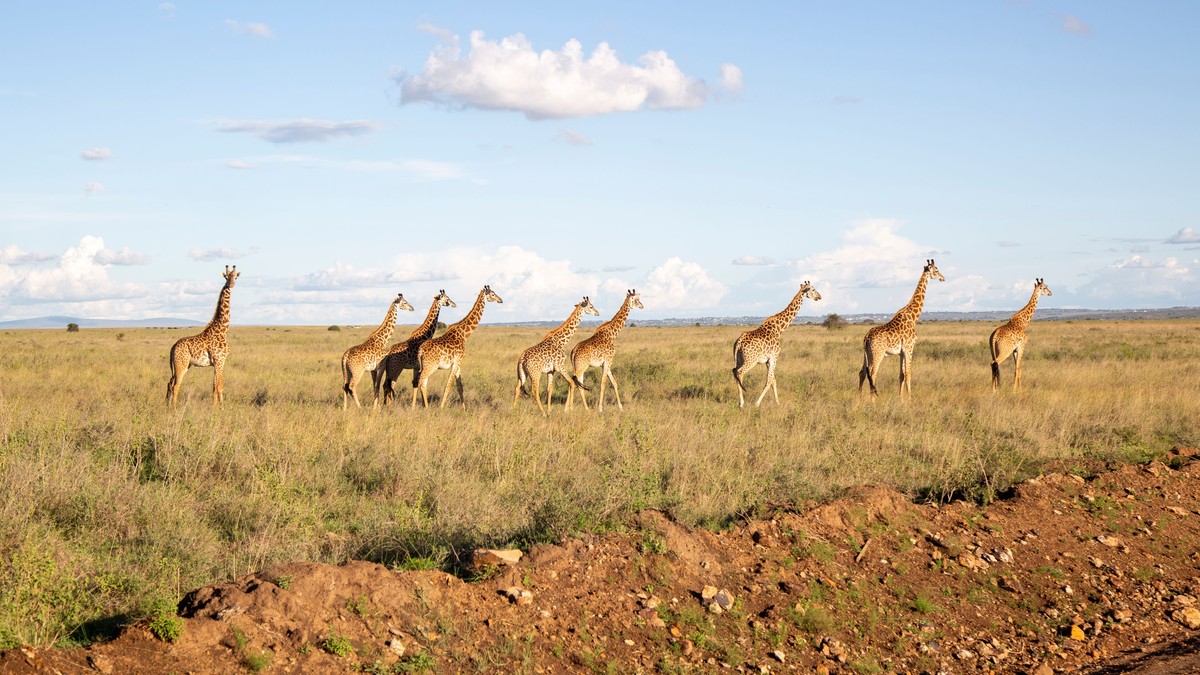
Nairobi National Park is the standout for backpackers on a tight schedule. It’s inside the city, entry runs around $43-52, and shared taxis from town get you to the gate for a few hundred shillings. You can see lions, giraffes, and rhinos with the Nairobi skyline in the background, all in a half-day trip.
Sample 7-Day Backpacker Budget
| Day | Activity | Estimated cost (USD) |
|---|---|---|
| 1 | Nairobi, hostel dorm, local food | 20 |
| 2 | Nairobi National Park half-day, shared taxi | 55 |
| 3 | Matatu to Naivasha, campsite, bike ride around the lake | 30 |
| 4 | Hell’s Gate National Park entry and camping | 45 |
| 5 | Matatu to Nakuru, guesthouse | 25 |
| 6-7 | 2-day group camping safari to Maasai Mara (shared vehicle, driver, park fees, meals, camping) | 260-320 (full 2 days) |
Total for the week: roughly $435-495, or about $62-71 a day averaged out, mostly because of the Mara add-on. Skip the Mara and stick to self-drive-friendly parks, and you’re closer to $30-35 a day.
Money-Saving Tips That Actually Work
Travel in a small group whenever possible. Splitting a matatu fare, a campsite, or a safari vehicle cuts your per-person cost fast. Eat where locals eat, since hoteli food is not just cheaper, it’s usually better. Book group joining safaris instead of private ones for the Mara or Amboseli, since a shared Land Cruiser with five other backpackers costs a fraction of a private vehicle. Travel in the shoulder seasons of April-May or November, when camp rates drop and parks are quieter, though rain can affect some roads.
Visas, Flights, and Other Small Costs
Kenya’s eTA (electronic travel authorization) costs $34 and is required before arrival. A local SIM card from Safaricom costs around KES 100-200 for the SIM itself, plus whatever data bundle you choose, usually KES 1,000-2,000 for a few weeks of decent data. Travel insurance varies by provider, but budget roughly $1-2 a day for a basic policy. None of these are daily costs, but they add up before you land, so plan for them separately from your day-to-day budget.
The Valley Safaris Difference
We’ve watched too many backpackers arrive in Nairobi with a guide that promised a “cheap Mara safari,” only to find out the conservancy they wanted requires a partner camp booking, or that the quoted price didn’t include park fees. We build our group joining safaris specifically for independent travelers without a vehicle, with transparent pricing that shows park fees, camping costs, and driver fees as separate line items, not buried in one number. We also know which parks genuinely work for a DIY day trip and which ones need a shared vehicle, so you’re not guessing at the gate.
Plan Your Kenya Trip With Us
If you’re working out your own daily budget and want real numbers for the specific parks and dates you’re considering, we’re happy to help you plan it. Have a look at our group safari tours or reach out through our contact page to start putting a realistic itinerary together.