If you ask ten camp managers along the Ewaso Nyiro River for the best month for wildlife photography in Samburu, you will get ten confident answers and at least three different opinions. That is because Samburu rewards photographers differently depending on what you are chasing: dust-lit elephant herds, clean green backdrops, or dense predator action at the water’s edge.
This guide gives you a month-by-month verdict, not just a season label. It also covers what most articles skip: which camps actually suit a photographer’s vehicle needs, what the shoulder season really costs, and where the light is best at 6:15am versus 5:45pm.
Best Month for Wildlife Photography in Samburu: At a Glance
Samburu sits in Kenya’s northern semi-arid belt, about 325 km north of Nairobi, a 5 to 6 hour drive on the A2 highway through Nanyuki and Isiolo, or a 55-minute flight from Wilson Airport to Samburu or Kalama airstrip.
| Period | Rainfall | Wildlife density | Light quality | Photography verdict |
|---|---|---|---|---|
| June to October (peak dry) | Low, under 20mm/month | High, animals crowd the river | Hazy, dusty by midday | Best for action, tougher midday light |
| December to early February (secret season) | Low to moderate | Moderate to high | Clean, crisp, low haze | Best all-round light-to-density ratio |
| March | Rising | Moderate | Building storm skies | Good for dramatic cloud shots |
| April to May (long rains) | High, 80 to 150mm/month | Lower, animals disperse | Soft, green, saturated color | Best for landscape and “red elephant” shots |
| November | Short rains, patchy | Moderate | Variable, good migratory birds | Good value, underrated month |
Rates shift with these seasons too. Expect roughly USD 350 to 600 per person per night in high season (July, August, and the Christmas week) at mid-range to upscale camps, dropping to USD 250 to 400 in the April-May green season and the quieter parts of November. The reserve’s non-resident conservation fee runs around USD 100 per adult per 24 hours, payable at Archer’s Post or Ngare Mara gate, with lower rates for Kenya residents and citizens.
Why Samburu Photographs Differently Than the Mara
Samburu is drier, browner, and more intimate than the Maasai Mara. The reserve covers only about 165 square km, so sightings feel close rather than distant across open grassland. The Ewaso Nyiro River is the anchor. Almost every good photograph here happens within 500 meters of its banks, where doum palms and yellow-barked acacia frame the shot.
This means your best month depends less on migration timing, since Samburu has no wildebeest migration, and more on river flow, dust levels, and animal concentration around permanent water.
The Dry Season Rush: June to October
This is when Samburu gets crowded, both with animals and with vehicles. Elephant herds, sometimes 40 or 50 strong, walk to the river every morning. Grevy’s zebra, gerenuk, and reticulated giraffe, three of the Samburu Special Five, gather in visible numbers because grazing elsewhere has dried up.
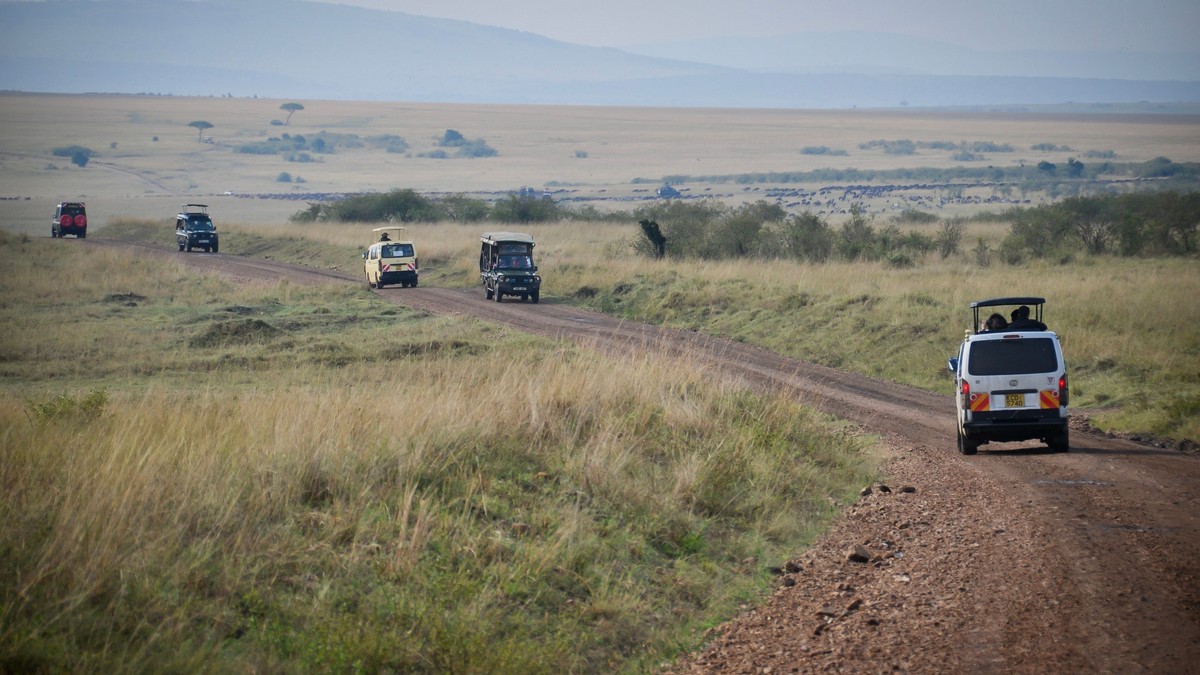
The trade-off is haze. By July and August, dust from vehicle tracks and dry riverbeds hangs in the air by mid-morning, softening contrast and dulling color saturation in photos taken after about 9:30am. Camp rates also peak, and popular viewpoints like the river crossing near Samburu Lodge can have four or five vehicles at once during August.
If you want density over pristine light, this is still the best month for wildlife photography in Samburu in terms of sheer numbers of animals in frame.
The Secret Season: December to Early February
Ask a Samburu-based photographer off the record and many will point here instead. Short rains in November settle the dust. Skies run clear through December and January, days warm to around 30°C, and nights drop to a crisp 14°C, perfect for dawn shoots without haze.
Wildlife has not yet dispersed for the long rains, so density stays close to dry-season levels through most of January. Camps like Elephant Bedroom Camp and Saruni Samburu run noticeably quieter, and rates sit 15 to 25 percent below the July-August peak.
The catch: Christmas week itself gets busy and pricey, so target the first three weeks of January for the best combination of light, animals, and value.
Green Season Photography: April and May
April and May bring Samburu’s long rains, usually 80 to 150mm a month, concentrated in short afternoon downpours rather than all-day drizzle. Grass greens up fast, doum palms glow against storm-dark skies, and this is when Samburu’s elephants earn their nickname.
The reserve’s red volcanic soil coats their skin after they dust-bathe or wallow, and the contrast against green grass produces some of the most striking elephant images anywhere in Kenya. Landscape and behavior shots outperform pure density shots this time of year.
Road conditions worsen though. Some camps close briefly in late April, and low-clearance vehicles struggle on black cotton soil sections near Buffalo Springs. Confirm your camp’s access road status before booking this window.
The Samburu Special Five
Samburu’s dry, semi-arid habitat supports five species rarely photographed elsewhere in East Africa in the same numbers: Grevy’s zebra, reticulated giraffe, gerenuk, Somali ostrich, and beisa oryx.
Grevy’s zebra and gerenuk cluster near Buffalo Springs National Reserve, just across the river from Samburu proper, where sandy soil suits gerenuk browsing on acacia at eye level. Reticulated giraffe favor the denser bush toward Shaba National Reserve to the east, about a 40-minute drive from most Samburu camps. Beisa oryx show up most reliably on the open plains north of the Isiolo-Wamba road, best photographed in the first hour after sunrise when they still stand still to warm up.
Golden Hour and Camera Settings
Sunrise in Samburu runs close to 6:30am year-round, with usable soft light lasting until about 8am in dry months and slightly longer, until 8:30am, in the green season when haze is lower. Evening light turns good again from around 5:15pm until sunset near 6:45pm.
For river scenes, a low-profile 4×4 with beanbag support beats a tripod, since most shooting happens from the vehicle. A 100-400mm zoom covers most Special Five subjects, while a 500mm or longer prime helps with skittish gerenuk and birds. Set shutter speed to at least 1/1000 for elephant herds crossing water, and expect to shoot at f/8 or narrower by midday dry season to cut through haze.
Choosing Camps and Vehicles for Photographers
Not every camp suits a photographer’s needs. Look for camps offering dedicated low-profile game vehicles with 180-degree open sides and beanbag rests, rather than shared closed-roof vans.
| Camp | Location | Vehicle setup | Approx. rate (high season) |
|---|---|---|---|
| Elephant Bedroom Camp | Riverside, Samburu NR | Open 4×4, beanbags on request | USD 450 to 550 pppn |
| Larsens Camp | Riverside, Samburu NR | Open 4×4, photography guides | USD 500 to 650 pppn |
| Saruni Samburu | Hilltop, private conservancy | Open 4×4, hide access nearby | USD 550 to 700 pppn |
| Samburu Intrepids | Riverside, Samburu NR | Open 4×4, standard game drives | USD 350 to 450 pppn |
Hilltop camps like Saruni Samburu trade river-level intimacy for wider landscape compositions and better sunset light over the Matthews Range in the distance.
Crowds, Cost, and Value
August and the last week of December are Samburu’s busiest weeks. If solitude matters as much as sightings, aim for late January, June, or November, when camps run at 40 to 60 percent occupancy and you can wait quietly at a water hole without another vehicle in frame.
The Valley Safaris Difference
We plan around light, not just dates on a calendar. When you tell us you are chasing a specific shot, whether it is a red elephant crossing the Ewaso Nyiro at dawn or a gerenuk standing on its hind legs at eye level, we build the itinerary around that window, not a generic seven-day loop.
We also know which vehicles are actually free on which dates, not just which camps have beds. That matters more in Samburu than almost anywhere else in Kenya, since a shared closed van can cost you the shot a private open 4×4 would have caught. Our guides have spent years learning where the Special Five gather by month, and they will tell you honestly if your travel dates fall in a dusty week rather than oversell you a booking.
Plan Your Samburu Photography Safari
If you are weighing the best month for wildlife photography in Samburu against your own calendar and budget, we can talk it through with you. Have a look at our Samburu safari packages or reach out through our contact page to start planning your dates, vehicle, and camp together.