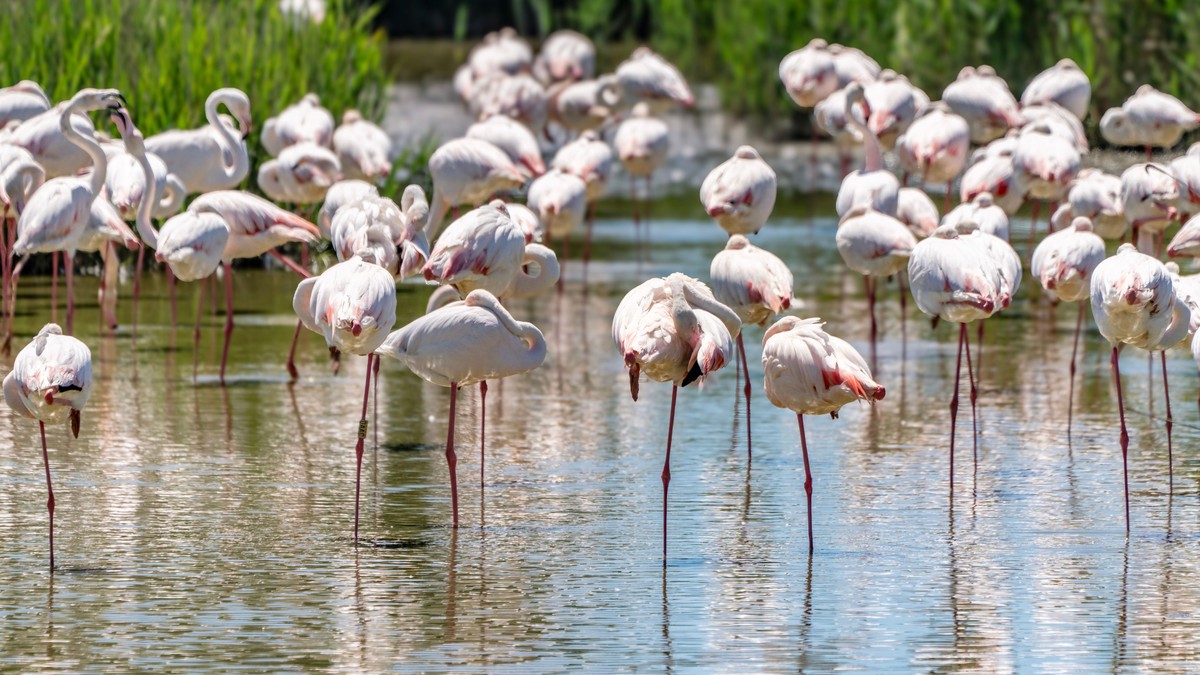
Lake Bogoria vs Lake Nakuru flamingos: that’s the real question if you’re planning a trip this year. If you asked me in July 2026, I’d say Lake Bogoria, without much hesitation. The soda levels there have stayed high enough this year to keep the algae blooming, and that means lesser flamingos by the tens of thousands along the eastern shoreline near Loboi Gate. Lake Nakuru still has flamingos too, just fewer, and they move around the lake edge more than they used to.
That said, “right now” is the wrong way to plan a trip months in advance. Flamingos are nomadic. They follow algae, and algae follows rainfall and salinity, which change month to month. So let me give you the honest, current picture, plus the trade-offs that matter more than a single week’s flock count.
Two Species, Two Different Stories
Most of the pink you see on both lakes belongs to the lesser flamingo, Phoeniconaias minor. It’s smaller, with a darker bill, and it feeds on the blue-green algae (spirulina) that thrives in warm, alkaline soda lakes. Lesser flamingos gather in huge, shifting flocks, sometimes 100,000 birds or more when conditions are right.
The greater flamingo, Phoenicopterus roseus, is bigger, paler pink, with a pink and black bill. It eats small shrimp and invertebrates rather than algae, so it doesn’t need the same intense bloom. You’ll usually see greater flamingos in smaller numbers, often standing apart from the lesser flock, at both lakes.
The mix shifts because the two species aren’t competing for the same food. When algae blooms hard at Bogoria, lesser flamingos flood in and greater flamingos stay a smaller side note. At Nakuru, deeper water since 2013 has reduced the algae edge, so numbers of both species run lower and more erratic.
Why the Numbers Keep Shifting
Lake Nakuru used to be one of the great flamingo spectacles on earth, with counts sometimes topping a million birds through the 1990s and 2000s. Then, between 2013 and 2020, heavy rains pushed Nakuru’s water level up by several meters. The lake grew, submerged the old shoreline road, and diluted the salinity that fed the algae. Flamingos moved out, mostly to Lake Bogoria, Lake Elementaita, and even as far as Lake Natron in Tanzania.
Water levels at Nakuru have dropped back some since 2021, and flamingos have returned in patches, but not at the old scale. Bogoria, by contrast, is shallower and more consistently saline, which is why it has held the bigger flocks more reliably through the past decade. Rain still matters here too. A very wet season dilutes even Bogoria’s algae bloom for a few months, so numbers can dip there as well.
Best Time to Visit, Month by Month
Neither lake gives you a guarantee. But patterns hold up well enough to plan around.
- January to March: Dry season, low rainfall. Algae concentrates. Good months for Bogoria’s big flocks.
- April to May: Long rains. Water rises at both lakes, flamingo numbers often drop as birds disperse.
- June to August: Dry, cool season. Bogoria typically strong. Nakuru variable but improving since the 2021 recession.
- September to October: Short dry spell. Solid window for both lakes.
- November to December: Short rains begin. Numbers can swing either way depending on how heavy the rain is that year.
If you’re a photographer chasing that dense wall of pink for a wide shot, dry-season months at Bogoria are the safer bet. If you want flamingos plus a strong chance at other species in the same frame, Nakuru’s dry months work well too.
Getting There: Distance, Roads, and Cost
This is where the two lakes really diverge, and it matters more for trip planning than most guides admit.
| Lake Nakuru National Park | Lake Bogoria National Reserve | |
|---|---|---|
| Distance from Nairobi | 156 km | 280 km |
| Drive time from Nairobi | About 3 hours | 4.5 to 5 hours |
| Road condition | Tarmac (A104) the whole way | Tarmac to Marigat, rougher gravel and dirt inside the reserve |
| 4×4 needed? | No, saloon cars manage fine | Recommended, especially after rain |
| Entry fee (non-resident adult) | Around USD 60 | Around USD 20 to 25 |
| Entry fee (non-resident child) | Around USD 35 | Around USD 10 to 15 |
| Managed by | Kenya Wildlife Service | Baringo County Government |
| Lodging inside the park/reserve | Yes, several lodges | None, camps sit just outside |
Fees at both sites change from time to time, so treat these as indicative figures and confirm before you travel. The bigger practical point is the road. Nakuru is an easy tarmac run any car can handle. Bogoria takes longer and rewards a proper 4×4, particularly on the reserve’s internal tracks near the geysers. If you’re keen on the drive yourself, our guide to self-driving to Lake Bogoria walks through what your vehicle actually needs.
Where to Stay
Lake Nakuru National Park has lodging inside its gates, which saves you an early wake-up call. Sarova Lion Hill Game Lodge sits on a ridge above the lake, with flamingo views from the rooms. Rates generally run from about USD 200 to 350 per person per night, full board. Lake Nakuru Lodge, a more modest option, sits closer to USD 120 to 180.
Lake Bogoria has no lodging inside the reserve boundary at all. Everyone stays just outside. Papyrus Guest House in Kampi ya Samaki offers simple rooms from roughly USD 40 to 70 a night. For something with more comfort, try Lake Bogoria Spa Resort, a short drive from the gate. It has hot spring-fed pools and rooms from about USD 90 to 150. Both options put you close enough for a pre-dawn drive to the flamingo shoreline, which matters if you want the soft morning light photographers chase.
Beyond the Flamingos
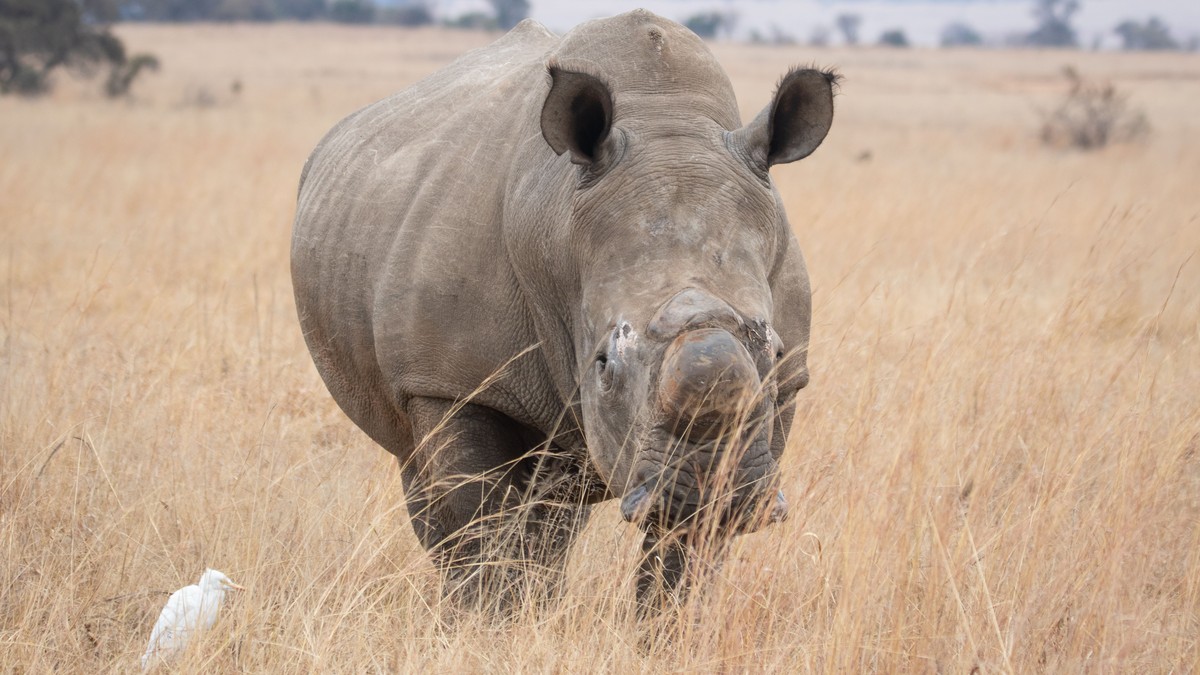
Lake Nakuru does double duty as one of Kenya’s best rhino sanctuaries. Its fenced perimeter protects both black and white rhino, and sightings are close to guaranteed on a half-day game drive. You’ll also find Rothschild’s giraffe, lion, leopard, and buffalo, all inside a compact park you can circuit in a morning.
Lake Bogoria’s other headline is geothermal, not wildlife. Hot springs and small geysers steam along the western shore, some hot enough to boil an egg. They make a genuinely striking stop between flamingo viewpoints. Greater kudu also live in the surrounding hills, an animal you won’t easily spot at Nakuru.
So the honest trade-off is this: Nakuru gives you flamingos plus a rhino sighting you can plan around. Bogoria gives you a better shot at the big flamingo spectacle plus a geothermal landscape you won’t find anywhere else in the Rift Valley.
Combine Both Lakes in One Trip
You don’t have to choose only one. Nakuru and Bogoria sit about 150 km apart by road, roughly 2.5 hours, mostly on tarmac through Nakuru town. A lot of our guests do both lakes across four or five days. Many pair it with a Lake Naivasha day trip on the way up from Nairobi, then finish with a night near Bogoria’s hot springs.
All three lakes, Nakuru, Bogoria, and Elementaita, form part of the Kenya Lake System UNESCO World Heritage Site. It’s recognized for supporting some of the richest bird life on the planet. Visiting more than one gives you a real sense of why that recognition matters, since each lake behaves differently depending on the year’s rainfall.
Lake Bogoria vs Lake Nakuru Flamingos: Which Should You Actually Pick?
If you have one day and want the highest odds of a big, dense flamingo flock right now, choose Bogoria. If you have one day and want flamingos alongside rhino, easy roads, and lodging inside the gate, choose Nakuru. If you have three or four days, do both. Let a guide who tracks these flocks week to week tell you which shoreline to hit first.
The Valley Safaris Difference
We don’t send you to a lake and hope the flamingos show up. Our guides check current water levels and recent sightings across Nakuru, Bogoria, and Elementaita before we build your route. That means we’re not working off last year’s numbers. We know which side of Bogoria’s shoreline gets the morning light for photographers. We know which rooms at Sarova Lion Hill actually face the lake. And we know when the Marigat road turns rough enough to need a 4×4 instead of a saloon car. That kind of detail, not a generic itinerary, is what turns a flamingo drive-by into a morning you still talk about years later.
Plan Your Rift Valley Lakes Trip
Ready to see where the flock actually is this month? Visit our Rift Valley lakes safari page, or head to our contact page. We’ll build an itinerary around Bogoria, Nakuru, or both, timed to the current conditions.