You have done the Mara. You have watched a leopard drag a kill up a sausage tree in Samburu and eaten breakfast under fever trees in Laikipia. The Koobi Fora fossil site Turkana region holds a very different kind of trip, one most safari-goers never reach.
This is not a wildlife stop. It is a walk through 4 million years of human history, on the ground where some of the most important fossils on Earth were dug out of volcanic ash. Few operators can tell you honestly how to get there, what it costs, or where you will sleep. This guide does.
Koobi Fora Fossil Site Turkana: What and Where
Koobi Fora sits inside Sibiloi National Park, on the northeastern shore of Lake Turkana in Marsabit County. It is about 590 km north of Nairobi as the crow flies, though no road runs that straight.
The site is a spit of sedimentary land jutting into the lake, exposed by millions of years of shifting water levels and volcanic eruptions. Those layers of ash, called tuffs, are why Koobi Fora matters so much to science. Each ash layer can be dated, which lets researchers pin fossil finds to a specific age with real precision.
Lake Turkana itself is the world’s largest permanent desert lake, often called the Jade Sea for its blue-green color, driven by algae. The whole basin is UNESCO-listed for both its geology and its fossil record.
Discovery History and the Koobi Fora Research Project
Richard Leakey began surveying the eastern lake shore in 1968, after a helicopter flight revealed fossil beds nobody had properly explored. He built a research camp at Koobi Fora that same year. The site has run as an active dig ever since, under what is now called the Koobi Fora Research Project.
Bernard Ngeneo, a member of Leakey’s field team, found Skull 1470, formally KNM-ER 1470, in 1972. It was one of the finds that forced scientists to rethink how many species of early human relatives once lived side by side.
Kamoya Kimeu was another Kenyan fossil hunter on the team, and he became famous in his own right. His talent for spotting bone fragments other people walked past led him to find the Turkana Boy skeleton, KNM-WT 15000, in 1984 at Nariokotome, on the lake’s west side. That find remains the most complete early human skeleton ever recovered.
Major Fossil Finds
Koobi Fora and the wider Turkana Basin have produced some of the most famous hominin fossils ever found.
Skull 1470 belongs to Homo rudolfensis and is roughly 1.9 million years old. Bernard Ngeneo found it at Koobi Fora itself, on the lake’s east side, in 1972.
Turkana Boy is the most complete early human skeleton ever discovered. Kamoya Kimeu and his team found it in 1984 at Nariokotome, on the west side of the lake, not at Koobi Fora. Guides sometimes blur this distinction, so it is worth knowing before you go. Turkana Boy belonged to Homo erectus and lived about 1.5 million years ago.
Koobi Fora has also yielded fossils of Homo habilis, Paranthropus boisei, and Australopithecus anamensis, plus thousands of animal fossils including ancient crocodiles, hippos, and giant tortoises. Together they make the Turkana Basin one of the richest windows into human evolution anywhere in the world.
Geology and Stratigraphy
The Koobi Fora Formation is built from layers of sandstone, siltstone, and volcanic ash laid down over roughly 2 million years. Geologists date the ash layers using potassium-argon and argon-argon methods, which measure the decay of radioactive elements in volcanic minerals.
This layered record lets scientists place a fossil’s age within a tight window, sometimes to within a few thousand years. It is part of why Koobi Fora carries more scientific weight than sites where fossils are harder to date.
Sibiloi National Park
Sibiloi National Park covers about 1,570 square km around Koobi Fora. Expect a stark, volcanic landscape of black basalt and pale grasslands running down to the lake shore, with petrified forest patches where fossilized tree trunks lie scattered across the ground.
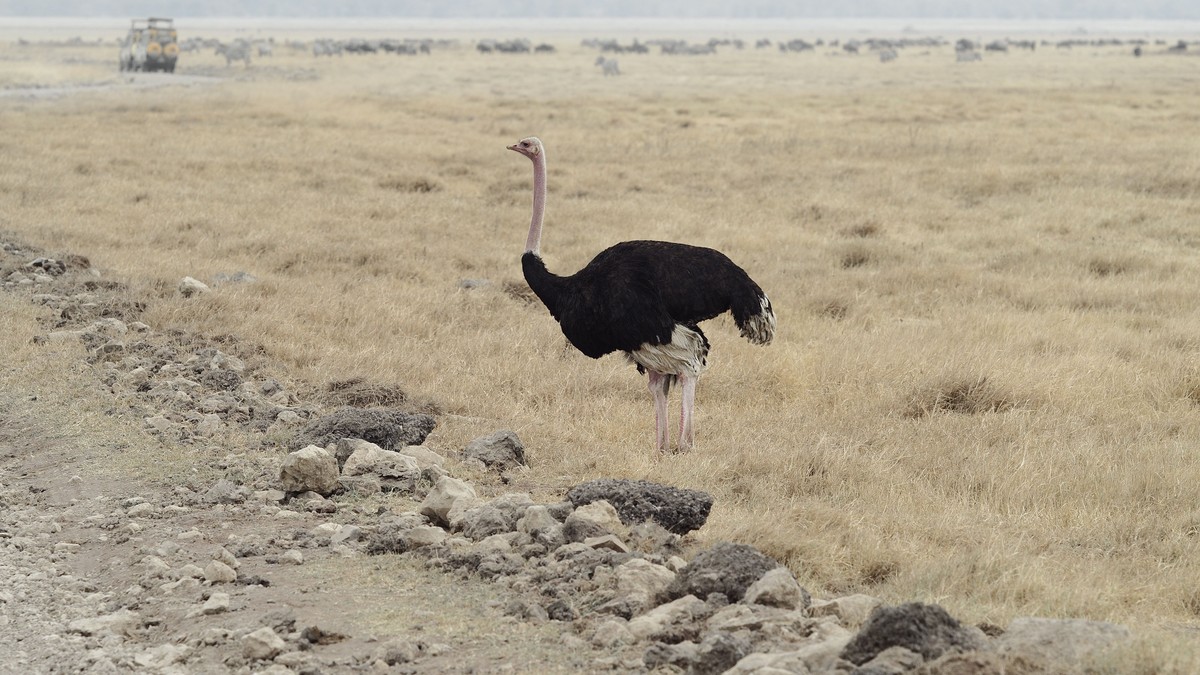
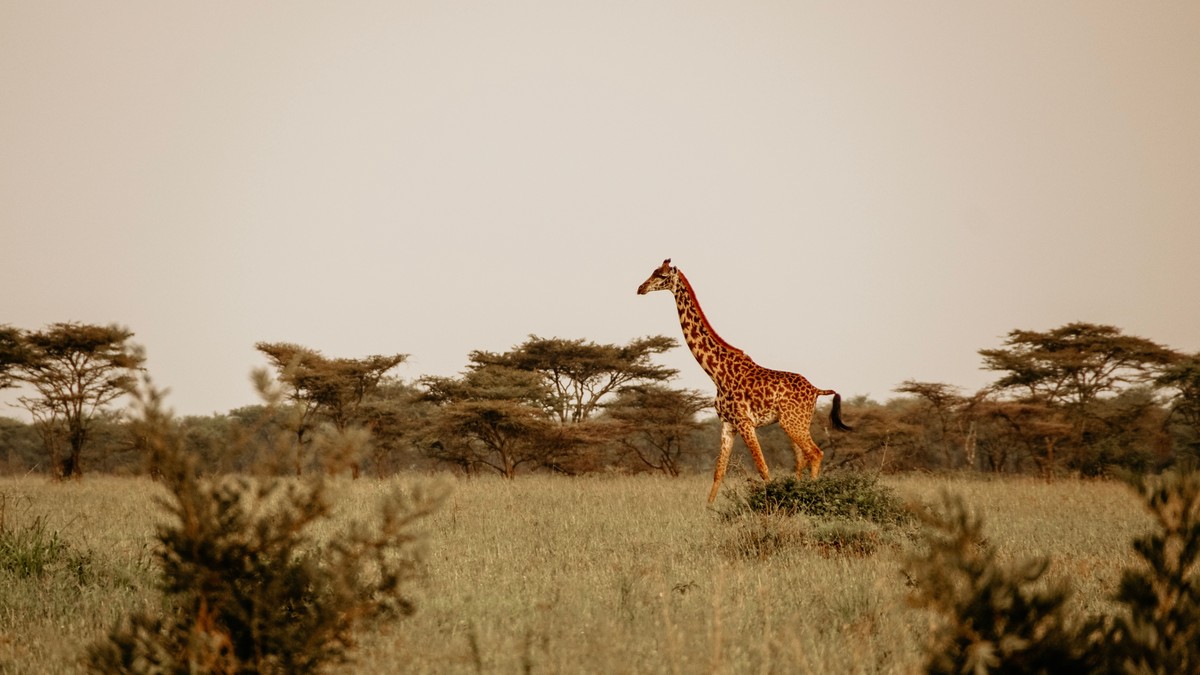
Wildlife is sparse but real. You may spot Grevy’s zebra, oryx, topi, and Grant’s gazelle, plus large Nile crocodile populations along the lake shore. Bird life is strong, especially migratory flamingos and pelicans.
How to Get There
You have two real options, and they are not close in comfort or cost.
Charter flights leave Nairobi’s Wilson Airport and land at the Koobi Fora airstrip, usually with a fuel stop. Flight time runs about 3 to 4 hours depending on the aircraft and route.
The road route runs north through Isiolo and Marsabit, then on to Loiyangalani on the lake’s southeastern shore, before turning north again to Sibiloi. It demands a 4×4 Land Cruiser, why a 4×4 Land Cruiser is essential for rough northern routes, and at least 3 days of driving each way.
| Route | Distance from Nairobi | Travel time | Indicative cost |
|---|---|---|---|
| Charter flight (Wilson to Koobi Fora airstrip) | approx. 590 km air (direct), more with fuel-stop routing | 3 to 4 hours | USD 2,500 to 4,500 per charter, shared across group |
| Road via Marsabit and Loiyangalani | approx. 850 to 950 km | 3 days one way in a 4×4 | USD 150 to 250 per day for vehicle and fuel, indicative |
| Road via Kitale and Lodwar (west side, for Nariokotome/Turkana Boy site) | approx. 800 km | 2.5 to 3 days one way | Similar range, indicative |
Costs above are indicative ranges, since fuel prices and charter availability shift often in northern Kenya. Always confirm current rates before booking.
Best Time to Visit
The dry months of January to March and July to October bring firmer roads and lower lake winds. Northern Kenya sits well outside the malaria-heavy lake basins further south, but it is still worth checking malaria risk in Kenya’s northern safari regions before you travel. For a broader picture of what to expect month by month, see our guide to the best time of year to travel in Kenya.
Avoid April, May, and November, when rains can cut off the Marsabit-Loiyangalani road entirely for days at a time.
Accommodation Options
This is the part most blog posts skip, and it is the part that matters most for planning.
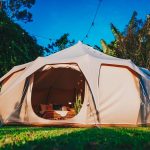
There is no proper lodge at Koobi Fora. The National Museums of Kenya runs a basic guesthouse near the research camp, with simple rooms and shared facilities. Sibiloi National Park also has a KWS campsite near the museum, where you bring your own tents and gear.
Most visitors base themselves in Loiyangalani, roughly 130 km south of Koobi Fora by rough track, where a handful of simple camps offer proper beds, cold drinks, and lake views. From there, Koobi Fora becomes a long day trip or an overnight camping add-on rather than your main base.
What to See and Do
The Koobi Fora Museum, run by the National Museums of Kenya, holds fossil casts, tools, and exhibits explaining the dig’s history. A resident researcher or ranger usually leads walking tours to the original fossil beds, including the spot where Skull 1470 came out of the ground.
Central Island National Park, a volcanic island in the middle of Lake Turkana with three crater lakes, makes a strong add-on by boat from Loiyangalani. Give it a half day, including crossing time.
Practical Tips and Safety
You need a permit from the National Museums of Kenya to visit the research camp and fossil beds, arranged in advance. Sibiloi National Park entry fees run around USD 40 per adult per day for non-residents, indicative, payable to KWS. East African citizens and Kenya residents pay lower local rates.
Pack more water than you think you need, a wide-brim hat, and a basic med kit. Temperatures regularly pass 38°C at midday. Mobile signal is patchy to absent past Loiyangalani, so tell someone your route before you go.
Security in the immediate Sibiloi and Koobi Fora area has been stable in recent years. Northern Kenya as a whole carries a higher baseline risk than the southern safari circuit. Check current travel advisories before finalizing dates, and travel with a guide who knows the region.
The Valley Safaris Difference
We have driven the Marsabit road and we have flown the charter route. We tell clients honestly which one fits their budget and time. Most repeat visitors who want Koobi Fora are also chasing Samburu, Laikipia, or the Kaya forests on the same trip. We build the logistics so those pieces connect instead of fighting each other on the calendar.
We do not send anyone north without confirming museum permits, KWS fees, and a working vehicle plan first. That groundwork is where most self-organized Koobi Fora trips fall apart.
Plan Your Trip to Koobi Fora
Koobi Fora rewards travelers willing to put in the extra days it takes to get there. Maybe you want to add this fossil site to a Samburu or Laikipia itinerary. Maybe you want a dedicated Lake Turkana expedition built around it. Either way, talk to our team through our Lake Turkana and northern Kenya tours page, or reach out via our contact page to start planning.