If you have already done the Masai Mara and are hunting for something rawer, Tsavo East is where a lot of our repeat guests land next. It is bigger, dustier, and far less crowded than the Mara. You will not see wall-to-wall vehicles at a cheetah sighting here. You will see red elephants crossing open plains, maneless lions dozing under acacias, and a horizon that barely changes for an hour of driving. This Tsavo East National Park guide covers what you actually need to plan the trip: fees, gates, camps by budget, and how Tsavo East compares to its western twin.
Overview: A Tsavo East National Park Guide to Location, Size and History
Tsavo East covers 13,747 square kilometers, making it one of the largest national parks in Kenya. It sits in Taita-Taveta and Kitui counties, roughly halfway between Nairobi and Mombasa. Together with Tsavo West and Chyulu Hills, it forms the Tsavo Conservation Area, around 22,000 square kilometers of protected land.
The park was gazetted in 1948, split from the original Tsavo reserve for easier management. The Galana River became the rough dividing line, with Tsavo East stretching out flat and open to the north and east of it. Most of the park north of the Galana is closed to tourism and managed as a wilderness zone, which is part of why the visited section still feels uncrowded.
Getting There: Nairobi, Mombasa and the Train
From Nairobi, the drive to Voi Gate covers about 333 km along the Nairobi-Mombasa highway, roughly 4 to 5 hours depending on traffic through Mtito Andei. Mtito Andei Gate itself sits almost exactly halfway between the two cities, which makes it a natural stop if you are combining Tsavo East with Tsavo West on the same trip.
From Mombasa, Buchuma Gate is closer, about 190 km and 2.5 to 3 hours away, making Tsavo East an easy add-on to a coast holiday.
The SGR train from Nairobi to Mombasa stops at Voi station, about a 4-hour ride. Many lodges will arrange a road transfer from Voi station into the park, which cuts out the highway drive entirely if you would rather not self-drive that stretch.
Main gates include Voi, Manyani, Buchuma, Sala and Mtito Andei. Voi Gate is busiest and closest to Voi town for fuel and supplies.
Wildlife: Red Elephants, Maneless Lions and the Big Five
Tsavo East is famous for its red elephants. The color comes from the park’s red laterite soil, which the elephants dust themselves with to cool off and repel insects. It is the same elephant, just wearing Tsavo’s soil.
Lions here are also known for having thin or absent manes, likely linked to the heat and thick scrub. You will still find the full Big Five, alongside good numbers of buffalo, giraffe, and one of Kenya’s largest populations of hirola antelope in nearby conservation areas. Birders should bring a checklist. Over 500 species have been recorded, including the striking vulturine guineafowl and, in wetter months, migrant waders around Aruba Dam.
Key Attractions and Landmarks
Yatta Plateau runs along the park’s western edge and is believed to be the world’s longest lava flow, stretching close to 290 km. Mudanda Rock is a 1.6 km whaleback outcrop that pools rainwater below it, drawing elephant herds in the dry season. Aruba Dam, built across the Voi River, is a reliable spot for hippo, crocodile and thirsty game. Lugard Falls, on the Galana River, is less a waterfall than a set of dramatic rock rapids worth a short walk from the vehicle.
Safari Activities
Game drives are the core activity, morning and afternoon, in a 4×4 with pop-up roof for photography. Some private conservancies bordering the park, like Kasigau and Galdessa’s private concession, offer walking safaris and night drives, which are not permitted inside the national park itself. Birding is strong year-round. On dust: yes, Tsavo East earns its reputation, especially at the end of the dry season. A lens cloth, a dust cover for your camera bag, and a scarf go a long way. The upside of that dust is the golden light it throws over the plains at sunset, which photographers tend to love once they stop cursing it.
Where to Stay: Three Price Tiers
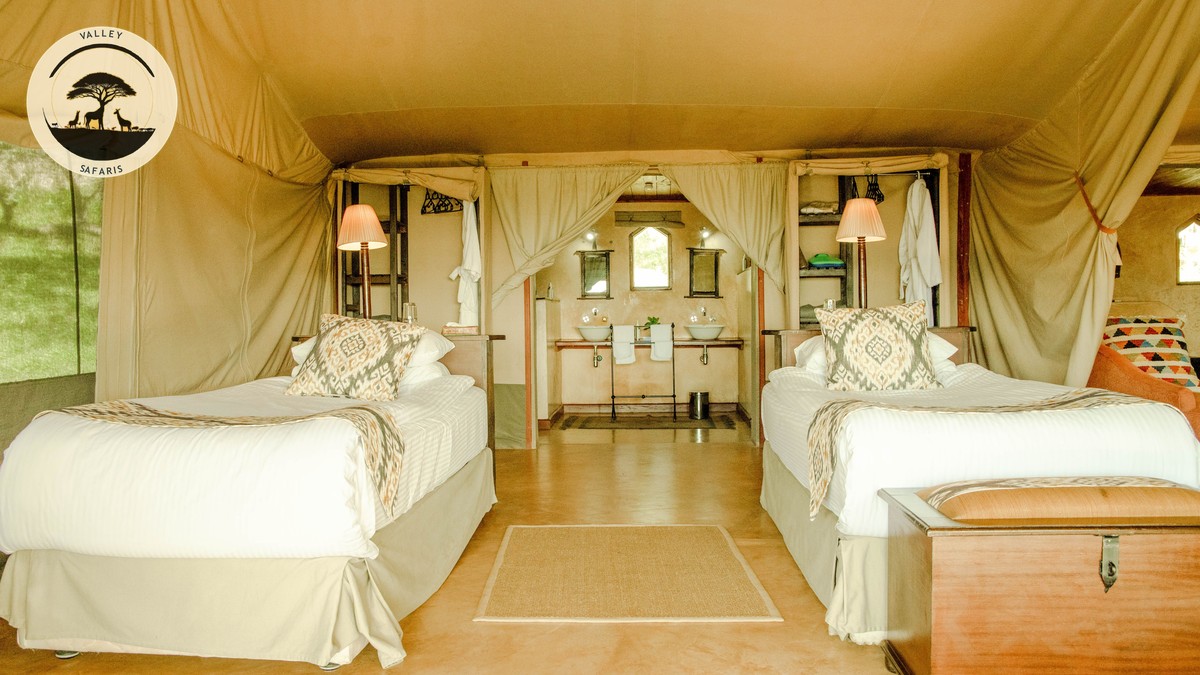
Accommodation ranges from public campsites to some of Kenya’s most storied tented camps. Here is a realistic spread, in US dollars per person per night, all-inclusive unless noted.
| Tier | Example Camps | Indicative Price (pppn) | Style |
|---|---|---|---|
| Budget | Sentrim Tsavo East, KWS public campsites | $25 to $90 | Self-catering camping or simple bandas |
| Mid-range | Voi Safari Lodge, Ashnil Aruba Lodge, Patterson’s Safari Camp | $150 to $280 | Full board lodges near Aruba Dam and Voi |
| Luxury | Satao Camp, Galdessa Camp | $400 to $750 | Tented camps on the Galana River, private concessions |
Prices shift with season and currency, so treat these as an indicative range and confirm current rates before booking. For a fuller cost breakdown across a Kenya itinerary, our 2026 Kenya safari price guide walks through typical trip budgets for two.
Best Time to Visit: Weather and Off-Peak Angles
The dry seasons, June to October and January to February, bring the best game viewing as animals cluster around the Galana River and Aruba Dam. They are also the dustiest and busiest months.
The green season, March to May and November, thins the crowds considerably and turns the park a deep green after rain. Roads can get muddy and some low-lying tracks close, but birdlife peaks and rates at most camps drop. For a repeat visitor who has already chased the Mara migration crowds, we often recommend April or November here. You get Tsavo close to yourself, at a lower price, with newborn animals around.
Entry Fees and Park Costs (2026)
Kenya Wildlife Service fees are reviewed periodically, so treat the figures below as an indicative 2026 range and confirm exact rates before you travel.
| Visitor Category | Fee per 24 hours (indicative) |
|---|---|
| Non-resident adult | USD 45 to 60 |
| Non-resident child (3-17) | USD 25 to 30 |
| Kenyan citizen adult | KES 300 to 400 |
| East African resident adult | USD 25 to 30 |
| Vehicle fee | KES 300 to 1,000 depending on size |
Most lodges and camps bill park fees separately from accommodation, so ask what is included when you book.
Tsavo East vs Tsavo West
Guests often ask whether to choose one park or do both. Here is the honest comparison.
| Factor | Tsavo East | Tsavo West |
|---|---|---|
| Size | 13,747 km² | 9,065 km² |
| Terrain | Flat, open savanna, dusty red soil | Hillier, more volcanic, greener |
| Signature sights | Yatta Plateau, Aruba Dam, Lugard Falls | Mzima Springs, Shetani Lava Flow |
| Game visibility | Excellent, open plains | Good, but denser bush |
| Access from Nairobi | Voi Gate, about 333 km | Mtito Andei Gate, about 233 km |
| Best for | Elephants, wide horizons, first safari or return trip | Scenery, springs, rhino sanctuary |
If you want the full breakdown, our Tsavo East vs Tsavo West safari guide goes deeper into which one suits your itinerary.
How Many Days, and What to Combine It With
Two full days inside Tsavo East is the minimum to see the highlights without rushing. Three days lets you add a walking safari or a slower morning at Aruba Dam. Because Mtito Andei sits between the two Tsavo parks, many of our itineraries combine three nights split across East and West, or pair Tsavo East with combining Tsavo with Chyulu Hills for a change of altitude and scenery.
Given its position near the coast, Tsavo East also pairs naturally with a Mombasa or Diani beach extension. A common pattern for repeat visitors is Amboseli or the Mara first, then Tsavo East, then four or five nights on the coast to close the trip.
Self-driving is allowed and the main circuits are manageable in a well-prepared 4×4, but a guide who knows the current water points and where herds have been moving saves you hours of empty driving. Tsavo East is generally safe for visitors, with the usual safari precautions around wildlife distance and staying in the vehicle where instructed.
The Valley Safaris Difference
We have been routing guests through Tsavo since long before it was fashionable to skip the Mara for something quieter. Our planners know which gate saves you two hours of driving, which camp on the Galana River has the best sundowner spot this month, and when Aruba Dam is drawing the biggest herds. We do not just book a lodge and hand you a map. We build the days around what you actually want, whether that is photography, birding, or simply somewhere to switch off after the Mara crowds. Every itinerary gets checked against current KWS fees and gate conditions before we confirm it, so there are no surprises at the barrier.
Plan Your Tsavo East Safari
Ready to see the red elephants for yourself? Get in touch through our contact page and we will build a Tsavo East itinerary around your dates, budget and the parks you have already ticked off.