You have already stood in a jeep queue at Amboseli’s Kimana Gate, watching six other vehicles jostle for the same elephant silhouette against Kilimanjaro. If that was your first Kenya trip, fair enough. It works. But if you are back for round two, the Chyulu Hills deserve a hard look.
This guide is your Chyulu Hills safari Kilimanjaro views primer, with real prices, honest trade-offs, and tips for pairing the hills with Amboseli or Tsavo.
These volcanic hills sit just north of Tsavo West, a short hop from Amboseli, and they give you the same mountain backdrop with almost none of the traffic. I say almost none deliberately. This post is not going to pretend Chyulu replaces Amboseli’s game viewing, because it does not. What it offers instead is a different kind of safari day, one built around solitude, walking, and a volcano you can climb inside.
What and Where Are the Chyulu Hills
The Chyulu Hills run for about 60 km along the Nairobi-Mombasa road corridor, roughly between Amboseli National Park and Tsavo West National Park. Geologists consider them one of the youngest volcanic ranges on the planet, with some cones formed as recently as 500 years ago.
The result is a landscape of grass-covered cones and craters rather than the bare lava rock you might expect. Ernest Hemingway wrote about this stretch of Kenya, and Denys Finch Hatton, the hunter and pilot from “Out of Africa,” is buried on a Chyulu ridge with sweeping views toward Kilimanjaro. The hills became a national park in 1983, but most of the surrounding land is community-owned Maasai group ranch, which shapes almost everything about how you experience it.
The Chyulu Hills Safari Kilimanjaro Views You Came For
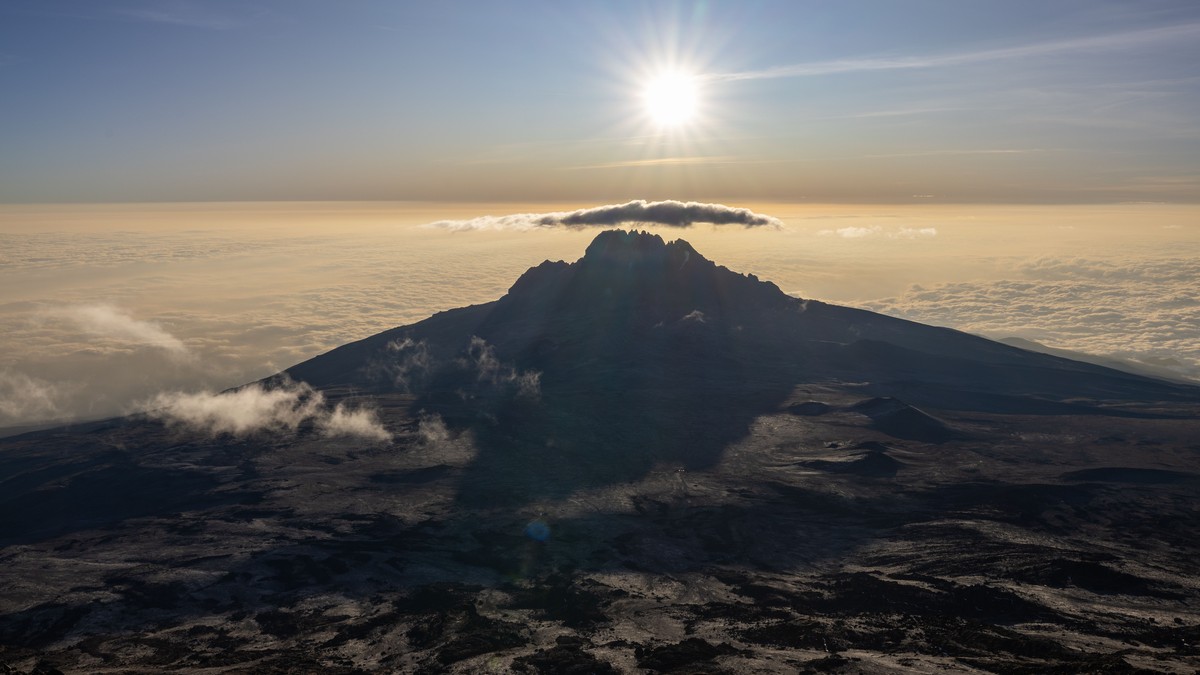
Kilimanjaro sits about 40 km southeast of the Chyulu Hills, close enough that on a clear morning it fills the horizon. The best viewing window is early, usually before 9 a.m., before the mountain builds its own cloud cover for the day.
Dry season months, especially July through October, give you the highest odds of a clean view. Ol Donyo Lodge markets itself partly on this promise, with rooms and a rooftop “star bed” deck angled straight at the summit. From Campi ya Kanzi’s dining deck, the mountain appears less framed and more like part of the daily backdrop, visible over breakfast on a good day.
Neither camp can guarantee it. Kilimanjaro is a mountain that makes its own weather, and locals will tell you honestly that some weeks it hides for days. That unpredictability is true anywhere in this region, including Amboseli.
Leviathan Cave: Walking Inside a Volcano
The Chyulu Hills sit on top of one of the longest lava tube systems in the world. The Leviathan Cave stretches for more than 11 km, formed when a river of molten lava cooled on the outside while still flowing inside, leaving a hollow tunnel behind.
Guided visits go in from Ol Donyo Lodge or with rangers from the Kenya Wildlife Service, and you need a headlamp, closed shoes, and a reasonable comfort level with tight, dark spaces. Inside you will see bat colonies, rock formations shaped by cooling lava, and the kind of cave silence that game drives never give you. This is not a paved tourist tunnel. It is a real cave, and it should be treated with the same caution you would give any wild cave system.
Wildlife and Scenery: The Honest Trade-off
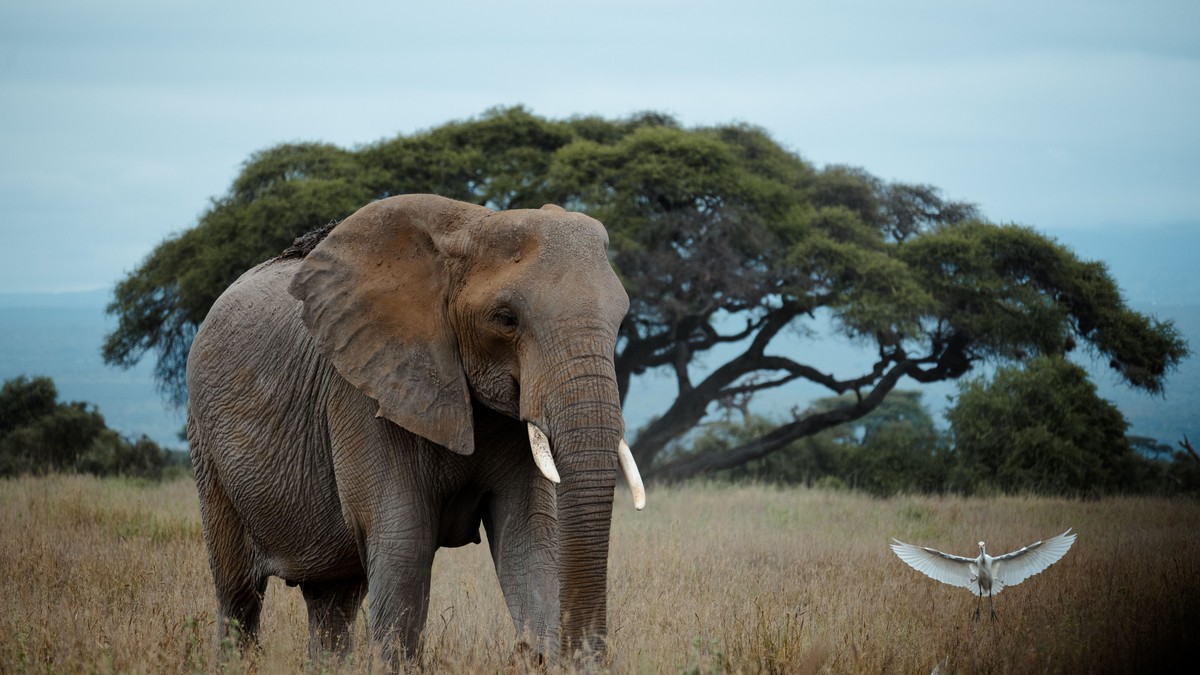
Here is the trade-off, stated plainly. Amboseli has denser elephant populations and easier, more predictable game viewing because its swamps concentrate animals in the dry season. Chyulu’s thicker forest and grassland cover mean animals spread out more and hide better.
You will still see elephant, buffalo, giraffe, eland, and occasionally lion or leopard on a Chyulu Hills safari, plus healthy bird life including sunbirds and hornbills. But if your main goal is stacking up Big Five sightings in three days, Amboseli or Amboseli’s Kilimanjaro-view lodges will serve you better.
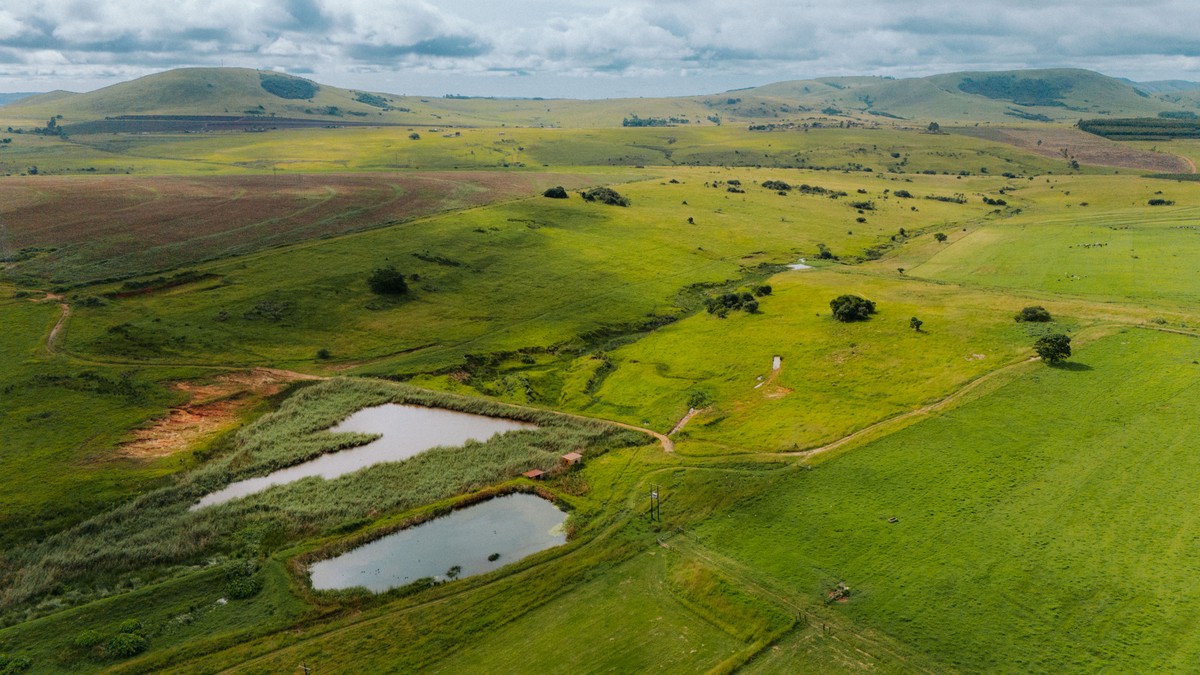
What Chyulu gives you instead is scenery and quiet. Rolling green hills, forest edges, open grassland, and views that stretch to Kilimanjaro on one side and the Tsavo plains on the other.
Activities Beyond the Game Drive
This is where Chyulu earns its place on a second Kenya itinerary. Because it sits on community land rather than inside strict national park boundaries, camps here can offer activities that most parks do not allow.
Ol Donyo Lodge runs horseback safaris and mountain biking routes through the hills, alongside walking safaris with armed Maasai guides. Campi ya Kanzi leans heavily into walking, with guided hikes up into the hills and cultural visits to nearby Maasai communities on the Kuku Group Ranch. Both offer night drives, which are restricted or banned in many national parks.
If you have already done multiple game drives on past trips, this is the change of pace worth booking a few nights for.
Where to Stay: Ol Donyo Lodge and Campi ya Kanzi
Two camps dominate this landscape, and each has its own personality.
Ol Donyo Lodge, run by Great Plains Conservation on the Mbirikani Group Ranch, is the more polished, design-forward option, with eight suites, private plunge pools, and those rooftop star beds facing Kilimanjaro. Rates run in the range of USD 900 to 1,400 per person per night, all-inclusive, though this varies by season and should be confirmed directly, since high-end Kenya camp pricing shifts year to year.
Campi ya Kanzi, on the Kuku Group Ranch, is smaller, more rustic, and built around a genuine long-term partnership with the local Maasai community. It has around six cottages plus a family-friendly Simba Cottage. Rates typically fall in the range of USD 600 to 950 per person per night, all-inclusive, again as an indicative range rather than a fixed quote.
Both camps are low-volume by design. Neither will ever feel like Amboseli’s Kimana Gate at 8 a.m.
Kuku Group Ranch and the Conservation Model
Most of the Chyulu Hills sit within the Kuku Group Ranch, roughly 283,000 acres of Maasai-owned land. Campi ya Kanzi’s owners set up the Maasailand Preservation Trust decades ago, funding schools, a clinic, and anti-poaching rangers directly from tourism revenue and conservation fees.
This matters practically, not just ethically. It is the reason walking safaris and night drives are possible here, and the reason the land has stayed wild instead of being converted to farmland. When you pay a conservation fee at Campi ya Kanzi, you are funding the ranger team that protects the same hills you are looking at from your veranda.
Chyulu Hills vs Amboseli: The Real Trade-offs
| Factor | Chyulu Hills | Amboseli National Park |
|---|---|---|
| Distance from Nairobi | ~250 km (4-5 hr drive) | ~240 km (4-5 hr drive) |
| Kilimanjaro distance | ~40 km | ~25 km |
| Park/conservation fees | ~USD 60-80 pp/night (community land fees vary) | USD 60 pp/day (KWS park fee) |
| Peak-season crowding | Low, camps cap guest numbers | High, especially July-Sept |
| Elephant density | Moderate, more dispersed | Very high, swamp-concentrated |
| Activities allowed | Walking, horseback, biking, night drives | Vehicle game drives only |
| Best for | Scenery, solitude, active safaris | Reliable Big Five sightings |
Neither destination beats the other outright. Amboseli wins on wildlife density and proximity to Kilimanjaro. Chyulu wins on quiet, terrain, and activity variety.
When to Go
The dry seasons, June to October and January to February, give the clearest Kilimanjaro views and the easiest hiking and biking conditions. The long rains from March to May turn the hills a spectacular green but can make some trails muddy and cut into your viewing days.
Malaria risk exists at this elevation, lower than the highlands but real, so talk to your doctor about prophylaxis regardless of which camp you choose.
Getting There and Combining with Other Parks
Most visitors fly. Scheduled light aircraft connect Nairobi’s Wilson Airport to airstrips at Ol Donyo or nearby Kimana, a flight of about 45 minutes. Driving from Nairobi takes 4 to 5 hours along the Mombasa road, then a rougher final stretch onto community land.
Chyulu’s real advantage on a second Kenya trip is logistics. It sits close enough to Tsavo West and Amboseli that you can fly or drive between them in under two hours. That makes it easy to pair Chyulu with Tsavo’s underrated parks, or to bolt it onto an Amboseli itinerary as the quiet counterpoint. If you are still mapping out where to go on your second Kenya safari, Chyulu works best as one leg of a three- or four-stop trip rather than a standalone week.
The Valley Safaris Difference
We do not sell Chyulu Hills as a replacement for Amboseli, because that would be dishonest, and our clients come back precisely because we tell them the trade-offs upfront. What we do is build the sequence that makes both destinations work together: two nights of dense game viewing in Amboseli, followed by three nights of walking, biking, and cave exploring in the Chyulu Hills, timed around the dry season windows when Kilimanjaro actually shows itself.
We also know these camps personally, which matters for a destination this small. We know which Campi ya Kanzi cottage catches the best morning light, and which Ol Donyo guide has spent twenty years learning where the Chyulu leopards move. That kind of detail is what turns a good itinerary into the trip people talk about years later.
Plan Your Chyulu Hills Safari
Ready to see Kilimanjaro without the crowd at the gate? Get in touch through our contact page and we will build an itinerary around your dates, your pace, and how much walking versus game driving you actually want.