
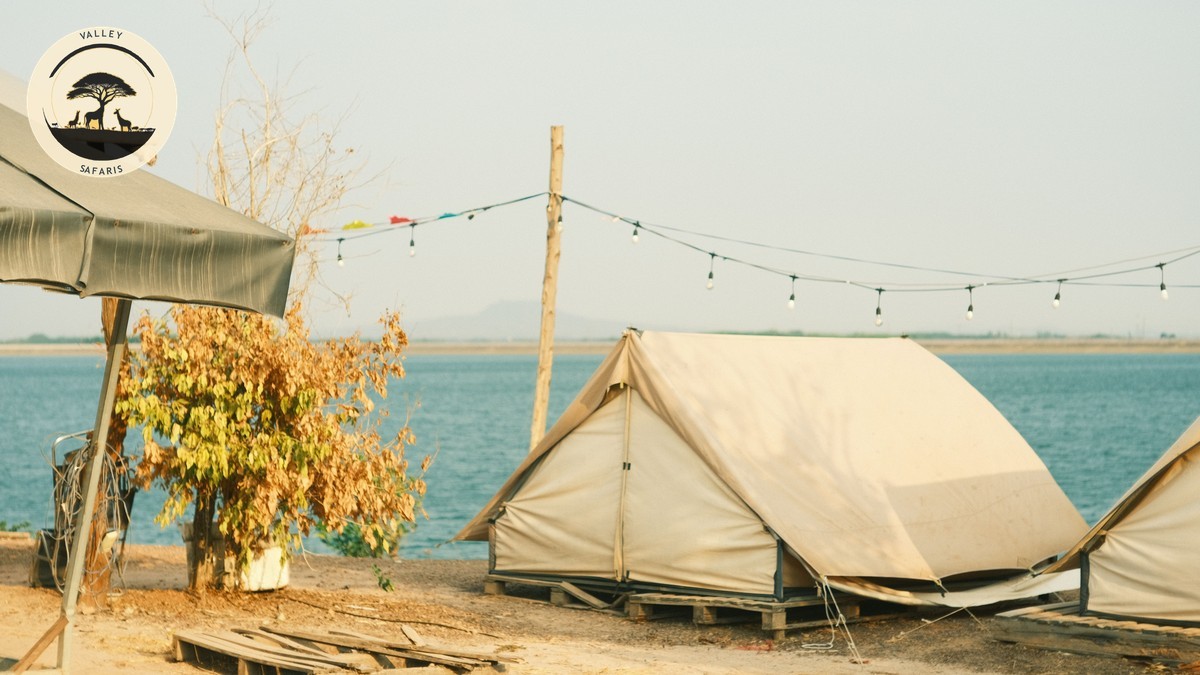
You have found the camp of your dreams on Instagram. The website has a “book now” button. So why would you pay someone else to arrange it for you?
It is a fair question. Most articles comparing book direct camp vs operator options will not give you a straight answer, because they are written by operators trying to convince you to book through them. We are an operator too, based in Nairobi, so we will not pretend to be neutral. But we will show you real numbers, name real camps, and tell you plainly when booking direct is the smarter move. Sometimes it is.
Book direct camp vs operator: is it actually cheaper?
Usually, no. Not by much, and sometimes not at all.
Most established camps in Kenya sell rooms at the same published rate whether you book through their website or through a licensed operator. This is called rate parity, and camps enforce it because they do not want to undercut the operators who send them repeat business all year.
Here is what that looks like in practice. A mid-range Mara Triangle camp might publish a rate of 450 USD per person per night, full board. Book directly on their site and you pay 450 USD. Book the same room through a Nairobi-based operator and you also pay 450 USD, because the operator’s commission is already built into that published rate. It does not get added on top.
Where you can sometimes save is with smaller, independent camps that have not standardized their pricing, or with last-minute deals a camp posts only on its own site. Where you can lose money is assuming a “direct” price is automatically lower. It rarely is.
| Booking method | Typical price for a Mara camp room | Who carries logistics risk |
|---|---|---|
| Direct with the camp | Same as published rate, occasionally a small owner discount | You |
| Kenya-based operator | Published rate, commission already included | Operator |
| International travel agent | Published rate plus 15 to 30 percent markup | Agent, but at higher cost |
How tour operators and agents actually make their money
This confuses almost every first-time traveler, so it is worth explaining clearly.
A camp sets one published rate. When a guest books through a Kenya-based operator, the camp pays that operator a commission out of its own margin, usually between 10 and 20 percent. The guest pays the same price either way. This is why booking through a solid Nairobi operator rarely costs you more than booking direct.
International agents work differently. Many of them are not licensed operators on the ground in Kenya. They act as a layer between you and a Kenya-based operator, and they add their own markup on top of the local rate, often 15 to 30 percent. You end up paying more for the same room, the same guide, and the same game drives.
So the real comparison is not “direct versus operator.” It is direct versus a Kenya-based operator versus an overseas agent adding a second layer of margin. The middle option usually costs you the least while still giving you support.
When direct booking works best
We will say this clearly: if you are visiting one park and staying at one camp, book direct. There is no reason to add a coordinator to a trip that does not need coordinating.
Direct booking makes sense when:
- You are staying at a single property for your whole trip, like five nights at Governors’ Camp in the Mara.
- You have already visited Kenya before and know the camp, the region, and roughly what a fair rate looks like.
- You are comfortable arranging your own airport transfer and, if needed, a domestic flight through a site like SafariLink or AirKenya.
- You do not need help sequencing multiple parks or working around Kenya’s shoulder seasons.
If that describes your trip, going direct saves you nothing in operator fees you would not have paid anyway, and it keeps things simple.
When a tour operator earns its keep
The moment your trip involves more than one park, the math changes.
Say you want seven nights split between the Maasai Mara, Amboseli, and Samburu. That is a common first-timer circuit, and it is where DIY planning gets complicated fast.
| Route | Distance | Road drive time | Alternative |
|---|---|---|---|
| Nairobi to Maasai Mara | About 270 km | 5 to 6 hours | 45-minute flight, Wilson Airport to Mara airstrips |
| Nairobi to Amboseli | About 240 km | 4 to 5 hours | 35-minute flight to Amboseli airstrip |
| Nairobi to Samburu | About 325 km | 6 hours | 1-hour flight to Samburu airstrip |
| Amboseli to Samburu direct | No practical road route | Not recommended | Requires routing back through Nairobi |
Notice that last line. Amboseli and Samburu are on opposite sides of Nairobi. A traveler booking direct with each camp separately might not realize this until they are staring at a flight schedule that forces an overnight in Nairobi they did not budget for. An operator sequences the route correctly the first time, because we do it every week.
Add to that the park fees, which change by park and by residency status. Maasai Mara National Reserve runs around 100 USD per person per day for non-residents. Amboseli National Park is about 60 USD per day. Samburu National Reserve is close to 100 USD per day. Conservancy fees inside places like Mara North or Naboisho are usually bundled into the camp rate, but not always. Getting this wrong means a surprise bill at the gate.
What an operator does that you do not see
A good operator’s real value shows up in the parts of the trip you never have to think about.
That includes double-checking that your Amboseli camp and your Samburu camp are not both fully booked the same week you are trying to travel between them. It includes holding a spare seat on a bush flight when one gets cancelled, which happens more often than people expect on small aircraft schedules. It includes knowing that the road from Nairobi to the Mara is rough enough in April that flying is worth the extra cost, or that a June visit means booking Naboisho Conservancy camps months ahead because the wildebeest migration draws crowds.
None of this is visible on a camp’s booking page. You only notice it when it goes wrong and there is no one to call.
Hidden costs and risks of DIY booking
Booking direct with three or four separate camps means three or four separate email threads, three or four sets of terms and conditions, and three or four points of contact if something changes.
If a flight gets cancelled and you booked everything yourself, you are the one calling each camp to adjust dates. If a camp changes its cancellation policy, you find out when you read the fine print, not before. And if you are new to Kenya safaris, you may not know which camps are well run and which just have good photos.
There is also the time cost. Researching and cross-checking a seven-night, three-park circuit properly can take fifteen to twenty hours if you are doing it for the first time. That is not a small thing to hand yourself as homework on top of an already full life.
Local operators vs international agents and their markup
We touched on this above, but it deserves its own point. A Kenya-based operator like Valley Safaris works with camps directly, in Kenyan shillings and US dollars, with relationships built over years. We know which camps answer the phone quickly when plans change, and which ones do not.
An overseas agent booking the same trip is often just relaying your request to a local operator anyway, then adding their own margin for the privilege. You end up paying two layers of overhead for one layer of actual on-ground knowledge. If you are going to use an operator at all, a Kenya-based one usually gets you closer to the real price.
The Valley Safaris Difference
We are not going to tell you that booking direct is always wrong. For a single camp, single park trip, it is often the simplest choice, and we will say so if you ask us.
Where we add real value is on the trips that involve moving pieces: multiple parks, bush flights that need to connect, conservancy permits that need booking in advance, and timing around Kenya’s seasons. We quote at the same rate the camp would quote you, because our commission comes from the camp, not from a markup on your bill. And when a flight gets cancelled or a camp overbooks, you have someone in Nairobi who can fix it that day, not a call center in another time zone.
We have planned circuits through the Mara, Amboseli, and Samburu for years, and we know which camps deliver what their photos promise.
Plan your trip with us
If your trip is one camp, one park, go ahead and book direct with confidence. If it involves more than that, we would be glad to help you sequence it properly. Take a look at our Kenya safari tours or get in touch to start planning.