You have already done the Maasai Mara. You know the drill: dawn game drive, brunch, siesta, sundowner. Now you are eyeing Samburu, Laikipia, maybe even the Kaya forests near the coast, and you are wondering something practical. Can you actually take a work call from camp without the whole trip falling apart?
The honest answer is yes, but only at certain camps, and only in certain hours. Nobody selling Kenya safaris likes to say that plainly. We will. This guide is the plain-language rundown on safari camp wifi remote work kenya travelers need before they book flights.
Safari Camp Wifi Remote Work Kenya: Mobile Signal vs. Camp WiFi
These are not the same system, and mixing them up causes most of the frustration.
Mobile signal comes from towers run by Safaricom, Airtel, or Telkom. It reaches wherever there is a tower within range, which usually means main roads, gate areas, and towns like Narok, Isiolo, or Nanyuki. Signal is patchy or absent once you are deep inside a conservancy.
Camp WiFi is a separate setup the lodge installs itself, usually satellite-based. It works regardless of mobile coverage, but its speed depends entirely on what the camp invested in. A camp with old-style VSAT satellite internet might give you 2 Mbps shared across twenty guests. A camp with Starlink can give you 50 Mbps or more, shared the same way.
So the real question is never “does Samburu have signal.” It is “which specific camp installed Starlink, and where is the router.”
Park-by-Park: What You Will Actually Get
Here is how connectivity breaks down across the regions repeat visitors tend to explore next, based on what camps report and what our own guides experience on the ground.
| Region | Mobile signal | Typical camp WiFi | Best for video calls |
|---|---|---|---|
| Maasai Mara (Mara North, Naboisho) | Good near camps, patchy in reserve | Starlink at newer camps, VSAT at older ones | Yes, at Starlink camps |
| Amboseli | Good, Kilimanjaro views often keep towers busy | Mixed, mostly VSAT | Sometimes, lounge only |
| Samburu National Reserve | Weak to moderate, Safaricom strongest | Starlink increasingly common | Yes, at select camps |
| Laikipia (Loisaba, Ol Malo area) | Weak, private conservancy, few towers | Starlink at flagship lodges | Yes, at Starlink camps |
| Tsavo East and West | Weak, vast and remote | VSAT, slow | Rarely reliable |
| Kaya forests and Kilifi coast | Good, near towns | Hotel-grade fibre or 4G routers | Yes, coastal infrastructure is stronger |
Indicative figures based on 2025 to 2026 camp reports; individual properties change providers often, so always confirm with your specific lodge before booking around a call.
Laikipia surprises a lot of repeat visitors. It has some of the weakest mobile signal in Kenya because it is private conservancy land, not a public reserve with government-backed towers. Yet lodges like Loisaba Tented Camp and Ol Malo have invested heavily in Starlink precisely because guests expect it now. Camp WiFi there can outperform the Mara.
If you’re building the Samburu safari circuit around your remote work needs, ask specifically whether the camp’s Starlink dish serves guest tents or only the mess tent. That single detail changes your whole day.
Starlink Changed the Game, Quietly
Three years ago, almost no Kenya safari camp had internet worth trusting for a video call. Starlink’s low-orbit satellites changed that fast because they do not need the huge fixed dishes and clear southern sky angle that older VSAT systems required.
Camps we work with at Sasaab and Elephant Bedroom Camp in Samburu, and Angama Mara and Mahali Mzuri in the Mara, now run Starlink. Speeds we have personally tested range from 15 to 60 Mbps download, plenty for Zoom or Teams, as long as you are not competing with ten other guests streaming Netflix at the same time.
The catch: Starlink needs a clear view of the sky and steady power. Camps sometimes switch it off overnight to save generator fuel, and it can drop during heavy rain, which matters in the November and April wet seasons.
SIM Cards, eSIMs, and Pricing
For backup connectivity, or if your camp has no WiFi at all, a local SIM is worth carrying.
Safaricom covers the most ground in Kenya and is the network our guides use themselves. An eSIM or physical SIM at the airport costs roughly KES 500 to 1,000 (about USD 4 to 7) for the SIM itself. Data bundles run from around KES 1,000 for 20GB valid for 30 days, up to larger bundles for heavier use. Airtel is a reasonable second option with slightly different coverage gaps, and Telkom is a distant third in rural areas.
Buy the SIM in Nairobi before you fly out to a bush camp. Once you’re in Samburu or Laikipia, there is often no shop for 50km in any direction.
Is It Actually Good Enough for Video Calls?
At the right camp, yes. Realistically, no, everywhere else.
We tested this ourselves at three camps in early 2026. At Angama Mara, a scheduled Zoom call with camera on ran smoothly at 4pm, mid-afternoon, when most guests were resting. The same call attempted at 7:30pm, with the whole camp back from evening drives and charging devices, buffered constantly.
That pattern holds everywhere. WiFi at safari camps is shared bandwidth, not a personal connection. The quiet windows are usually late morning, after breakfast, and mid-afternoon, before the evening game drive departs.
A Realistic Daily Schedule
If you are trying to combine actual work with a safari, structure your day around the camp’s rhythm, not against it.
| Time | Activity | Connectivity window |
|---|---|---|
| 6:00 – 9:30am | Morning game drive | None expected |
| 9:30 – 11:00am | Brunch, downtime | Good, low camp usage |
| 11:00am – 3:00pm | Siesta, free time | Best window for calls |
| 3:30 – 6:30pm | Afternoon/evening drive | None expected |
| 7:00pm onward | Dinner, socialising | Poor, high camp usage |
Book your calls between 11am and 3pm. Tell colleagues in advance that mornings and evenings are dark by design. This is the schedule our repeat guests use when they are stitching a work trip into a Masai Mara and Amboseli safari itinerary that still needs a functioning inbox.
Communal WiFi vs. In-Tent WiFi
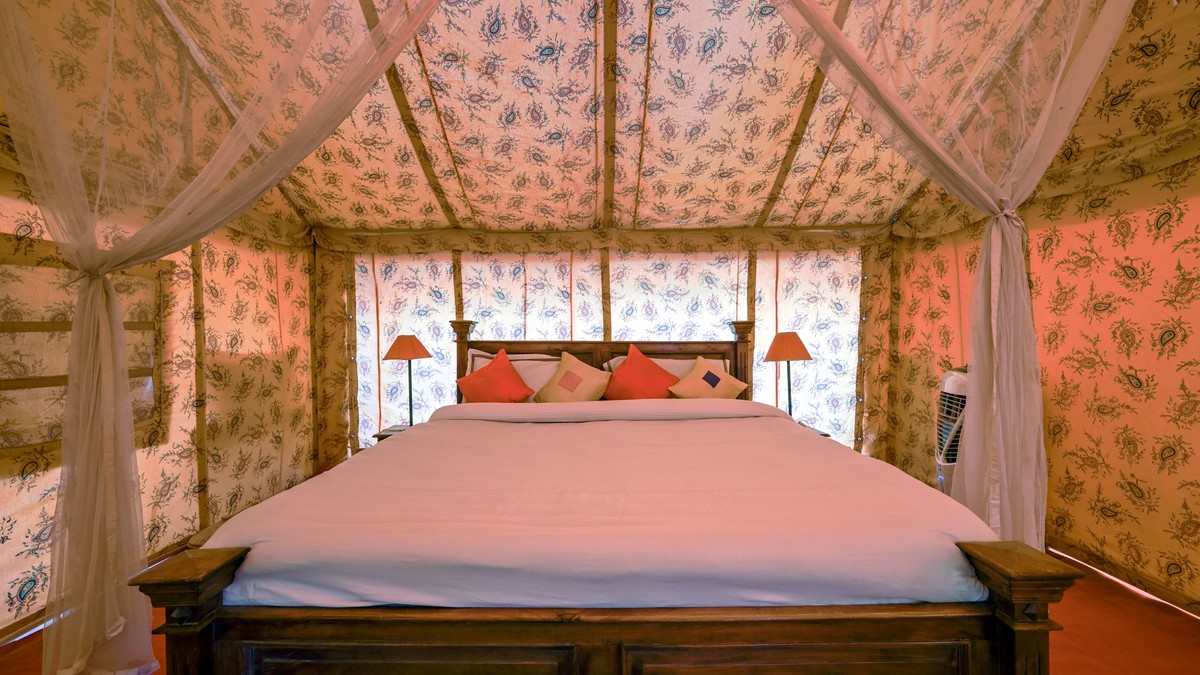
This distinction trips people up constantly. Many camps advertise “WiFi available” but only extend the signal to the main lounge or dining tent, not individual rooms.
If in-tent WiFi matters to you, ask directly before booking. Camps like Mahali Mzuri and Segera in Laikipia do extend WiFi to guest tents. Others, especially older bush camps, keep it deliberately limited to the communal area to encourage guests to actually talk to each other over dinner, which is its own kind of charm, just not helpful for a 9pm deadline.
Electricity and Charging
Most mid-range and luxury camps now run generators or solar power with proper charging points in tents, not just the mess area. Solar-only camps sometimes cut power overnight, so charge laptops and power banks during the day. Voltage is 240V with UK-style three-pin sockets, so bring an adapter, not a full converter.
The Valley Safaris Difference
We do not tell guests that every camp will work for remote calls, because it is not true, and it wastes your trip if you find out the hard way at 6pm on day two.
When you book with Valley Safaris, we ask upfront how much work you actually need to do, then match camps accordingly. If a video call matters, we place you at a Starlink property and build your game drive schedule around your call windows, not the other way round. If you genuinely want to disconnect, we will tell you which Laikipia camps have the weakest signal on purpose, and some guests specifically ask for that.
We have stayed at, or sent guides to check, most of the camps mentioned here. That first-hand detail, not a brochure spec sheet, is what shapes your itinerary.
FAQ
Is WiFi included in the camp rate? Usually yes at mid-range and luxury camps, though a few remote Laikipia and Tsavo properties still charge separately for heavy data use.
Which network is best for a Kenya safari? Safaricom, for the widest rural coverage.
Can I really do a workcation on safari? Yes, if you pick Starlink camps and work in the 11am to 3pm window. For help scoping how many days you need for a Kenya safari around a work trip, we can build that timeline with you.
What about emergency contact if WiFi fails entirely? Every camp we work with carries a VHF radio network and satellite phone backup for genuine emergencies, separate from guest WiFi.
Plan It With Us
If you want a Kenya safari that actually accommodates a few real work hours, without ruining the parts you’re there for, we can build it around the camps that support that. Have a look at our Samburu safari circuit or get in touch through our contact page to start planning.