If you have already done the Mara and want something quieter, this Aberdare National Park Kenya guide is for you. Aberdare sits about three hours north of Nairobi, wrapped in cloud forest, bamboo and moorland that feels nothing like the open plains you have already photographed. This guide covers the real numbers: current entrance fees, honest differences between The Ark and Treetops, and how the park fits into a wider Kenya itinerary.
Aberdare National Park Kenya Guide: Location and How to Get There
Aberdare National Park lies in central Kenya, straddling the Aberdare Range between Nyeri and Naivasha, roughly 180 km from Nairobi. Most visitors drive up via Nyeri town on the eastern side. That route is a tarmac trip of about three hours. You can also approach from the west near Naivasha and Nyahururu.
The park covers around 767 square km. It splits between the high moorland plateau and the forested Salient. The Salient is a wedge of dense forest on the eastern slopes, and it holds most of the lodges and wildlife viewing.
Self-drive works in a 4×4 with good clearance. Many roads in the Salient turn to thick mud after rain, though. A guided transfer is the safer choice outside the dry months.
Landscape and Altitude: From Bamboo to Moorland
Few Kenyan parks change character as fast as Aberdare does with altitude. The lower Salient sits around 2,000 meters and holds thick rainforest and bamboo. Climb higher and the bamboo gives way to open moorland above 3,000 meters, dotted with giant lobelias and groundsel that look almost prehistoric. The range peaks at Ol Doinyo Lesatima, 3,999 meters, and on a clear day the moorland gives sweeping views toward Mount Kenya.
This layered terrain is why Aberdare feels more like a highland trek than a classic savannah safari. Temperatures drop fast after dark, even in July and August, so pack warm layers regardless of the season.
Wildlife, the Big Five, and the Mountain Bongo
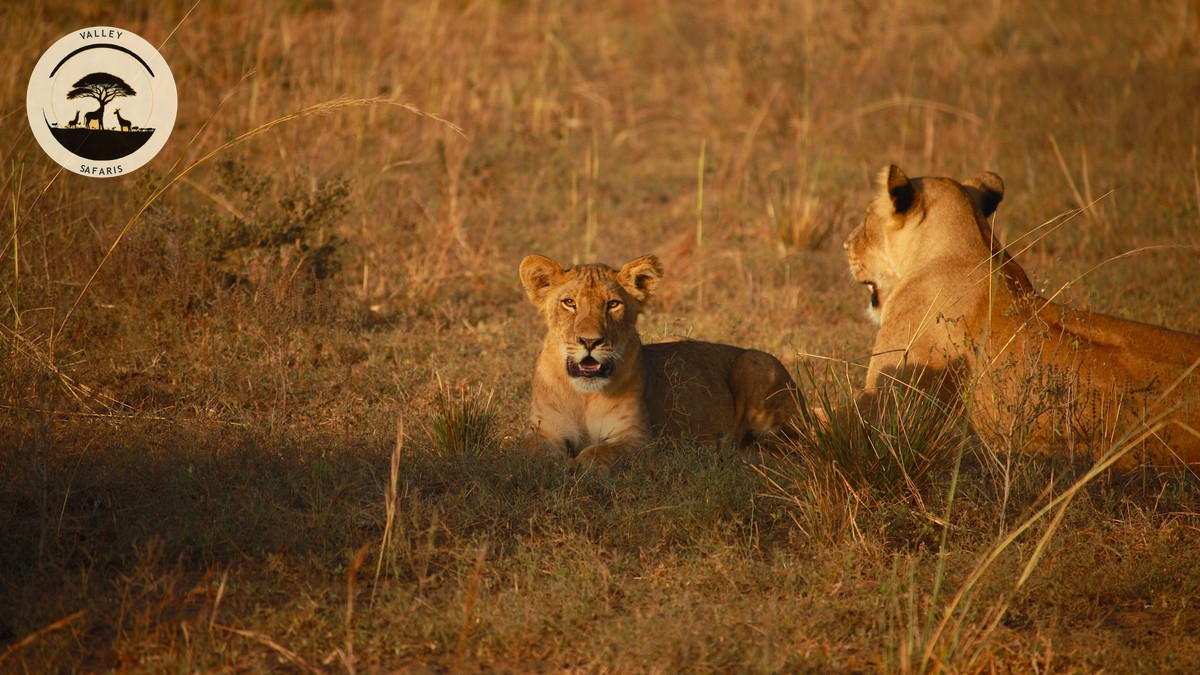
Aberdare holds all of the Big Five. That includes a genuinely wild black rhino population, protected inside an electric fence that rings much of the park. Elephant, buffalo and leopard move through the Salient forest. Lion sightings are less frequent than in the Mara, because the thick cover makes spotting hard.
The park’s most famous resident is the mountain bongo, a striped forest antelope found almost nowhere else on earth. Fewer than 100 are believed to survive in the wild, most of them in the Aberdares. A captive breeding herd also lives at the Mount Kenya Wildlife Conservancy near Nanyuki. Sightings are rare and require patience.
Wildlife density has thinned in the Salient over the past two decades as forest cover has changed. Game drives here reward patience rather than guaranteed sightings. If a dense rhino population is your priority, compare Aberdare to a dedicated rhino safari at Lewa Wildlife Conservancy. Tracking success rates there run much higher.
Waterfalls: Karuru, Gura, Chania and Magura
Aberdare’s waterfalls are a genuine reason to visit on their own. Karuru Falls drops about 273 meters in three stages and ranks among the tallest waterfalls in Kenya. Gura Falls, nearby, plunges roughly 300 meters down a sheer cliff face and is best viewed from a signed lookout point rather than the base. Chania Falls and Magura Falls are smaller and easier to reach on foot. Both are worth a stop if you have a full day in the park.
Guided walks to Karuru and Gura take two to three hours round trip. They require a ranger escort, which your lodge or tour operator can arrange at the gate.
Best Time to Visit Aberdare
The dry seasons, January to February and June to September, bring firmer roads and clearer moorland views. The long rains fall from March to May, and short rains fall from October to November. Both can turn Salient tracks slippery and close some routes entirely.
Because Aberdare’s appeal is forest and waterfalls rather than open-plain migrations, it stays a reasonable choice year round. Off-peak months like May and November also mean quieter lodges and lower rates. That is a real advantage if you already have a busy Mara or Samburu leg booked around peak season.
Activities Beyond Game Drives
Game drives through the Salient are the main activity, usually done at dawn or dusk when animals move to the salt licks near the lodges. Guided moorland walks and forest treks reach the waterfalls and higher peaks. Birders will want a full day here too, since the park holds over 250 recorded species, including the Aberdare cisticola, found nowhere else.
Trout fishing is also possible in the park’s cold mountain streams, a legacy of colonial-era stocking. Day permits are available at the gate alongside your park entry fee.
Where to Stay: The Ark vs Treetops vs Aberdare Country Club
The two lodges everyone asks about are The Ark and Treetops, and they are more different than most guides admit. Treetops carries the royal history, since Princess Elizabeth was staying there in February 1952 when she learned she had become Queen. The Ark was built later, in the 1960s, and designed purely around game viewing. It has a covered bunker built almost at ground level, next to a floodlit waterhole and salt lick.
In practice, The Ark tends to deliver more consistent nighttime wildlife activity because of that bunker position. Treetops trades some of that density for its history and its central Salient location. Aberdare Country Club sits outside the park gate at higher altitude. It works as a comfortable base camp, with golf and gardens, rather than as a wildlife lodge itself.
| Lodge | Location | Price range (per person/night) | Known for |
|---|---|---|---|
| The Ark | Aberdare Salient, inside park | USD 350 to 550 | Ground-level viewing bunker, consistent night sightings |
| Treetops Lodge | Aberdare Salient, inside park | USD 300 to 500 | Royal history, 1952 Queen Elizabeth story |
| Aberdare Country Club | Outside main gate | USD 200 to 350 | Base camp, gardens, golf, easy access to both lodges |
Rates vary by season and operator, so treat these as indicative ranges rather than fixed prices.
The Colonial Story: Where a Princess Became a Queen
Treetops opened in 1932 as a simple viewing platform built into a fig tree above a waterhole. On the night of February 5, 1952, Princess Elizabeth and Prince Philip stayed there while on a Commonwealth tour. Her father, King George VI, died that same night in England. She descended from the tree the next morning as Queen. The original tree platform burned down in 1954 during the Mau Mau uprising, and the current lodge was rebuilt nearby in 1957.
Park Gates, Entrance Fees and How to Pay
Aberdare National Park has several gates. Ruhuruini and Kiandongoro, on the eastern Salient side, are used most often by lodge guests. Wandare and Shamata serve the western moorland approach. Your lodge or driver will confirm which gate matches your route.
As of 2026, Kenya Wildlife Service entrance fees for Aberdare run USD 70 per adult non-resident per day and USD 35 per child. Fees must be paid through the KWSpay cashless system, either online in advance or by card and mobile money at the gate. Cash is not accepted at KWS gates, so confirm your operator has pre-loaded payment before you arrive, especially if you are self-driving.
Most visitors spend one full day and night in the park. That is enough time for an afternoon game drive, an overnight stay at the waterhole lodge, and a morning drive out. Two nights gives more room for a waterfall trek or a moorland excursion if the weather cooperates.
The Valley Safaris Difference
We do not sell Aberdare as a headline safari destination, and we say so upfront. It works best as a two or three night addition to a longer itinerary. Pair it with Samburu, Laikipia or a proper rhino tracking day at Lewa. Our guides know which nights at The Ark tend to produce the best waterhole activity based on recent rainfall, not just a fixed booking calendar.
We also build in the practical details other guides skip. That means confirming KWSpay balances before you reach the gate, and choosing routes that avoid the worst mud season tracks. If you are still building your first Kenya route, check our guide to common first-time Kenya safari mistakes. It covers the planning errors we see most often, including underestimating drive times between parks like Aberdare and the coast.
FAQs
Is Aberdare National Park worth visiting? Yes, particularly as a cooler, forested change of pace after the Mara or Amboseli, though set expectations for quieter game viewing than the open plains.
How many days do you need for Aberdare? One night covers the essentials. Two nights allow time for a waterfall walk or moorland drive.
Can you self-drive to Aberdare, or do you need a guide? Self-drive is possible with a 4×4 in the dry season. A guide is strongly recommended in the rains, and for night game drives near the lodges.
Is Aberdare good for rhino safaris compared to Lewa or Ol Pejeta? Aberdare has a genuine black rhino population, but density and sighting rates are lower than at Lewa or Ol Pejeta, which track rhinos more intensively.
For parks further afield with a very different landscape, see our Tsavo West National Park safari guide. It covers volcanic terrain and the Mzima Springs hippos, a contrast to Aberdare’s cloud forest.
Plan Your Aberdare Trip with Valley Safaris
Aberdare rewards travelers who already know what a good safari looks like and want something different next. If you are ready to build it into your Kenya route, alongside Samburu, Laikipia or a rhino day at Lewa, visit our Aberdare safari tour page. Or reach out through our contact page, and we will plan the details with you.