If you have one free morning in Nairobi with kids in tow, the David Sheldrick Wildlife Trust is usually the first thing on the list. It should be. But it’s also the attraction our clients get the most confused about, mostly because the fees, the booking process, and the actual visit length are scattered across a dozen websites that don’t agree with each other.
This David Sheldrick Wildlife Trust visit guide is the clean version, the one we give families before every Nairobi stopover.
David Sheldrick Wildlife Trust visit guide: what it is
The Sheldrick Wildlife Trust was founded in 1977 by Daphne Sheldrick, in memory of her husband David, who spent decades as a warden in Tsavo National Park. The Trust’s Nairobi Nursery raises orphaned elephants and rhinos, most rescued after poaching, drought, or human conflict left them without a mother.
Once old enough, the animals move to reintegration units in Tsavo East and Tsavo West, where they gradually rejoin wild herds. It’s a multi-year process, and some elephants take a decade or more to fully return to the wild.
The Nairobi Nursery, inside Nairobi National Park, is the only part of the Trust’s work open to the public.
Visiting hours and the one-hour window
The public visit runs daily from 11am to 12 noon, every day except December 25th. That’s it. One hour, once a day.
This matters for planning because it’s not a flexible attraction you can slot in whenever traffic allows. If you arrive at 11:20, you’ve lost a fifth of your visit. We build an arrival buffer into every itinerary for exactly this reason.
How to book (and who not to book through)
Bookings go directly through the Sheldrick Wildlife Trust’s own website, using their official online booking system. That’s the only channel that works.
Despite this, Viator, GetYourGuide, and Tripadvisor all list Sheldrick Wildlife Trust “tickets” or “tours.” The Trust has stated plainly that it does not accept third-party bookings for the public visiting hour. If you book through one of these platforms, you may end up with a driver dropping you at the gate with no actual reservation, or a generic Nairobi tour that includes transport but not a guaranteed entry slot.
Book directly, confirm your slot by email, and keep that confirmation on your phone.
Entry fees and donation costs
This is where most guides get sloppy, because two completely separate fees apply, and only one of them is optional to think about.
| Fee | Who it applies to | Cost | How it’s paid |
|---|---|---|---|
| SWT Nursery donation, adult (12+) | All visitors | US$20 (or Ksh equivalent) | Cash at the gate |
| SWT Nursery donation, child (under 12) | All visitors | US$5 (or Ksh equivalent) | Cash at the gate |
| SWT Nursery donation, Kenya resident adult | Residents with ID | Ksh 2,000 | Cash at the gate |
| KWS Nairobi National Park fee, non-resident adult | All non-resident visitors | US$80 | eCitizen platform, online |
| KWS Nairobi National Park fee, Kenya resident adult | Residents with ID | Ksh 1,350 | eCitizen platform, online |
| KWS Nairobi National Park fee, East African citizen | Citizens of EAC states | Ksh 1,000 | eCitizen platform, online |
The SWT donation is not pre-paid online. You pay it in cash at the Nursery gate on the day, in dollars or Kenyan shillings.
The KWS park fee is separate, mandatory, and unrelated to the Trust. Because the Nursery sits inside Nairobi National Park, Kenya Wildlife Service requires every visitor to pay the park gate fee too, on top of the SWT donation. Paying one does not cover the other. We handle the KWS eCitizen payment for our clients ahead of time so nobody is standing at a gate trying to register an account on their phone.
Getting there: location, gate, and arrival timing
The Nursery sits inside Nairobi National Park’s Main Gate area, roughly 7 km from downtown Nairobi. Drive time from a CBD hotel is usually 20 to 30 minutes, longer during the morning rush between 8am and 9:30am.
From Karen or Langata, where many family-friendly lodges are based, it’s closer, usually 15 to 20 minutes. We recommend arriving by 10:30am to allow time for parking, the KWS fee check, and walking to the viewing area before the 11am start.
If you’re flying in that morning or have bags to drop before heading into the bush afterward, it’s worth reading up on storing your luggage in Nairobi before heading into the bush, since most safari camps won’t check you in early.
What to expect during the visit
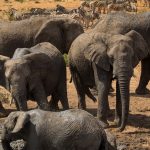
This is the honest part competitors skip. The public visit is a viewing session, not an interactive encounter. You stand behind a rope at a clearing while keepers bring out the youngest orphans in groups, feed them milk from oversized bottles, and talk through each elephant’s rescue story.
There’s usually a mud bath demonstration, and keepers are generous with details: how old each calf is, where it was found, which one is the troublemaker of the group. Kids tend to love the milk feeding most.
You will not get to touch, feed, or walk among the elephants during the public hour. That kind of access is reserved for the Trust’s higher-tier evening program, open only to people who give at that level (more on that below).
What to wear and what to bring
Neutral, muted clothing works best; elephants can be curious about bright colors and loose fabric. Closed shoes are smart since the ground is often muddy near the mud bath area.
Bring cash in USD or Kenyan shillings for the donation, sunscreen, and a hat, since the viewing area has little shade. It’s an outdoor, standing visit, so strollers are fine but can be awkward on the packed dirt paths.
Nairobi sits above the malaria transmission zone that covers most of Kenya’s coast and lake regions, so it’s generally considered lower risk here, though many family doctors still recommend prophylaxis for the wider trip. Check with a travel clinic based on your full itinerary.
Photography rules and visitor etiquette
Personal photography and phone photos are allowed during the public visit. Tripods and professional camera rigs need prior approval from the Trust, so email ahead if you’re bringing serious equipment.
Keep voices low, don’t lean over the rope line, and follow keeper instructions immediately if an elephant approaches the barrier. Flash photography is best avoided since it can startle young calves.
Adopting an orphan elephant, standard and higher-tier
Adopting an elephant is a yearly donation, starting around US$50, that supports a specific orphan and includes updates and a certificate. It’s a nice option for families who want to keep following an elephant’s story after they go home.
There’s also a higher annual giving tier tied to the same adoption program. It costs more, and in return you get access to an exclusive evening visit at the Nursery, where you can get closer to the elephants and sometimes help with a bottle feed. It requires a separate booking process through the Trust directly.
Combining the visit with other Nairobi activities
Because the public hour ends at noon, most families still have half a day left. The Giraffe Centre in Langata is a natural pairing, and it’s worth reading more about pairing your visit with the Giraffe Manor experience if you want to extend it into an overnight stay with resident Rothschild giraffes wandering the grounds at breakfast.
A short Nairobi National Park game drive works well too, since you’re already inside the park boundary and have paid the KWS fee for the day. Lions, giraffes, and sometimes black rhino are possible sightings within an hour or two.
If this Nairobi morning is the start of a longer Kenya trip, it helps to see how the orphanage fits into your wider Kenya itinerary before booking flights or transfers onward to the Mara or Amboseli.
The Valley Safaris Difference
We don’t just hand you a booking link and wish you luck. We confirm your Sheldrick Wildlife Trust slot directly with the Trust, prepay your KWS Nairobi National Park fee through eCitizen so you’re not fumbling with an app at the gate, and time your pickup so you’re parked and settled by 10:45am, not sprinting in at 11:05.
We also build the rest of the morning around your family’s pace, whether that’s a slow Giraffe Centre visit, a two-hour game drive, or simply heading back to rest before an afternoon flight to the bush. No generic city tour, just a plan that fits the people actually on the trip.
FAQs
How do I book a visit to the David Sheldrick Wildlife Trust? Book directly through the Trust’s official website. Third-party platforms like Viator and Tripadvisor are not accepted.
How much does it cost? US$20 for adults, US$5 for children under 12, paid in cash at the gate. This is separate from the KWS park fee.
Do I need to pay Nairobi National Park fees separately? Yes. Rates run from Ksh 1,000 for East African citizens to US$80 for non-resident adults, paid through the eCitizen platform.
What time does it open, and how long does the visit last? Daily from 11am to 12 noon, one hour only, every day except December 25th.
Is the Sheldrick Wildlife Trust the same as the Giraffe Centre? No, they’re separate organizations in different parts of Nairobi, though both are commonly visited on the same morning.
Can I touch the elephants? Not during the public hour. Direct interaction is limited to the Trust’s higher-tier evening giving program.
Ready to build your Nairobi morning around the Sheldrick Wildlife Trust? Get in touch with Valley Safaris and we’ll handle the bookings, the fees, and the timing.