Every week we put backpackers on the Madaraka Express in Nairobi and meet them again a few hours later in Mombasa, sun on their faces and sand on their minds. A nairobi to mombasa train safari is the cheapest, most scenic way to cover the 472 km between Kenya’s capital and its coast. Here is what the fare tables never tell you: the exact stretch of track where elephants actually show up, current 2026 prices in KES and USD, and how we build the ride into a proper safari-to-beach trip without burning a travel day.
What Is the Madaraka Express?
The Madaraka Express runs on the Standard Gauge Railway, or SGR, built by China Road and Bridge Corporation and opened in 2017. It replaced the old colonial-era metre gauge line that took over 12 hours to limp between Nairobi and Mombasa. The SGR passenger service now does the same run in under five and a half hours, on a modern diesel train with air conditioning, assigned seating, and a snack trolley. It is operated by Kenya Railways, and it is the backbone of overland travel between the highlands and the coast.
Schedule, Duration, and Distance
The line covers 472 km. Journey time on the express service is usually 4 hours 40 minutes to 5 hours 30 minutes, depending on stops. Kenya Railways has typically run two Madaraka Express departures a day in each direction, around 8:00 am and 3:00 pm from Nairobi Terminus in Syokimau. On busier weeks an extra evening departure near 7:30 pm to 8:00 pm sometimes gets added. Treat all of this as an indicative timetable and confirm exact times on the SGR booking platform before you travel, since Kenya Railways adjusts the schedule a few times a year.
Ticket Prices by Class in 2026
SGR passenger service has two real classes: Economy and First. Fares below are indicative 2026 adult one-way prices; confirm current rates when you book, since Kenya Railways revises them periodically.
| Class | One-way fare (adult) | Approx. USD | Journey time | Seating |
|---|---|---|---|---|
| Economy | KES 1,000 | ~USD 8 | 4h40m-5h30m | Airline-style, 2+3 rows, no meal service |
| First | KES 3,000 | ~USD 23 | 4h40m-5h30m | Wider seats, tray tables, snack trolley |
| Inter-County train | KES 500 (indicative) | ~USD 4 | 6-7 hours | More local stops, basic seating, cheapest option |
Children under 3 usually ride free on a parent’s lap, and there are discounted child fares on most routes. For a family of four (two adults, two kids) in Economy, budget roughly KES 3,000 to 3,500 one-way, or around USD 24 to 27. If you are pricing out the full trip, our budgeting a family safari in Kenya guide breaks down what the train adds to a week-long itinerary.
How to Book Your SGR Ticket
Bookings open a set number of days ahead of travel, usually around three to four weeks, through the Kenya Railways online booking portal or the SGR mobile app. You pay by M-Pesa, card, or in person at the ticketing counters at Nairobi Terminus or Mombasa Terminus. Economy seats on the popular 8:00 am and 3:00 pm departures sell out fastest, sometimes days in advance during the July to September and December school holidays. If you are travelling as a group joining one of our safaris, book your seats as soon as your dates are confirmed rather than waiting until the week before.
Economy, First, or the Class Everyone Gets Wrong
You will see plenty of blog posts mention a “Premium” or “Business” SGR class. In practice there isn’t one. Passenger service runs Economy and First only, plus the separate, slower Inter-County train for travellers on the tightest budgets. For backpackers, Economy is genuinely fine. The seats are comfortable enough for a five-hour ride, the windows are the same size as First’s, and you keep an extra KES 2,000 for camping fees or a dive trip in Diani. First earns its price mostly through legroom and a quieter carriage, which matters more on the night-leaning departures than on the scenic ones.
Watching Wildlife Through Tsavo
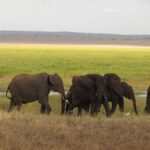
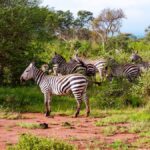
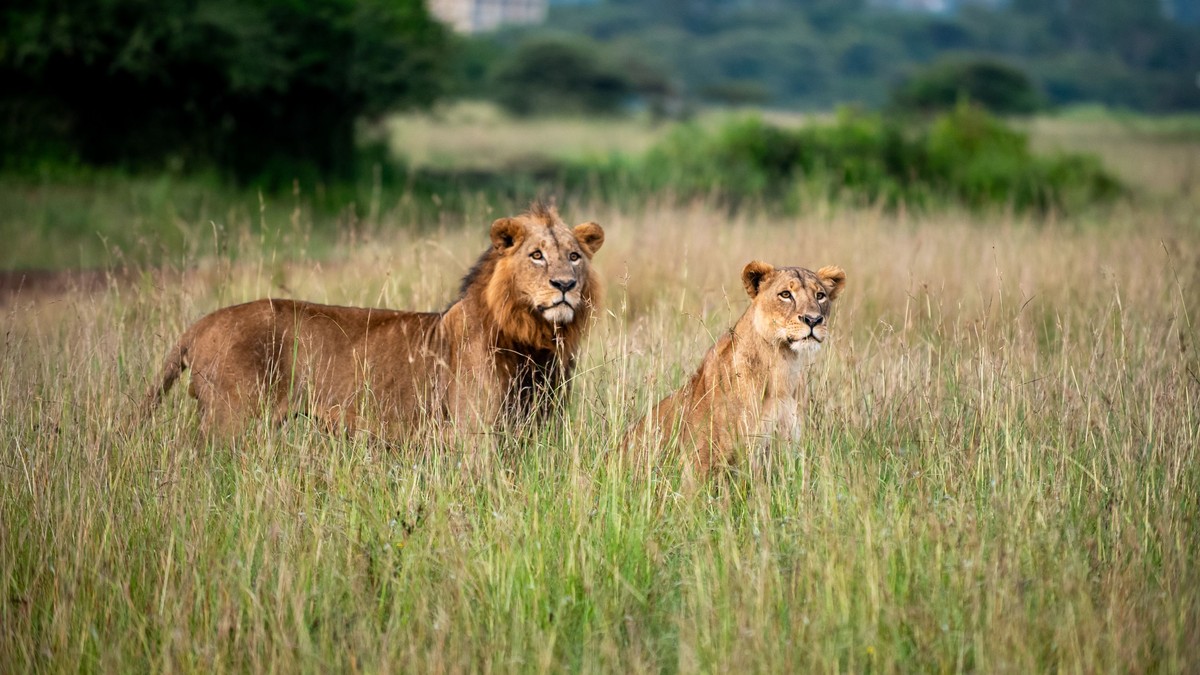
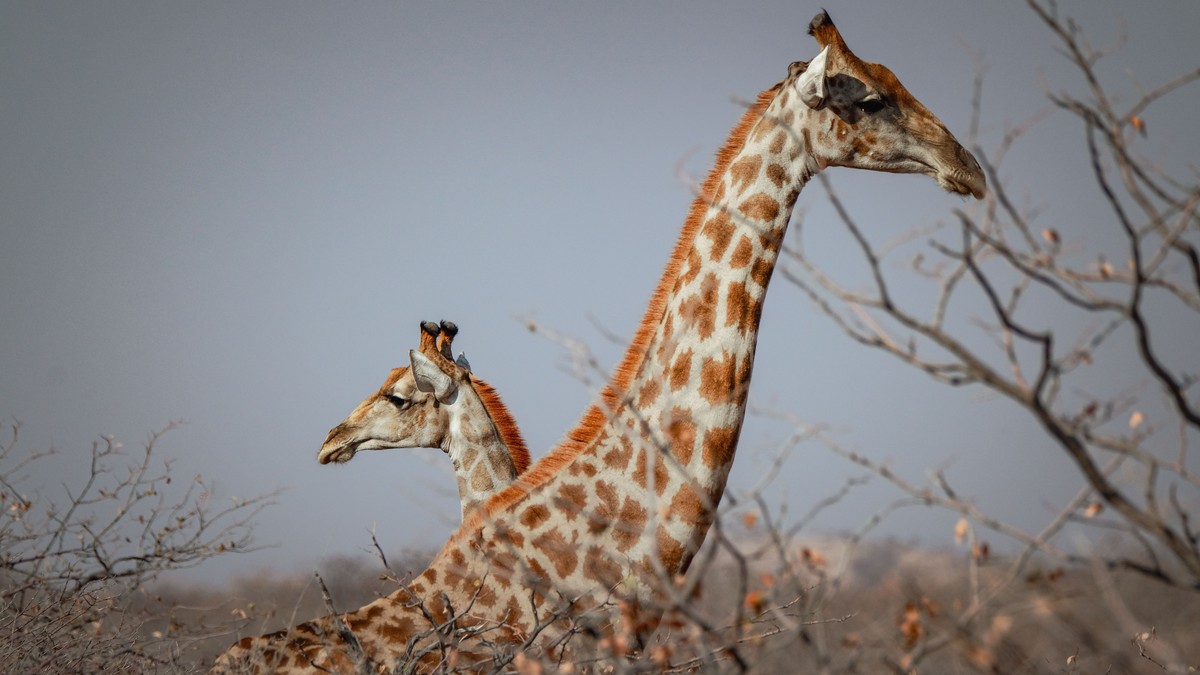
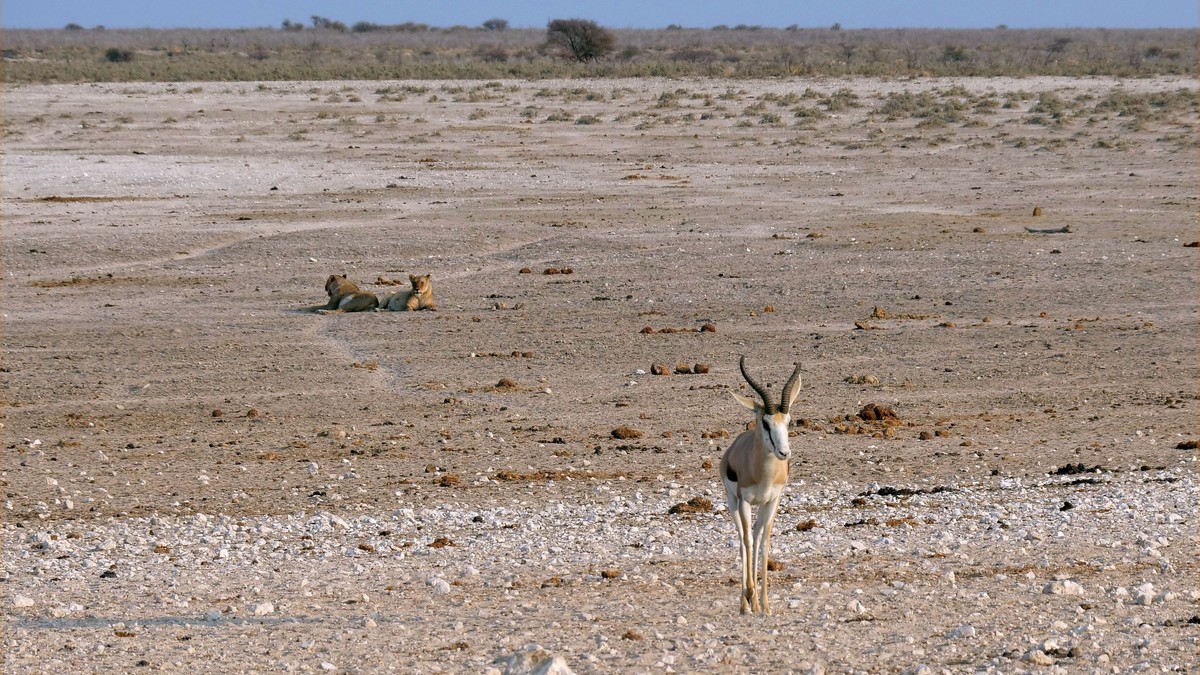
This is the detail the fare-table blogs skip. The richest wildlife viewing sits between Mtito Andei and Voi stations, roughly 90 minutes to 2 hours after leaving Nairobi, as the line crosses open Tsavo East and Tsavo West country. Watch for elephants, giraffe, and the occasional zebra herd near the Athi River bridge around the 250 km mark. Our guides recommend seats on the right-hand side of the train heading toward Mombasa, where the plains open up rather than tree line. Sightings are never guaranteed, wild animals do not keep a timetable, but this stretch is consistently the best window on the whole route.
The trade-off worth knowing: the scenic 8:00 am and 3:00 pm trains give you daylight through Tsavo but sell out fastest. A later or overnight-leaning departure is more comfortable and less crowded, but you will sleep, or at least sit in the dark, through the exact stretch everyone books this train to see.
Combining the Train With a Safari and Beach Stay
The smartest way to use this route is as the link in a bigger loop, not a day trip on its own. A common Valley Safaris itinerary for backpacker groups starts with three or four days in Amboseli or Tsavo West, where you can actually get out and camp near the animals rather than watch them through glass. From Nairobi you then take the Madaraka Express down to the coast and spend your remaining days in Diani or Watamu. For the coastal leg, we book budget-friendly stops like Distant Relatives Eco Lodge in Kilifi, which has dorms, camping pitches, and a well-known backpacker scene, or Stilts Backpackers in Diani for travellers who want beach access without resort prices. If you would rather skip the train on the way out and see more of the country by road, our guide to other overland transport options from Nairobi covers matatus and shared shuttles too.
Getting To and From the Stations
Nairobi Terminus sits in Syokimau, about 18 km southeast of the city centre and reasonably close to Jomo Kenyatta International Airport. Budget 30 to 45 minutes by road from the CBD depending on traffic, and a similar stretch from JKIA. If you are flying in the same day, read our notes on arriving at JKIA before your train journey so you don’t cut the connection too close. On the coast, Mombasa Terminus is in Miritini, roughly 15 km from Mombasa town and Nyali beach, and about an hour further on to Diani across the Likoni ferry or the new Likoni bridge routes. Shuttle vans and metered taxis meet every arriving train at both ends.
Train vs Bus vs Flight
| Option | Distance/time | Approx. one-way cost | Best for |
|---|---|---|---|
| SGR train (Economy) | 472 km, ~5 hours | KES 1,000 (~USD 8) | Budget travellers, wildlife views |
| Overnight bus | 500 km, 8-9 hours | KES 1,200-2,000 (~USD 9-15) | Latest, cheapest departures |
| Domestic flight | 45 minutes | KES 7,000-12,000 (~USD 55-90) | Short timelines, less time to spare |
For most backpackers, the train wins on comfort per shilling. Buses are slightly cheaper but slower and less predictable in Nairobi traffic getting out of the city. Flights save the most time but cost eight to ten times more than an Economy train ticket.
What to Pack and First-Timer Tips
Arrive at least 45 minutes before departure, since check-in closes and boarding gates lock on schedule. Luggage allowance is generous, but very large backpacks may need to travel in the baggage car rather than beside your seat. Bring cash or M-Pesa for the snack trolley, since card payments on board are inconsistent. Pack a light jacket, carriages run cold with the air conditioning on, and keep your phone charged for photos through Tsavo since the outlets at every seat are a nice touch but not always reliable.
The Valley Safaris Difference
We do not just print the SGR timetable and call it a guide. Our team books this route for backpacker groups every month, so we know which departures are running late this season, which side of the train the guides actually sit on, and which coastal camps answer the phone quickly when a group needs an extra bed. We build the train into the itinerary itself, timing your Tsavo safari days to end near Voi or Mtito Andei so you are not backtracking across Nairobi to catch it. That planning is the difference between a train ride and a proper safari-to-beach trip.
FAQ
Is there a train from Nairobi to Mombasa? Yes, the Madaraka Express runs daily on the SGR line, plus a slower Inter-County service.
How long does the journey take? Usually 4 hours 40 minutes to 5 hours 30 minutes on the express, longer on the Inter-County train.
Can you see wildlife from the train? Yes, most reliably between Mtito Andei and Voi through Tsavo East and West, though sightings vary by day.
Is the SGR train safe? Yes, it is well maintained, staffed, and has an excellent safety record since opening in 2017.
Plan Your Nairobi to Mombasa Train Safari With Valley Safaris
If you like the sound of pairing Tsavo wildlife with a coastal finish, we can build the whole route around your dates and budget. Have a look at our safari and beach tour page or get in touch through our contact page and we will work out the details with you.