Every guest who books a photographic safari with us asks the same mirrorless vs DSLR safari camera question in the weeks before departure. Should I buy a mirrorless camera, or is my old DSLR good enough for the Mara?
Here is the honest answer. Both work. What actually decides your results is light, patience, and how your gear behaves on a dusty conservancy road at 6am, not the badge on the front of the camera. Let’s walk through what really matters, using the logistics we see every week in the Masai Mara and Amboseli.
Mirrorless vs DSLR Safari Camera: What Actually Matters on a Kenya Safari
Photography blogs love to argue about autofocus points and megapixels. On safari, three things matter more: how much your kit weighs when you board a 12-seater Caravan at Wilson Airport, how you charge batteries at a tented camp with four hours of generator power, and whether dust from the Mara’s black cotton soil ruins your gear by day five.
Mirrorless cameras answer two of those questions better. DSLRs still have a case, especially if you already own one.
Autofocus and Tracking Fast-Moving Animals
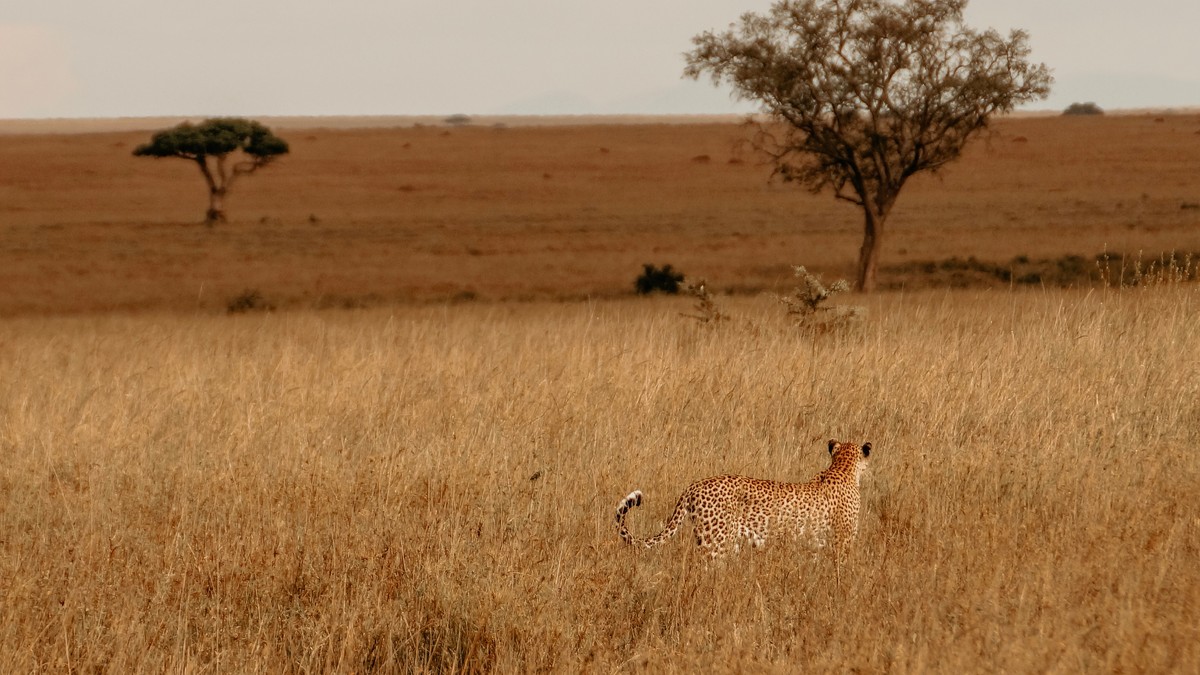
Mirrorless bodies, like the Canon R5, Sony A9 II, and Nikon Z8, use on-sensor autofocus with animal eye-tracking. That matters when a cheetah breaks into a sprint in Ol Kinyei Conservancy, or a leopard shifts in the shade of a sausage tree in the Mara Triangle.
DSLRs like the Canon 5D Mark IV or Nikon D850 focus superbly in good light but rely on phase-detection points clustered near the center of the frame. Once an animal moves off-center, or light drops at dusk near Musiara Marsh, DSLR autofocus works harder to keep up.
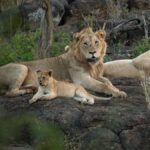
For fast action, hunts, river crossings at the Mara River, mirrorless has a real edge. For a lion pride resting under a tree at midday, either camera nails the shot.
Weight, Baggage Limits and Bush Flights
This is the constraint almost no gear guide mentions, and it matters more than any spec sheet. If your Kenya itinerary includes a bush flight from Nairobi to Musiara or Ol Kiombo airstrip on Safarilink or AirKenya, you need to plan around baggage weight. The allowance is roughly 15kg checked plus 5kg hand luggage, about 20kg total, and soft-sided bags only.
A two-body mirrorless setup with a telephoto zoom typically comes in lighter than an equivalent DSLR kit, mostly because mirrorless bodies themselves are smaller. Camera body weights are well documented; total kit weight varies with lens choice, so treat the numbers below as an indicative range.
| Setup | Two bodies (approx.) | Typical lens trio (approx.) | Kit weight range | Fits 20kg bush flight limit? |
|---|---|---|---|---|
| Mirrorless (e.g. Canon R5 + R6 II) | ~1.4 kg combined | 100-500mm, 24-70mm, 15-35mm | 4.0-4.5 kg | Yes, leaves room for clothes and a laptop |
| DSLR (e.g. Canon 5D Mark IV + 7D Mark II) | ~1.8 kg combined | 100-400mm, 24-70mm, 16-35mm | 4.8-5.6 kg | Tighter, less room for anything else |
That kilogram of difference sounds small until you are repacking at Wilson Airport with a scale in front of you. Guests flying into the Mara or on to Amboseli after a Nairobi stop feel this most. Road-only itineraries out of Nairobi have far more slack, since your vehicle carries the weight, not you.
If you are still choosing lenses, our guide to the best camera lens for a Kenya safari covers focal lengths for both systems in more depth.
Battery Life and Charging at Camp
DSLRs win this round clearly. A Nikon D850 can shoot 1,800 frames or more on one charge. A mirrorless body, because the electronic viewfinder and sensor stay powered constantly, often manages 400 to 700 frames per charge, sometimes fewer in cold Mara mornings.
Charging power depends on where you sleep. Lodges around Amboseli and permanent camps in the Mara Triangle usually run mains power most of the day. Smaller tented camps in conservancies like Mara North or Naboisho often run generators for a set window, commonly 6 to 10pm, with solar trickle power outside that. Ask your camp directly before you travel, since this changes camp to camp and season to season.
Our practical rule: bring at least four batteries for a mirrorless body on a 7 to 10 day safari, and two for a DSLR. Add a portable power bank rated for USB-C camera charging if your camp confirms limited generator hours.
Dust, Bumps and Durability on Mara and Amboseli Roads
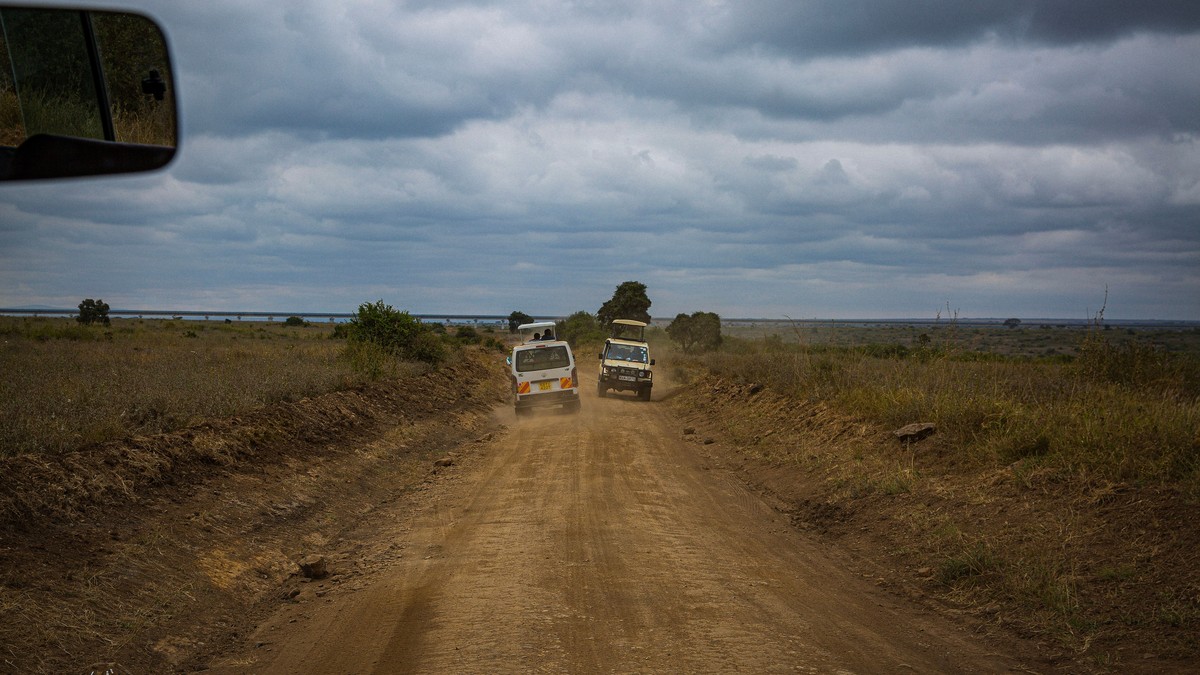
Dry season roads in the Masai Mara and Amboseli throw up fine, powdery dust, especially from July through October and again in January and February. Both mirrorless and DSLR bodies from major manufacturers now carry weather sealing at the mid and professional tiers, and both are vulnerable if you swap lenses in open air with dust blowing.
The real risk with mirrorless bodies is an exposed sensor during a lens change, since there is no mirror covering it. DSLRs have some natural protection here. In practice, this is why many working photographers on Mara game drives run two bodies with different lenses already mounted, mirrorless or DSLR, rather than swapping lenses in the vehicle. It also means fewer missed shots when a cheetah appears on one side of the vehicle and a herd of elephants on the other.
If dust and vehicle movement worry you, ground-level photographic hides in Kenya offer a stiller, more controlled way to shoot, with less lens-swapping in the field.
Shutter Noise Near Skittish Wildlife
Mirrorless cameras offer a fully silent electronic shutter option. This genuinely helps near nervous species, like a leopard with a fresh kill in a tree, or ground-nesting birds on the Amboseli plains. DSLR mirror slap is audible within a few meters and can make a wary animal look up.
For most Big Five sightings from a vehicle 20 meters out, this difference matters less than photographers expect. It matters most for close, quiet moments on foot with a guide, which some Mara conservancies allow outside the main reserve.
Lenses, Rentals and What You Already Own
Here is where we push back gently on the upgrade pressure you’ll find elsewhere. If you already own a capable DSLR and a 100-400mm lens, you do not need a new mirrorless body for one Kenya trip. The gap in final image quality, printed or shared, is smaller than marketing suggests.
Lens rental in Nairobi is limited compared to Cape Town or the US, so bring what you own rather than plan to rent locally. Both Canon and Nikon still sell new DSLR bodies and a wide range of budget-friendly used lenses, which keeps DSLR kits genuinely cheaper to build from scratch.
Budget Tiers, By Photographer Type
- Under $1,500: a used DSLR body (Canon 90D, Nikon D7500) with a 150-600mm third-party lens covers most Mara sightings well.
- $2,000 to $4,000: a mirrorless body like the Canon R6 II or Nikon Z6 III with one telephoto zoom, a strong middle ground.
- $4,500 and up: dual mirrorless bodies (R5 plus R6 II, or two Z8s) with 100-500mm and 24-70mm glass, the working photographer’s kit we see most often on our longer, slower off-peak Masai Mara photography safaris.
The Valley Safaris Difference
We plan photography safaris around light and patience, not gear upgrades. Our guides know which Mara North Conservancy waterholes get morning backlight, and when the Amboseli herds move toward Kilimanjaro’s base for the clearest mountain shots, usually just after dawn before haze builds.
We also tell guests plainly when their current camera is fine for the trip they are booking. A guide who spends three unhurried hours with one cheetah family, positioning the vehicle for light rather than rushing to the next sighting, will get you a better photograph than a camera upgrade ever will. That patience, and honesty about what gear you actually need, is what our repeat photography guests tell us they value most.
Plan Your Kenya Photography Safari
Whether you are bringing a ten-year-old DSLR or a brand-new mirrorless kit, the camera matters less than the itinerary around it. Get in touch through our contact page and we will help you plan a Kenya safari built around light, timing, and the sightings that make the gear question feel small.