A guest once asked me, halfway through packing her camera bag, whether she should pay extra for a pop-up roof Land Cruiser or just take the shared van. I told her the truth: it depends on where she was going and who else was in the vehicle. That answer annoys people who want a simple yes. But a safari vehicle pop up roof is not automatically the better photography tool. Sometimes it is. Sometimes a window seat in a well-run van beats it outright.
Let’s go through what actually matters, with real numbers instead of brochure talk.
What a Safari Vehicle Pop Up Roof Actually Is
A pop-up roof is a section of the vehicle’s roof, usually over the rear half, that lifts up on hinges or a hydraulic arm. Most Kenyan safari Land Cruisers use a manual crank or gas-strut system rather than hydraulics, which keeps maintenance simpler on rough roads. The roof panel itself is either fiberglass or a lightweight metal sheet, both a few millimeters thick, built to shed rain rather than insulate.
When it’s up, you get roughly 90 to 120 centimeters of standing headroom above the seat line. That’s enough for most adults to stand and shoot over the vehicle’s roofline without stooping. When it’s down, the vehicle looks and drives like any closed 4×4.
The classic vehicle for this is the Toyota Land Cruiser, usually in an extended-wheelbase configuration seating 6 to 7 with roof access. It’s sometimes badged GX or LX depending on the importer. Land Rover Defenders show up on some routes too, though parts and servicing are harder to source in Kenya, so most operators, Valley Safaris included, run Land Cruisers.
Why Photographers Love, and Sometimes Overrate, a Pop-Up Roof
The real benefit is a 360-degree shooting angle without a window frame cutting your composition. You can swing from a lion on the left to a bird taking off on the right in two seconds. Standing height also lifts your eye line by 30 to 40 centimeters. That matters when grass is up after the rains, since a seated shot only gets you belly and legs.
Ventilation is genuinely better too, and that keeps you alert on long game drives that can run 6 hours or more.
Where the pop-up roof gets overrated is stability. A raised roof means more vehicle sway on rutted tracks. Bracing a 400mm or 600mm lens on a moving roof edge without a bean bag or roof-rail clamp gives you as much camera shake as a window mount. I have seen photographers with a pop-up roof shoot worse frames than a guest with a bean bag on a van’s window ledge. It happened simply because they never bothered to stabilize the shot.
Pop-Up Roof vs Standard Van vs Fully Open 4×4
Here is how the three main options actually compare, based on what Valley Safaris and most Nairobi-based operators run in 2026.
| Vehicle type | Typical capacity | Photography angle | Approx. price per person, per day (shared, indicative) | Approx. private charter, per day (indicative) |
|---|---|---|---|---|
| Pop-up roof Land Cruiser (shared) | 6 to 7 | 360 degrees when standing | USD 180 to 260 | N/A |
| Pop-up roof Land Cruiser (private charter) | Up to 6, booked as one party | 360 degrees, no strangers to negotiate with | N/A | USD 320 to 480 |
| Standard closed van, sliding windows | 7 to 9 | Window only, roughly 90 degrees per seat | USD 90 to 140 | USD 260 to 380 |
| Fully open-sided 4×4 (no roof, low doors) | 4 to 6 | Nearly full angle, seated | USD 200 to 320 (mostly private, conservancy-only) | USD 260 to 400 |
These are indicative ranges, not fixed rates. They shift with season, group size, and whether park fees and fuel are bundled in. Vehicle fuel alone for a week in the Mara can run USD 150 to 250 depending on distance covered each day.
The number that matters most for photographers is not the vehicle type. It’s how many people are sharing the roof or the window row. A pop-up roof Land Cruiser with 6 photographers means everyone gets maybe 10 minutes of clean, unobstructed shooting time on a good sighting before someone else needs the space. A van with 4 photographers and assigned window seats can give each person more real shooting time than a crowded pop-up roof ever will.
Where the Rules Make the Decision for You
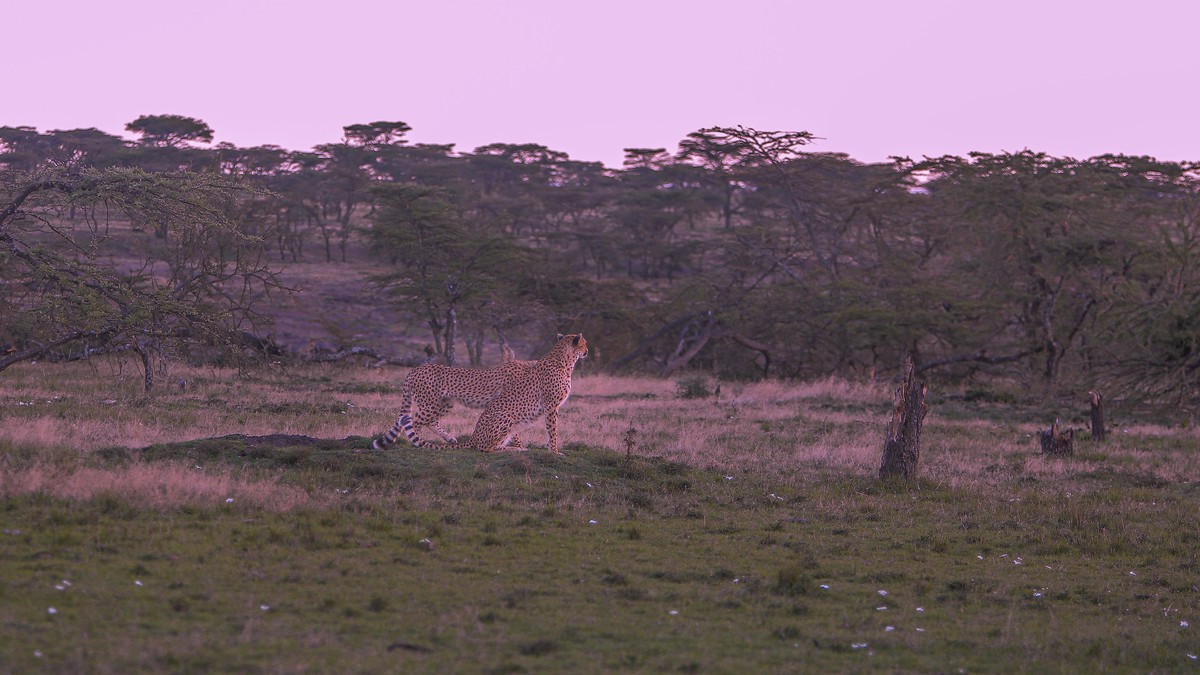
In several places, the choice isn’t really yours. The Masai Mara National Reserve allows both van and 4×4 traffic on the main tracks. Off-road driving to follow a cheetah hunt or a leopard in thick bush is different: it’s restricted to the reserve’s core zones, and it’s generally only permitted in a 4×4 with a pop-up or open roof. Vans can get stuck or simply can’t follow.
Private conservancies bordering the Mara, like Naboisho and Mara North, restrict vehicle numbers per sighting and often require 4x4s for off-road tracking. If you’re aiming for conservancies best suited for cheetah and leopard photography, a pop-up roof Land Cruiser stops being optional.
Laikipia’s conservancies, including Ol Pejeta, mostly run open-sided 4x4s rather than pop-up roofs, since night drives and close encounters with rhino call for a lower, quieter profile. Amboseli and Samburu run pop-up roof Land Cruisers as the norm, since the terrain is drier and off-road tracking is more limited by park rules anyway.
If you’re timing your trip for shooting the Mara during off-peak season, fewer vehicles at each sighting means even a shared pop-up roof feels close to private. That timing can matter more than the vehicle choice itself.
What It Actually Costs to Book Each Option
For a 6-day Masai Mara circuit from Nairobi, here’s a rough breakdown Valley Safaris guests have worked with recently. Nairobi to the Mara by road is about 270 km and takes 5 to 6 hours depending on the route through Narok. A scheduled flight from Wilson Airport takes about 45 minutes and runs USD 150 to 220 one way.
A shared pop-up roof seat for 6 nights, guide and fuel included, land only, typically runs USD 1,100 to 1,600 per person. A private charter for a family or small photography group of 4, same duration, runs USD 2,200 to 3,200 total for the vehicle. That often works out cheaper per person than the shared rate, if you fill the seats yourselves.
Park fees are separate and add up. Masai Mara National Reserve charges around USD 80 per adult per day (2026 nonresident rate, subject to change). Conservancy fees inside Naboisho or Mara North run USD 60 to 100 per day on top of that.
The Valley Safaris Difference
Most operators sell you a vehicle type and leave the seating politics to sort themselves out in the field. We don’t do that. When you book a shared pop-up roof Land Cruiser with us, we cap photographer seats at 4 rather than filling all 6 or 7 slots. We also rotate window and roof access on a schedule agreed before the drive starts, not negotiated awkwardly at 6am.
If your main goal is genuinely serious photography, on cheetah hunts, on leopard tracking in the conservancies, we’ll tell you honestly if a private charter is worth the extra cost for your dates. We’ll say so even when the shared option would earn us more per seat. We’d rather you come back and book again than oversell you once.
We also know which vehicles our own guides prefer for which season. Rains turn some Mara tracks into places where a lighter, higher-clearance Land Cruiser matters more than roof style. That’s local knowledge, not marketing copy.
So Which Should You Book?
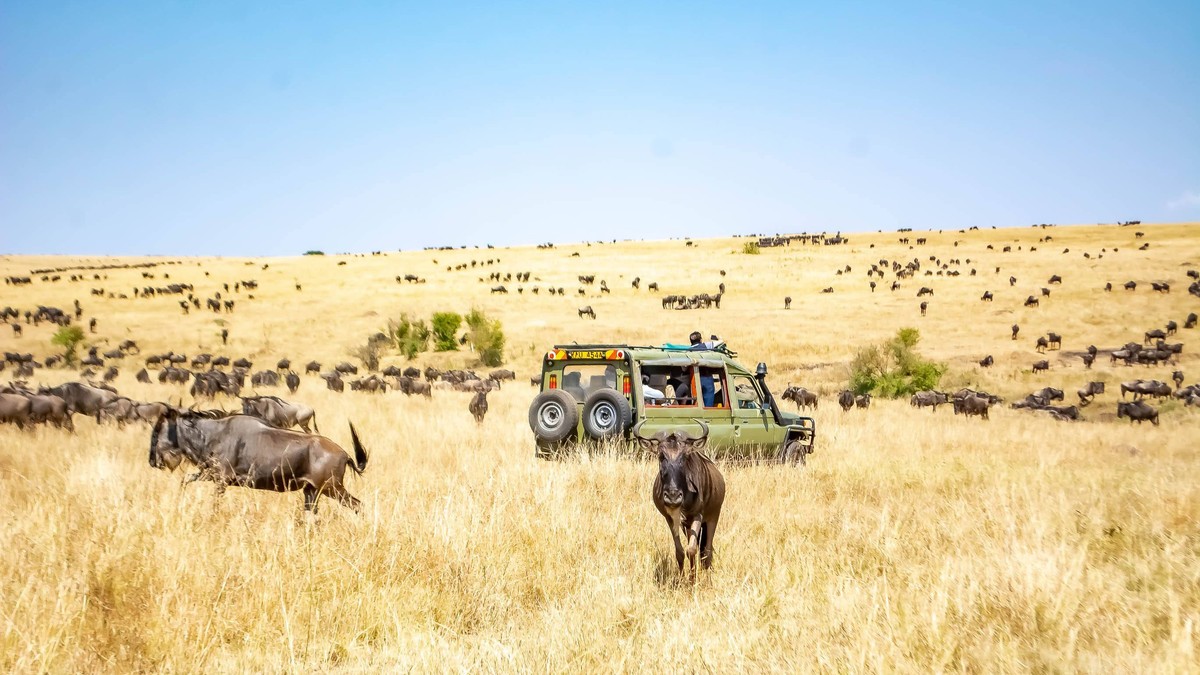
If you’re heading into conservancy tracking for cats, book the pop-up roof, ideally private if your budget allows it. If you’re doing a family trip with a mix of photographers and casual watchers, a well-managed shared van with assigned window rotation can deliver strong images for less money. If you’re new to Kenya altogether, it’s worth reading about common mistakes first-time safari-goers make before you lock in either option. Seat count and itinerary pace trip up first-timers more than vehicle type does.
Neither vehicle guarantees the shot. A steady hand, a bean bag, and a guide who reads animal behavior well will outperform an expensive roof every time.
Plan Your Trip
If you want help matching the right vehicle to your dates, your photography goals, and your budget, we’re happy to talk it through. Browse our Masai Mara photography safaris or reach out through our contact page and we’ll build the itinerary around how you actually want to shoot.