If you have priced a private safari in Kenya and felt your stomach drop, you are not alone. A private Land Cruiser with your own driver-guide can run $300 or more per person per day. A budget group joining safari kenya package brings that down to $110 to $170 per day, because you share the vehicle, the guide, and the fuel bill with other travelers.
This guide breaks down exactly what you pay for, what camps you sleep in, and how a shared departure actually gets guaranteed to run. No vague ranges pulled from nowhere. Real distances, real park fees, and the trade-offs nobody puts in the brochure.
What Is a Group Joining Safari?
A group joining safari means you book a seat, not a whole vehicle. Valley Safaris and other operators run fixed departure dates. Solo travelers, couples, and small groups all join the same minibus or Land Cruiser.
You still get a proper safari. Same parks, same game drives, same guide checking radio chatter about where the lions moved. You just split the cost of the vehicle, fuel, and guide fee across six to nine people instead of two.
This is the model that makes Kenya affordable for backpackers. It is also why timing matters. Read our guide on common mistakes first-time budget travelers make before you lock in dates.
Budget Group Joining Safari Kenya: Cost Breakdown
Price depends on trip length, which parks you visit, and whether you camp or use budget lodges. Here is a real breakdown for three common Valley Safaris departures.
| Trip length | Route | Distance from Nairobi | Drive time | Park fees included | Price per person |
|---|---|---|---|---|---|
| 3 days | Masai Mara only | 270 km to Talek Gate | 5 to 6 hours | $80/day Masai Mara Reserve | $340 to $420 |
| 5 days | Masai Mara, Lake Nakuru, Lake Naivasha | 270 km + 160 km + 90 km loop | 8 to 9 hours total driving | $80/day Mara, $60/day Nakuru | $620 to $780 |
| 7 days | Masai Mara, Nakuru, Naivasha, Amboseli | roughly 850 km loop | 14 to 16 hours total driving | $80/day Mara, $60/day Nakuru, $60/day Amboseli | $940 to $1,180 |
These are per-person rates for camping or budget tented camps, double occupancy. Solo travelers usually pay a single supplement of $30 to $60 a night, since most camps price per tent, not per head.
What’s Included and What’s Excluded
Most budget group packages include:
- Transport in a shared safari vehicle with pop-up roof
- A professional driver-guide
- Game drives listed in the itinerary
- Camping fees or budget tented accommodation
- Meals as specified, usually full board on camping trips
What usually costs extra:
- Park entry fees, unless stated as included (always confirm this line item)
- The Narok County bed levy, about $20 per person per night for stays inside the Masai Mara ecosystem
- Drinks, tips, and laundry
- Visa fees and travel insurance
- Optional extras like a Masai village visit or hot air balloon ride over the Mara, which runs $450 to $500 per person on its own
Ask any operator for a written cost breakdown before you pay. If park fees are not itemized separately, you cannot check whether you are getting a fair price.
Group Joining vs Private Safari
Both get you to the same parks. The difference is flexibility and pace.
A group joining safari fixes your schedule to a set departure date and a shared itinerary. You cannot linger an extra hour at a leopard sighting if the rest of the vehicle wants to move on. A private safari lets you set your own pace, choose your own camps, and add or drop stops.
Private safaris cost two to three times more per person. For a solo backpacker or a couple on a tight budget, that gap usually settles the decision. For photographers who need to wait for light, or families managing nap schedules, the extra cost of a private vehicle often pays for itself in patience saved.
Popular Budget Routes and Named Camps
Most budget itineraries loop through the same handful of parks, because they sit within a day’s drive of Nairobi and each other.
Masai Mara is the anchor of almost every itinerary. Budget travelers on Valley Safaris routes typically stay at Enchoro Wildlife Camp near Talek Gate, a simple tented camp with shared bathrooms in the budget tier and en-suite options if you upgrade slightly.
Lake Nakuru National Park, 160 km from Nairobi, is known for its rhino sanctuary and flamingo flocks when water levels are right. Punda Milia Camp, just outside the park gate, is a common budget stop.
Lake Naivasha, only 90 km from Nairobi, works well as a first or last night. Fisherman’s Camp on the lakeshore has been a backpacker staple for decades, with camping pitches and basic bandas.
Amboseli National Park, 240 km southeast of Nairobi with Mount Kilimanjaro often visible across the border, adds elephants and that classic mountain backdrop. Camp Kilimanjaro is a frequently used budget base near the park.
Tsavo East and Tsavo West, roughly 330 km from Nairobi near Voi, see fewer group joining departures because of the extra driving distance, but they appear on longer 7 to 10 day loops for travelers combining safari with the coast.
If you are arriving overland, our post on getting to the Mara on a budget by bus covers the public transport option before you even book a safari seat.
Cheapest Months for a Budget Safari
April, May, and November are Kenya’s long and short rains. Camps drop prices, sometimes by 20 to 30 percent, and roads into the Mara can get muddy. Game viewing stays good year round, since resident wildlife does not migrate away.
January, February, June through October, and December are high season, with the Great Migration crossing the Mara River roughly July through September. Expect higher camp rates and busier gates during those months.
How Departures Actually Fill
Group joining safaris run on a minimum number, usually two to four paying travelers, though some operators guarantee departure with just one person paying a supplement. Ask this question directly before you pay a deposit: what happens if my date does not fill?
Reputable operators will either guarantee the date regardless, combine it with a nearby date, or refund you in full with notice. Get this in writing.
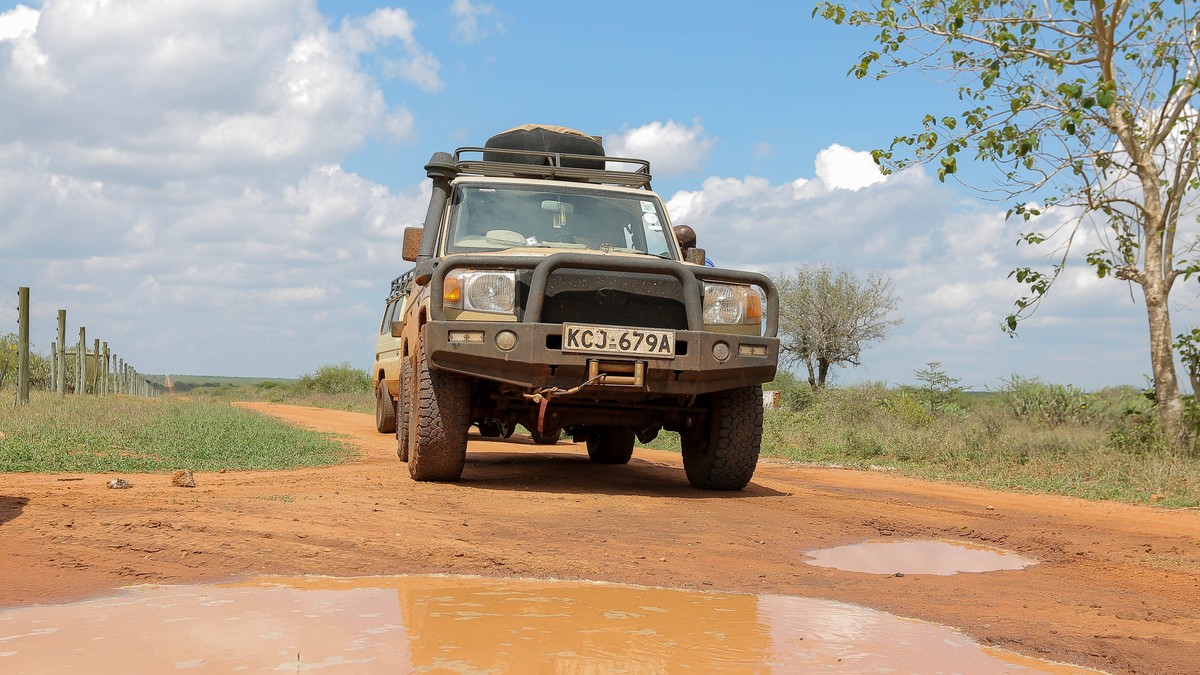
Vehicles are typically 7 to 9 seater safari vans or Land Cruisers with pop-up roof hatches for photos. Larger vans can seat more people, but that also means more people sharing window space during a good sighting.
Luggage limits usually cap you at one soft-sided bag of 15 kg, since hard suitcases do not fit safari vehicle storage compartments well. Pack light and pack soft.
Safety and Health Considerations
Malaria risk exists across most of Kenya’s safari circuit, including the Mara, Amboseli, and Tsavo, though Nairobi and the highlands around Nakuru carry lower risk. Talk to a travel clinic about prophylaxis before you go, and use repellent in the evenings regardless of what medication you take.
Group vehicles are driven by licensed, experienced guides who know the parks well. Shared safaris are not riskier than private ones. The main practical concern is comfort, not safety, since you are sharing space and schedule with strangers for several days.
The Valley Safaris Difference
We run our budget departures with a written minimum-group guarantee, so you know before you pay whether your date is confirmed or still filling. Every quote itemizes park fees and the Narok County bed levy separately, so you see exactly what you are paying the parks versus what you are paying us.
We also stick to camps we have personally vetted for clean bedding, working showers, and guides who actually know the terrain, not just camps that pay the highest commission. If you want to see how that adds up against other operators, read how Valley Safaris compares to other budget operators.
Frequently Asked Questions
How much does a group joining safari cost in Kenya? Expect $340 to $420 for 3 days, $620 to $780 for 5 days, and $940 to $1,180 for 7 days per person, camping or budget tented camps, double occupancy.
Is a group joining safari safe? Yes. Vehicles are driven by licensed guides, and the shared model does not change the safety of game drives or camps.
What is the cheapest month for a budget safari? April, May, and November, during the rains, when camp rates often drop 20 to 30 percent.
Do group joining safaris use a van or a Land Cruiser? Both, depending on group size. Most seat 7 to 9 people with pop-up roof hatches.
What happens if the group does not fill up? Ask before booking. Good operators guarantee the date anyway, shift you to a nearby date, or refund your deposit.
Is it suitable for families with young children? It can work for school-age kids, but toddlers do better on a private safari, since shared vehicles run on a fixed schedule with no room for nap breaks or early returns.
Plan Your Budget Safari
If this has you ready to see the Mara without draining your savings, we would love to help you pick the right departure date and route. Visit our Masai Mara group joining safari page or reach out through our contact page and we will build a plan around your budget and dates.